After a serious truck accident in Texas, filing a claim involves multiple steps that protect your rights and pursue compensation for catastrophic injuries. The Texas truck accident claim process begins immediately after the crash and extends through investigation, negotiation, and potentially litigation. Each phase requires specific actions and evidence that can directly impact your compensation for life-altering injuries and losses.
If you’ve been injured in a serious crash, a trusted Houston, TX truck accident lawyer can guide you through the claims process and protect your rights—contact us today for a free consultation.
Request Your Free Consultation
Key Takeaways for What is the Truck Accident Claim Process in Texas?
- Texas law requires reporting truck accidents with injuries, deaths, or property damage exceeding $1,000 to law enforcement immediately.
- Multiple parties may share liability in truck accidents, including drivers, trucking companies, cargo loaders, and maintenance providers.
- Federal Motor Carrier Safety Administration (FMCSA) regulations create additional evidence requirements beyond typical car accident claims.
- Insurance companies often deploy rapid response teams to accident scenes, making early legal representation critical for preserving evidence.
- Texas follows modified comparative fault rules, allowing recovery if you're less than 51% responsible for the accident.
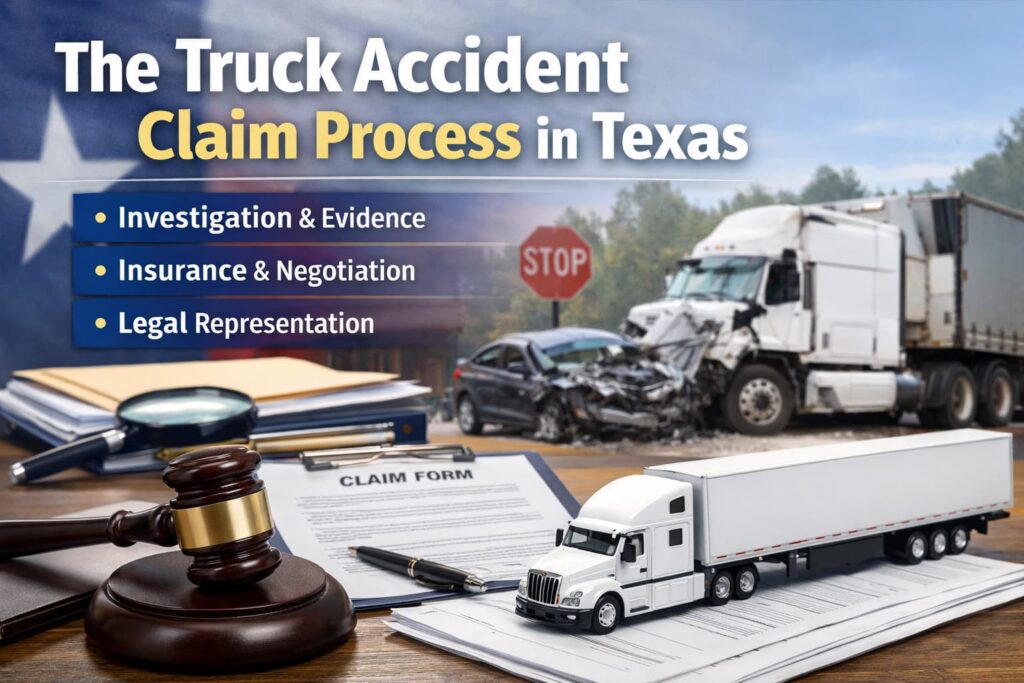
First Steps After a Texas Truck Accident
Your medical care takes priority after any serious truck accident. Once you're receiving appropriate medical care, several critical actions protect your right to compensation.
Essential steps to safeguard your truck accident claim include:
- Hire an experienced truck accident attorney before speaking with insurance companies or signing anything.
- Attend all medical appointments and follow treatment plans exactly. Gaps in treatment let insurers argue your injuries aren't serious.
- Keep a daily journal documenting pain levels, physical limitations, and how injuries affect your daily life.
- Photograph and record videos exhibiting visible injuries regularly to show progression and healing time
- Save all receipts related to the accident, including medical co-pays, prescriptions, and travel expenses for treatment
Your journal entries provide powerful evidence of suffering that medical records alone can't capture. Note specific activities you can no longer perform, sleep disruptions, and emotional impacts. This evidence carries more weight than trying to recall experiences months later during depositions.
Contact your insurance company to report basic facts only. Texas law doesn't require providing statements to the trucking company's insurer, and their adjusters work against your interests. Let your attorney handle all substantive communications while you focus on healing.
Understanding Liability in Commercial Truck Accidents
Texas truck accidents often involve multiple potentially liable parties. Determining responsibility requires investigating beyond the truck driver to uncover all contributing factors.
The trucking company may bear responsibility through:
- Negligent hiring practices or inadequate driver training
- Pushing drivers to violate hours-of-service regulations
- Failing to maintain vehicles according to FMCSA standards
- Improper cargo loading or securing procedures
Your attorney investigates employment relationships between drivers and companies. Some trucking companies misclassify employees as independent contractors to avoid liability. Texas courts examine actual working relationships rather than contract labels when determining responsibility.
Third parties sometimes share liability. Cargo loading companies face liability for improperly secured loads. Maintenance providers are responsible for faulty repairs. Parts manufacturers bear responsibility for defective components causing accidents.
Critical Evidence in Texas Truck Accident Claims
Commercial truck accidents generate unique evidence types that strengthen your claim. Federal regulations require trucking companies to maintain specific records, creating valuable documentation opportunities.
Electronic logging device (ELD) data
ELDs track driving hours, rest periods, and route information. This data reveals hours-of-service violations contributing to driver fatigue. Texas courts regularly admit ELD evidence showing regulatory violations.
Black box information
Most commercial trucks contain event data recorders capturing speed, brake application, and other critical metrics before crashes. This objective data contradicts false driver statements about accident circumstances.
Company safety records
FMCSA databases contain trucking company safety scores, violation histories, and previous accidents. Pattern evidence strengthens claims by showing systematic safety failures rather than isolated incidents.
The Investigation Phase
Professional accident reconstruction often plays an essential role in serious truck accident cases. Experts analyze physical evidence, witness statements, and electronic data to determine how crashes occurred. Their findings counter trucking company defenses and establish liability percentages under Texas's comparative fault system.
Your legal team coordinates with investigators to:
- Preserve physical evidence before destruction or alteration
- Interview witnesses while memories remain fresh
- Obtain surveillance footage from nearby businesses
- Review driver qualification files and training records
- Analyze maintenance logs and inspection reports
Time-sensitive evidence requires immediate action. Trucking companies legally destroy certain records after specified periods. Texas courts may sanction companies for spoliation of evidence, but proving intentional destruction requires showing they received preservation notices.
Request Your Free Consultation
Insurance Claim Process and Negotiations
Commercial trucking insurance differs significantly from standard auto coverage. FMCSA requires minimum liability coverage of $750,000 for general freight and up to $5 million dollars for hazardous materials. Many trucking companies carry additional umbrella policies providing further coverage.
Initial settlement offers rarely reflect adequate compensation for catastrophic injuries. Insurance adjusters use various tactics to minimize payouts:
- Requesting unnecessary documentation to delay proceedings
- Disputing medical treatment necessity or duration
- Arguing pre-existing conditions caused current symptoms
- Misrepresenting Texas law regarding compensation rights
Experienced attorneys counter these strategies through comprehensive case preparation. Detailed life care plans document future medical needs. Economic experts calculate lost earning capacity. This evidence forces insurers to acknowledge true claim values.
How Much Can I Get for a Truck Accident Injury in Texas?

Texas law recognizes both economic and non-economic damages in truck accident cases involving severe injuries. Understanding available compensation helps you evaluate settlement offers appropriately.
Economic damages:
- Past and future medical expenses
- Lost wages and diminished earning capacity
- Property damage and replacement costs
- Rehabilitation and therapeutic services
- Home modifications for permanent disabilities
Non-economic damages:
- Physical pain and mental anguish
- Physical impairment and disfigurement
- Loss of enjoyment of life
- Loss of consortium for spouses
In cases involving gross negligence, Texas permits exemplary damages. These punish defendants for conscious indifference to others' safety. Examples include drunk driving, falsifying logbooks, or knowingly operating unsafe vehicles.
Timeline Expectations for Texas Truck Accident Claims
Every truck accident claim follows its own timeline based on injury severity, number of liable parties, insurance company cooperation, and the complexity of the case. Many cases with clear liability resolve through negotiations, while disputed claims requiring extensive investigation naturally take longer.
Your truck accident attorney evaluates these factors during your initial consultation and provides realistic expectations based on similar cases. While nobody wants prolonged legal proceedings after suffering catastrophic injuries, thorough case development often leads to substantially better outcomes than rushing toward quick settlements.
Your attorney balances timely resolution with securing maximum compensation for life-changing injuries.
When Litigation Becomes Necessary
Filing a lawsuit becomes necessary when insurance companies refuse reasonable settlements or dispute clear liability. Texas's 2-year statute of limitations provides a firm deadline, though earlier filing preserves options. (*Always speak directly to an attorney for the exact deadlines that apply to your potential claims.)
The litigation process includes:
- Discovery exchanges revealing additional evidence
- Depositions of witnesses and involved parties
- Expert witness testimony establishing standards of care
- Mediation attempts before trial
- Trial presentation if settlement remains elusive
Trial outcomes vary based on evidence, injuries, and specific circumstances. Texas juries have the authority to award full compensation reflecting both economic losses and life changes following catastrophic injuries.
While each case presents unique challenges, thorough preparation and compelling evidence give your case its best opportunity for a favorable verdict. Your attorney evaluates strengths and potential obstacles to build the strongest possible presentation for trial.
FAQ for Texas Truck Accident Claim Process
What if the trucking company contacts me directly after the accident?
Texas law doesn't require speaking with trucking company representatives or their insurers. Politely decline discussions and refer them to your attorney. Direct contact attempts often seek admissions that damage your claim or push inadequate settlements before you understand your rights.
How does Texas's modified comparative fault rule affect my truck accident claim?
Under Texas Civil Practice and Remedies Code Chapter 33, you can recover damages if you're 50% or less at fault. Your compensation is reduced by your fault percentage. You can still recover damages in many cases if you are held partially at fault, but you will need an experienced attorney to defend you and your claim and maximize its value.
What happens if the truck driver was from another state?
Interstate trucking falls under federal jurisdiction through FMCSA regulations. Your attorney can file claims in Texas courts regardless of the driver's home state. Multiple jurisdiction options may exist depending on company locations and accident circumstances.
Can I pursue claims if the truck driver lacked proper insurance?
Yes. Uninsured or underinsured trucking operations face severe penalties. Your attorney explores alternative recovery sources, including company assets, broker liability, and your own underinsured motorist coverage. Texas prohibits commercial vehicles from operating without minimum insurance.
How long do trucking companies keep accident-related records?
FMCSA regulations specify retention periods for different records. Driver logs must be kept for 6 months, while accident registers require 3 years. Your attorney sends immediate preservation letters preventing the destruction of crucial evidence beyond the minimum requirements.
Getting Legal Help for Your Texas Truck Accident Claim
We know what you're up against after a catastrophic truck accident — the pain, the mounting bills, the insurance companies that want to pay as little as possible. When clients trust Terry Bryant Accident & Injury Law to handle their cases, that’s a responsibility we take to heart. It's a commitment that shows in our long history of results for seriously injured clients and grieving families throughout Texas.
For over 40 years, we've handled the legal battles so our clients can focus on healing and rebuilding. Call us now at (713) 973-8888 or toll-free 1 (800) 444-5000 or contact us online for a free and confidential truck accident consultation — you don’t owe anything unless you win your case.