Determining whether Texas or maritime law applies to an oil rig explosion injury typically depends on the specific location of the rig and your employment status at the time of the accident.
This distinction is far more than a technicality; it dictates which legal system governs your claim, the types of compensation available, and the deadlines for filing a lawsuit.
For workers facing the devastating consequences of a catastrophic maritime oil rig explosion, knowing which set of rules applies is the first step toward securing the financial support needed for recovery.
Partnering with a Houston oil rig injury lawyer can help assess the specific details of the incident, such as whether it occurred on a fixed platform or a floating vessel, to determine the correct legal path. During a free consultation, you can learn more about how the following legal insights may affect your claim.
Request Your Free Consultation
Key Takeaways About Texas and Maritime Law in Oil Rig Explosions
- Location determines the law. Injuries on fixed platforms in state waters often fall under Texas workers' compensation or state personal injury laws, while accidents on floating vessels or further offshore typically trigger federal maritime remedies.
- Worker classification matters. Identifying whether you are a "seaman" under the Jones Act or a harbor worker under the Longshore and Harbor Workers' Compensation Act (LHWCA) dramatically impacts the benefits and damages available for an oil rig injury in Texas.
- Compensation varies by system. Maritime laws often provide broader avenues for recovery, including maintenance and cure and claims for unseaworthiness, which are not available under standard Texas workers' compensation policies.
- Legal guidance protects your rights. An attorney experienced in Gulf Coast maritime injury claims can untangle the complex web of federal maritime law and Texas state law to build a strategy that maximizes potential recovery for medical bills and lost wages.
The Critical Distinction: Offshore vs. Onshore
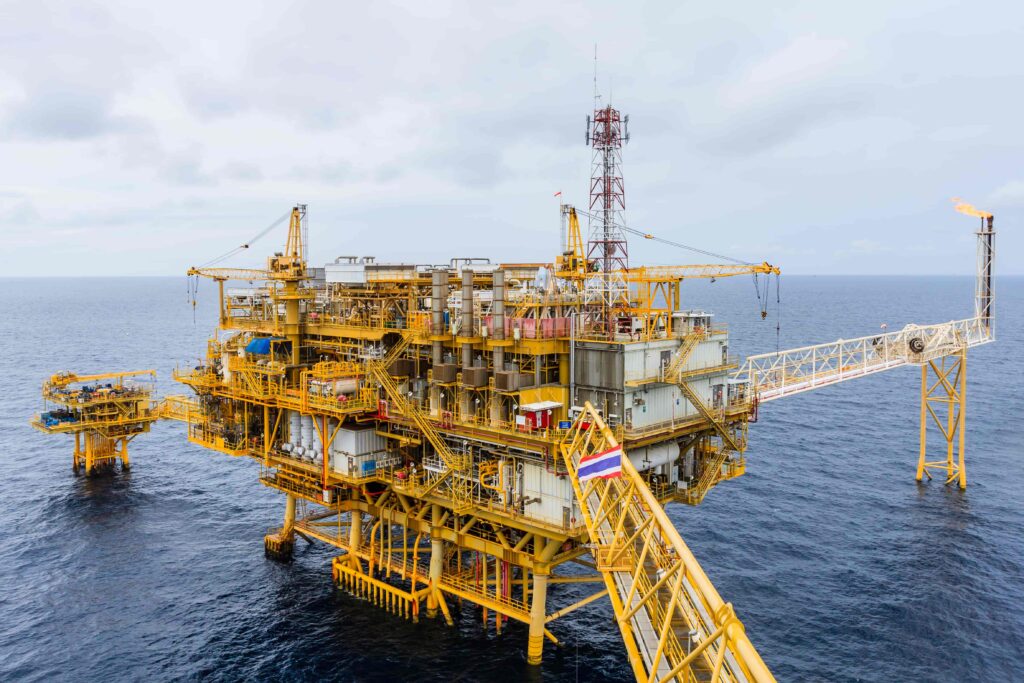
The oil and gas industry in Texas operates in a variety of environments, from land-based drilling sites in the Permian Basin to deepwater platforms in the Gulf of Mexico. The specific environment where an accident occurs is the primary factor in determining which laws apply.
Texas State Law and Land-Based Rigs
For accidents that happen on land or on fixed platforms within Texas territorial waters (generally up to 3 nautical miles offshore), Texas state law usually governs. In these scenarios, the legal remedy often involves:
- Workers' Compensation: If the employer subscribes to workers' comp, this insurance provides coverage for medical expenses and a portion of lost wages, regardless of fault. However, it generally prevents the worker from suing the employer for negligence.
- Third-Party personal injury claims: If a party other than the employer, such as a contractor, equipment manufacturer, or property owner, caused the accident, the injured worker may file a lawsuit under Texas civil law to recover damages for pain, suffering, and full lost income.
Federal Maritime Law and Offshore Vessels
When operations move further offshore or take place on floating vessels, federal maritime law takes precedence. This system differs from state law and offers distinct protections. Offshore versus onshore oil rig accident laws are designed to address the unique perils of working at sea.
Common scenarios covered by maritime law include:
- Injuries on jack-up rigs, semi-submersibles, or drillships.
- Accidents occurring on the Outer Continental Shelf.
- Incidents involving support vessels, tugboats, or barges.
Understanding where the accident occurred is only half the battle. The next critical piece of the puzzle is determining the worker's legal classification.
The Jones Act: Protection for Seamen
The Jones Act is a federal statute that provides significant protections to workers classified as "seamen." Unlike standard workers' compensation, the Jones Act allows injured workers to sue their employers for negligence.
Who Qualifies as a Jones Act Seaman?
To qualify for Jones Act seaman status in the Gulf of Mexico, a worker must generally meet 2 criteria:
- Connection to a vessel: The worker must have a substantial connection to a vessel or a fleet of vessels, in terms of both the duration and nature of the work. This typically means spending at least 30% of their time in service of the vessel.
- Contribution to the mission: The worker's duties must contribute to the vessel's function or to the accomplishment of its mission.
This classification often includes crew members on mobile offshore drilling units (MODUs), drillships, and supply boats. It allows them to pursue Jones Act oil rig injury claims in Texas if their employer's negligence played any role, even a minor one, in causing the accident.
What Benefits Are Available Under the Jones Act?
The recovery available under the Jones Act is often far more comprehensive than state workers' compensation. Injured seamen may seek compensation for:
- Past and future medical expenses.
- Lost wages and loss of future earning capacity.
- Physical pain and suffering.
- Mental anguish.
Additionally, seamen are entitled to "maintenance and cure" regardless of fault. "Maintenance" covers daily living expenses while recovering, and "cure" covers reasonable medical treatment until the worker reaches maximum medical improvement.
What is the Longshore and Harbor Workers' Compensation Act (LHWCA)

Not every offshore worker qualifies as a seaman. Many individuals working on oil rigs and platforms are classified as longshoremen or harbor workers. For these individuals, the Longshore and Harbor Workers' Compensation Act (LHWCA) provides a federal workers' compensation system.
LHWCA Coverage for Oil Rig Workers
The LHWCA covers employees who work on navigable waters or adjoining areas, such as docks and terminals, but who do not meet the criteria for seaman status.
This often applies to:
- Workers on fixed platforms on the Outer Continental Shelf.
- Contractors performing specific tasks like welding or equipment repair on a vessel.
- Employees involved in loading and unloading operations.
By providing comprehensive benefits and allowing third-party claims, the LHWCA ensures that workers injured in these high-risk environments have access to the financial support and legal remedies they need to recover and move forward.
LHWCA vs. State Workers' Comp
LHWCA benefits for oil rig workers are generally more generous than Texas workers' compensation benefits. They provide a higher percentage of the worker's average weekly wage and cover reasonable and necessary medical treatment.
Furthermore, the LHWCA allows injured workers to pursue third-party claims against non-employer parties, as does state law.
The Outer Continental Shelf Lands Act (OCSLA)
As drilling operations move further out into the Gulf, jurisdiction can shift again, complicating an already complex situation for injured workers. The Outer Continental Shelf Lands Act (OCSLA) extends federal law to the subsoil and seabed of the Outer Continental Shelf and to all artificial islands and fixed structures erected there.
When OCSLA Applies
OCSLA typically governs injuries occurring on fixed platforms located more than 3 nautical miles from the Texas coast. Under OCSLA, the laws of the adjacent state (in this case, Texas) are often adopted as surrogate federal law, provided they do not conflict with existing federal regulations.
This means that a worker injured on a fixed platform 50 miles offshore might still be dealing with issues related to Texas oilfield injury and maritime claims. However, unlike a seaman on a floating vessel, a worker on a fixed platform under OCSLA is usually covered by the LHWCA rather than the Jones Act.
Death on the High Seas Act (DOHSA)
Tragically, oil rig explosions sometimes result in fatalities. When a death occurs more than 3 nautical miles from shore, the Death on the High Seas Act (DOHSA) may apply.
DOHSA allows surviving family members to file a lawsuit for "pecuniary" (financial) losses resulting from the death. This includes loss of financial support and funeral expenses.
However, DOHSA historically limits recovery for non-economic damages like loss of companionship or the deceased's pain and suffering; although recent amendments and specific circumstances can sometimes alter these limitations.
Unseaworthiness Claims: A Unique Maritime Remedy
General maritime law offshore injury claims offer another powerful tool for injured seamen: the doctrine of unseaworthiness. This is a strict liability claim against the vessel owner.
Under this doctrine, a vessel owner has an absolute duty to provide a seaworthy vessel. A vessel is considered unseaworthy if it, its equipment, or its crew is not reasonably fit for its intended purpose.
Examples of unseaworthiness include:
- Defective equipment or tools.
- Slippery decks caused by oil or grease.
- Lack of proper safety gear.
- An incompetent or insufficient crew.
If an unseaworthy condition caused the injury, the seaman can recover damages from the vessel owner, even if the owner was not negligent in creating the condition. This provides a distinct advantage over standard negligence claims.
What is the Statute of Limitations For Oil Rig Worker Injury Claims?

Every legal claim for work injury compensation is subject to a deadline known as the statute of limitations. Missing this deadline can result in the permanent loss of the right to seek compensation.
- Jones Act and General Maritime Law: Generally, injured workers have 3 years from the date of the injury to file a lawsuit.
- LHWCA: Claims must typically be filed within 1 year of the injury.
- Texas Personal Injury Law: The statute of limitations for personal injury cases in Texas is generally 2 years. (*Always speak directly to an attorney for the exact deadlines that apply to your potential claims.)
Determining the correct statute of limitations for Jones Act, LHWCA claims, and state claims is vital. Terry Bryant Accident & Injury Law has over 40 years of experience helping Houston offshore oil rig injury victims. Call 713-973-8888 now for a free case review. Our skilled legal team will identify the facts to identify the applicable deadline and ensure all filings are submitted on time.
Frequently Asked Questions About Maritime and Oil Rig Laws
What is the difference between a fixed platform and a floating vessel?
A fixed platform is permanently attached to the seabed and is generally treated as an artificial island, often falling under OCSLA or state law. A floating vessel, like a jack-up rig or semi-submersible, is capable of moving on water and typically triggers Jones Act protections for its crew.
Can I sue my employer if I collect workers' compensation?
Under Texas state law, you generally cannot sue your employer if you collect workers' comp benefits. However, under the Jones Act, seamen have the specific right to sue their employers for negligence. This is a key difference between seaman and longshore worker classification.
Does maritime law apply if the accident happened at the dock?
If the injury occurred on a vessel docked in navigable waters and the worker qualifies as a seaman, maritime law likely applies. If the injury occurred on the dock itself, the LHWCA or state workers' compensation law might apply.
What is "Maintenance and Cure"?
This is a traditional maritime remedy. "Maintenance" provides a daily allowance for living expenses (food and shelter) while recovering from an injury. "Cure" requires the employer to pay for medical treatment until the worker reaches maximum medical improvement.
You Don't Have to Navigate Jurisdiction Alone After an Oil Rig Accident in Texas
The intersection of federal maritime law and Texas state law is one of the most complex areas of legal practice. For an injured worker or a grieving family, trying to decipher which laws apply while recovering from a traumatic event is overwhelming.
You deserve a legal team that understands the nuances of navigable waters jurisdiction, offshore claims, fixed platforms, and vessel classification. Our Terry Bryant Accident & Injury Law attorneys can handle the investigation, stand up to the insurance companies, and champion your right to fair compensation.
Are you ready to clarify your legal options and pursue the justice you deserve after an oil rig accident? Call Terry Bryant Accident & Injury Law now for a free and confidential consultation with our experienced work injury attorneys in Texas.
Legal Resources for Oilfield Accident Claims in Texas
Access to clear, attorney-curated guidance can provide the clarity and confidence needed to address the challenges of an accident injury claim. These resources offer practical insights into the legal process and what to expect when pursuing compensation in an oil rig accident injury lawsuit:
- The 7 Most Common Workplace Safety Violations Learn about frequent safety oversights that put workers at risk and how regulatory violations can impact an injury claim.
- Lack of Sleep Can Lead to Workplace Injuries Understand the dangers of worker fatigue in high-risk industries like oil and gas, and how pushing limits can lead to catastrophic errors.
- Workers Beware: Summer Temperatures Can Cause Injuries Discover the risks of heat stress and environmental hazards that contribute to accidents on drilling sites during Texas summers.
- Dangers Facing Temporary Workers Explore the unique vulnerabilities of contract and temporary workers in the oilfield and how their legal rights may differ from those of permanent employees.
- Causes of Oil Rig Explosions Learn the common causes of oil rig explosions and which parties are liable for resulting injuries.
For personalized legal guidance regarding your Texas oil rig accident or maritime injury claim, call Terry Bryant Accident & Injury Law now at 713-973-8888 or toll-free 1-800-444-5000. Let our Houston work injury law firm review your case and help you take the next steps toward recovery.