Texas leads the nation in both petrochemical production and truck crashes, creating a dangerous intersection of industrial hazards and highway risks. Over 20,000 truck accidents occur annually across the state, and thousands of hazmat vehicles traverse major corridors like I-10 and I-45 daily. When toxic chemicals spill during a hazardous chemical truck accident, highways become toxic emergency zones within seconds.
These incidents create immediate dangers extending far beyond the crash site, threatening drivers, residents, and first responders with substances that burn skin, damage lungs, and contaminate communities.
While federal laws and safety protocols exist to prevent these disasters, violations happen daily on Texas highways. When they do, the consequences can ripple through victims' lives for years, even decades, after the initial exposure.
If you were harmed in a hazardous chemical truck crash, a skilled truck accident lawyer can help protect your rights and pursue full compensation—contact us today for a free consultation.
Request Your Free Consultation
Key Takeaways for When Hazardous Chemicals Spill During a Truck Accident
- Chemical truck spills cause severe burns, respiratory damage, and neurological injuries requiring specialized treatment.
- Multiple parties, including trucking companies, chemical manufacturers, and loading crews, may share liability.
- Federal regulations require specific safety protocols, and violations strengthen injury claims.
- Chemical exposure injuries often develop over time, making ongoing medical care and documentation critical.
- Emergency zones around spills can extend for miles, affecting more victims than typical accidents.
- Texas leads the nation in truck crashes, with major chemical corridors increasing hazmat risks.
The Hidden Dangers of Chemical Cargo
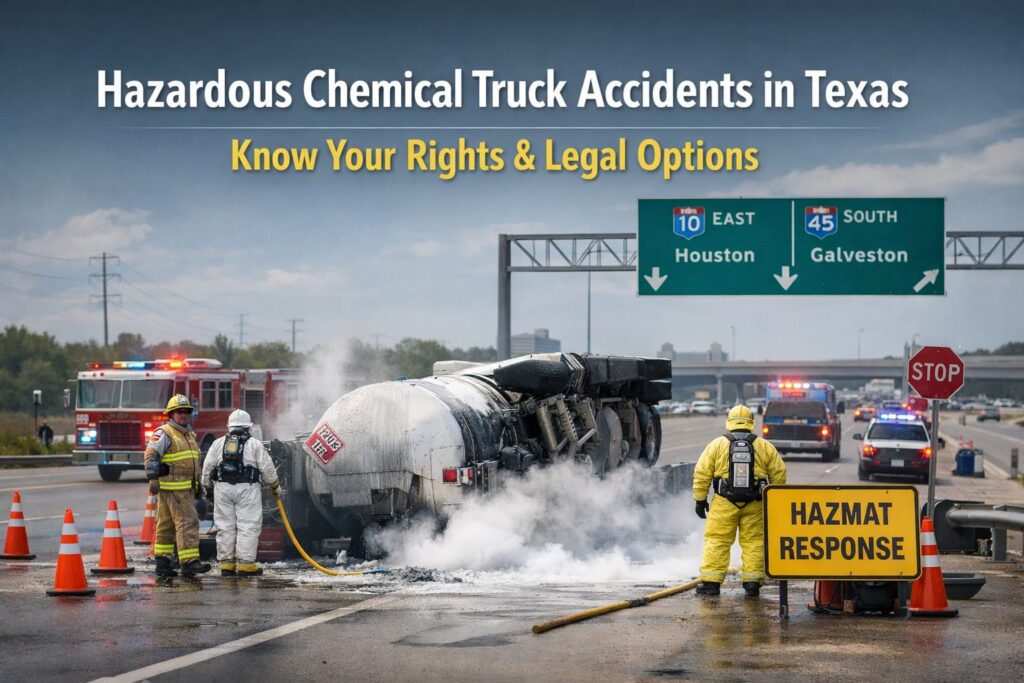
Commercial trucks transport over 3 billion tons of hazardous materials across American highways annually. Flammable liquids account for nearly half of all chemical releases during crashes. These vehicles carry industrial acids, compressed gases, agricultural chemicals, and petroleum products, each presenting unique accident risks.
The danger multiplies when truck accidents involve chemical spills because:
- Invisible vapors spread rapidly, poisoning air before victims realize the threat
- Chemical reactions between substances create secondary hazards
- Contaminated surfaces remain dangerous after visible cleanup
- Delayed symptoms mask exposure severity
A single overturned ammonia tanker forces evacuations across miles. Corrosive acids eat through equipment and burn tissue hours after contact. Even common chemicals like chlorine become deadly in large releases, creating toxic clouds that may drift into neighborhoods.
Common Injuries from Crash-Related Chemical Exposures
Chemical exposure during truck accidents causes injuries more complex than typical crash trauma. Victims face immediate damage plus long-term consequences appearing weeks or months later.
Immediate Chemical Injuries
Direct chemical contact produces devastating injuries within seconds:
- Severe burns penetrating multiple skin layers
- Respiratory distress from toxic fume inhalation
- Eye injuries ranging from irritation to permanent vision loss
- Acute poisoning affecting internal organs
Long-Term Health Effects
Chemical exposure creates lasting medical problems that persist for years after accidents:
- Chronic respiratory conditions, including asthma and reduced lung capacity
- Neurological damage causing memory problems and cognitive decline
- Increased cancer risks from carcinogen exposure
- Organ damage, particularly affecting the liver and kidneys
- Reproductive harm, including fertility issues
Medical specialists emphasize the importance of immediate decontamination and ongoing monitoring. Serious health effects can emerge gradually, making symptom documentation necessary for linking future conditions to exposure.
Who Bears Responsibility for Truck Accident Chemical Spills?
Hazardous material truck accidents involve multiple potentially liable parties, each carrying specific responsibilities under federal and state regulations. Texas courts recognize that chemical spill liability extends beyond typical accident fault considerations.
- Trucking companies face strict liability under Federal Motor Carrier Safety Administration (FMCSA) regulations. They must maintain specialized insurance, train drivers, and ensure proper maintenance. Safety protocol deviations establish negligence.
- Chemical manufacturers and shippers are responsible for packaging, labeling, and loading. Incorrectly secured containers or inadequate warnings create liability.
- Loading companies must follow precise protocols. Improper weight distribution or mixing incompatible chemicals establishes negligence.
- Maintenance providers face liability when mechanical failures contribute to spills. Defective valves or faulty emergency systems often play critical roles.
Government entities occasionally share liability for poor road conditions or delayed emergency response that contribute to or worsen truck accidents resulting in hazardous chemical spills. Texas law requires identifying all responsible parties carrying applicable insurance coverage.
Texas Regulations and Federal Requirements for Hazmat Transport
Hazardous materials transportation faces extensive federal and state regulation. The Federal Motor Carrier Safety Administration enforces the Hazardous Materials Regulations (49 CFR Parts 100-185), establishing baseline standards requiring placarding, driver certifications, and route restrictions.
Texas implements additional requirements:
- Special routing under Texas Transportation Code Chapter 644 directs hazmat vehicles away from populated areas
- Enhanced penalties through Texas Water Code Section 7.152 for environmental violations during transport
- Mandatory spill reporting to Texas Commission on Environmental Quality under 30 TAC Chapter 327
- Insurance requirements under 49 CFR 387.9 mandate $5 million dollar minimum coverage for hazmat carriers
Evidence of regulatory violations causing or contributing to the truck accident strengthens personal injury claims as evidence of negligence. Drivers must possess hazmat endorsements demonstrating emergency procedure knowledge. Missing endorsements, expired certifications, or hours-of-service violations increase trucking company liability.
Request Your Free Consultation
Building Your Chemical Exposure Claim
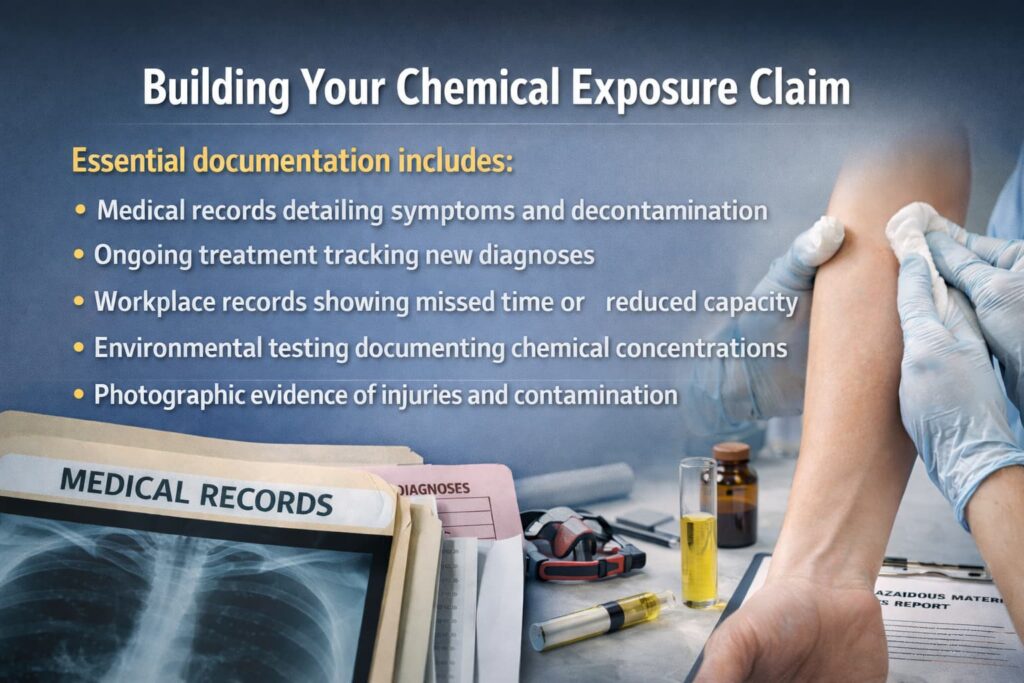
Documenting chemical injuries requires immediate action. Unlike typical injuries visible through X-rays, chemical damage develops internally over time.
Essential documentation includes:
- Medical records detailing symptoms and decontamination
- Ongoing treatment tracking new diagnoses
- Workplace records showing missed time or reduced capacity
- Environmental testing documenting chemical concentrations
- Photographic evidence of injuries and contamination
Expert witnesses prove crucial. Toxicologists explain tissue damage, industrial hygienists reconstruct exposure levels, and medical specialists connect health problems to chemical contact. Economic experts calculate lifetime chronic condition costs.
Compensation for Hazmat Accident Victims
Chemical spill victims often face expenses exceeding typical accidents. Specialized treatment, health monitoring, and decontamination create immediate burdens while long-term effects generate continuing losses.
Texas recognizes unique damages, including:
- Specialized medical care for burns and toxicology treatment
- Future medical monitoring for cancer screening
- Lost wages or income
- Lost earning capacity from chemical injuries
- Property damage, including vehicle replacement
- Pain and suffering for emotional trauma and chronic conditions
Punitive damages apply when investigations reveal gross negligence, like transporting chemicals in defective equipment. Settlement negotiations require experienced representation that understands the long-term implications.
Frequently Asked Questions About Hazardous Chemical Truck Accident
What immediate steps should I take after chemical exposure?
Seek emergency medical attention immediately, even without symptoms. Request all decontamination procedures and chemical identification sheets. Document your location and any symptoms experienced.
How long do I have to file a chemical exposure lawsuit in Texas?
Texas generally allows 2 years from the accident date. Chemical exposure cases may qualify for discovery rule exceptions when injuries appear later. Consult an attorney as soon as possible to preserve your rights and protect your claim. (*Always speak directly to an attorney for the exact deadlines that apply to your potential claims.)
What if I was exposed as a first responder or nearby resident?
Chemical spills affect anyone in contamination zones. First responders, residents, and employees have valid claims based on proximity and exposure duration.
How much does a hazardous chemical truck accident lawyer cost?
Most attorneys work on a contingency fee with no upfront costs. This means that payment comes only after you have secured your compensation. Initial consultations are typically free.
Can trucking companies avoid liability by blaming manufacturers?
No. Federal regulations make carriers responsible for safe transport regardless of who loaded the chemicals. Multiple parties may share responsibility.
Taking Action After Chemical Exposure
Chemical truck accidents leave victims facing health crises and uncertain futures. The complex regulations and evolving medical conditions make experienced legal representation essential.
Terry Bryant Accident & Injury Law brings over 40 years of fighting for injured Texans. Board Certified in Personal Injury Trial Law, Terry Bryant and his law firm have secured over $1 billion dollars in recoveries since 1985. Our Houston team handles hazmat accidents throughout Texas with relationships among leading toxicology and medical experts.
If you suffered chemical exposure in a truck accident, call (713) 973-8888 or toll-free 1 (800) 444-5000, you can also contact us online for a free and confidential case evaluation. We'll review your case, explore your legal options, and fight for the compensation and justice you deserve.