When a serious truck accident happens, the immediate thought might be driver error. But some of the most devastating crashes stem from problems buried beneath the surface — issues with the truck itself.
Mechanical issues in commercial trucks can quickly turn routine hauls into catastrophic collisions. When a truck accident mechanical failure leads to devastating injuries or fatalities, the question of who is legally responsible becomes urgent, especially for all of those affected.
In Texas and across the U.S., investigators look beyond the crash itself to uncover whether someone ignored their safety obligations.
If a mechanical failure caused your truck crash, an experienced truck accident lawyer can investigate liability and fight for the compensation you deserve—contact us today for a free consultation.
Request Your Free Consultation
Key Takeaways for Truck Accident Mechanical Failures
- Brake failures, tire blowouts, and steering issues are top contributors to mechanical failure truck accidents
- Mechanical issues often point to liability beyond the driver—fleet owners, mechanics, and manufacturers may also be at fault
- Federal law requires regular inspections, repairs, and documentation of commercial truck maintenance.
- Legal investigations rely on inspection records, black box data, and service logs to uncover the root cause
- Victims of mechanical failure truck crashes may pursue compensation for extensive damages
What Is Considered a Truck Mechanical Failure?
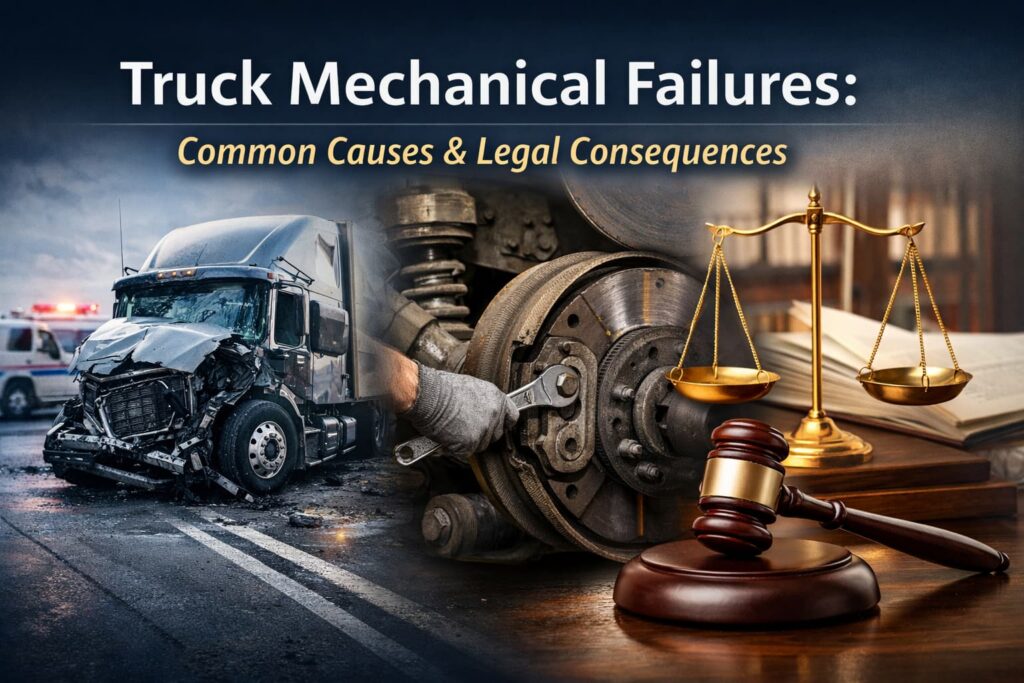
A truck mechanical failure happens when a critical part of a commercial vehicle stops functioning properly. This failure could result from poor maintenance, manufacturing defects, or failure to follow federal and state safety requirements. When a mechanical component fails on a fully loaded 80,000-pound vehicle, the consequences can be deadly.
Common truck defects involve the systems responsible for stopping, steering, or stabilizing the truck. Even minor oversights in routine inspections can lead to equipment failure in trucking.
Common Mechanical Failures That Lead to Truck Accidents
Most commercial truck breakdowns don’t happen out of nowhere. They're often the result of neglected repairs or skipped inspections. Some mechanical issues are more likely than others to trigger serious crashes.
Brake system failures
Brake failures are a leading cause of mechanical failure in truck accidents. Worn pads, damaged drums, or malfunctioning brake lines can reduce stopping power, often leading to rear-end collisions.
Tire blowouts and tread separation
Improper inflation or worn treads can result in tire blowouts, especially during high-speed travel or in hot Texas weather. Sudden tire failure can cause rollover accidents or jackknifing.
Steering and suspension system issues
Faulty steering mechanisms and weak suspension can make trucks harder to control. When a driver can’t respond properly to road conditions, the risk of a crash rises quickly.
Lighting and signal malfunctions
Dim or broken lights compromise a truck’s visibility. In low-visibility conditions, missing brake lights or turn signals can lead to crashes, especially on Texas highways at night.
These mechanical issues put other motorists and the truck driver at serious risk of injury. Many victims suffer traumatic injuries or fatal consequences from problems that could have been prevented with routine care.
Federal Motor Carrier Safety Administration (FMCSA) regulations under 49 CFR 396 require all commercial motor vehicles to be systematically inspected, repaired, and maintained. When a carrier fails to follow these rules, they may be legally responsible for any resulting harm.
Who Is Liable When Mechanical Failure Causes a Truck Crash?
In many truck accident mechanical failure cases, fault doesn't rest with just one person. Several parties may share responsibility depending on who neglected their legal duty of care.
Potentially liable parties include:
- The trucking company for skipping routine inspections or ignoring repairs
- The truck driver for failing to conduct daily inspections or driving with known defects
- Third-party maintenance providers for doing substandard repairs or using unsafe parts
- Truck or parts manufacturers, if a defect in design or production led to the failure
Every commercial vehicle is subject to FMCSA rules, including inspection requirements before and after trips. If a company knowingly lets unsafe trucks stay in service, it may be held accountable for any injuries that result.
How Investigators Prove Fault in Mechanical Failure Accidents
After a mechanical failure truck accident, investigators move quickly to collect and preserve evidence. This evidence helps determine what failed, why it happened, and who allowed the danger to exist.
Evidence commonly used includes:
- Maintenance logs and service records showing the truck’s repair history and any ignored warnings
- Driver inspection reports identifying previously reported defects
- Black box (EDR) data tracking speed, brake use, and other driving metrics before the crash
- Accident registers maintained by carriers, offering official summaries of prior incidents
- DOT inspection reports documenting safety violations or citations during roadside inspections
If inspections reveal the truck failed to meet FMCSA mechanical safety standards, the evidence may support claims of negligent maintenance or failure to inspect commercial vehicles.
Investigators must act fast. Some companies attempt to repair vehicles or conceal evidence immediately after a crash, which can result in lost or altered evidence.
Request Your Free Consultation
Injuries Common in Mechanical Failure Truck Accidents
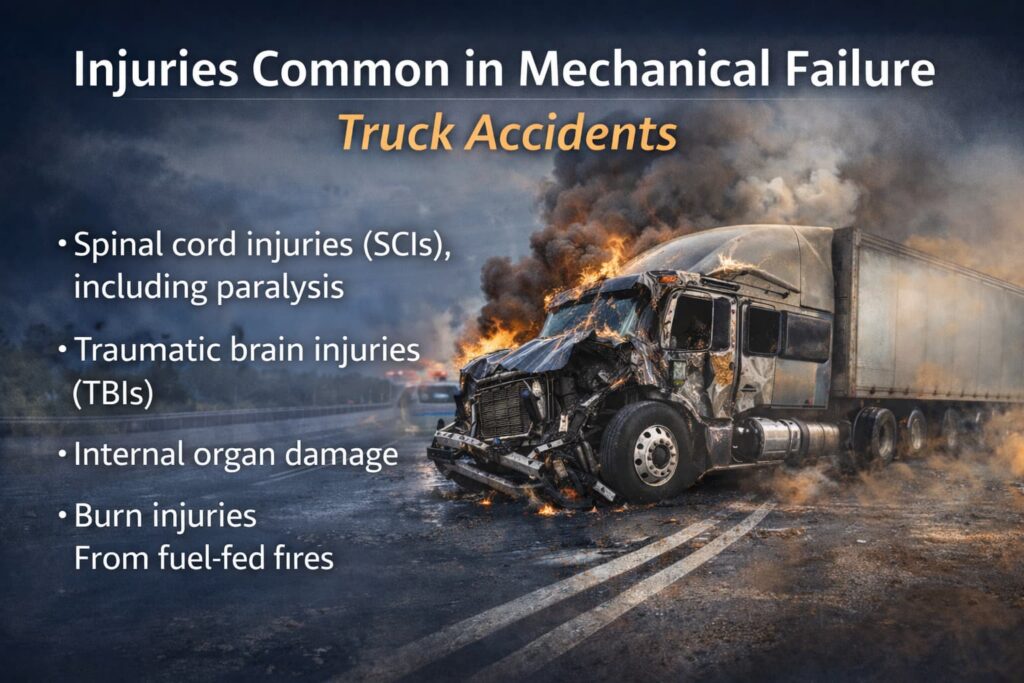
The size and weight of commercial trucks make even minor mechanical issues incredibly dangerous. When systems like brakes or steering fail, the impact forces involved often result in life-altering injuries.
Injury types often include:
- Spinal cord injuries (SCIs), including paralysis
- Traumatic brain injuries (TBIs)
- Internal organ damage
- Burn injuries from fuel-fed fires
- Broken bones and orthopedic trauma
These injuries often require long-term care, multiple surgeries, and specialized rehabilitation. Victims may also be unable to return to work, creating financial stress during an already difficult recovery.
Damages You May Claim After a Truck Mechanical Failure Crash
Victims of truck crashes linked to mechanical issues may pursue compensation through a personal injury or wrongful death claim.
Common damages sought include:
- Medical expenses, both current and projected
- Lost wages and future earning capacity
- Pain and suffering
- Emotional distress or trauma
- Property damage
- Wrongful death-related costs for surviving family members
Damages vary widely from case to case, and their worth depends on the specifics of the accident, the injury severity, and available insurance coverage.
Texas Laws Governing Truck Maintenance and Safety
In addition to federal regulations, Texas law requires that commercial motor vehicles meet certain safety standards. The Texas Transportation Code mandates that parts and accessories affecting safe operation, such as brakes, tires, lights, and steering systems, be in good working order at all times.
Under 49 CFR Part 396, every motor carrier must inspect, repair, and maintain vehicles under its control. Inspections must occur at least once every 12 months, with more frequent checks recommended. Noncompliance can serve as strong evidence in a civil injury claim.
Truck maintenance laws in Texas align with FMCSA rules but give state law enforcement added authority to issue citations and remove unsafe vehicles from the road.
FAQs for the Common Causes and Legal Consequences of Truck Mechanical Failures
How can I tell if mechanical failure caused a truck crash?
Signs include skid marks showing failed brakes, witness accounts of erratic movement, and inspection records showing prior mechanical issues. An attorney can help investigate further.
What happens if the truck driver ignored a known mechanical issue?
If a driver knowingly operated a vehicle with a mechanical defect, they may share legal responsibility. The employer may also be liable for pressuring the driver to complete the route.
Can I sue the truck manufacturer if a defect caused the crash?
Yes, if a design or manufacturing flaw contributed to the mechanical failure, you may have a claim against the manufacturer under product liability laws.
How long do I have to file a claim in Texas?
In most cases, the statute of limitations deadline is 2 years from the date of the accident, under Texas Civil Practice and Remedies Code § 16.003. Missing this deadline may limit your ability to seek compensation. (*Always speak directly to an attorney for the exact deadlines that apply to your potential claims.)
if the trucking company started repairs before an investigation?
Tampering with evidence can complicate the legal process. If you suspect this has happened, speak with an attorney immediately to preserve remaining evidence and evaluate your legal options.
Next Steps After a Mechanical Failure Truck Accident
When you or a loved one is injured in a crash caused by a truck’s mechanical failure, the legal path forward may seem tedious or even daunting. However, a law firm with the resources, experience, and skill to hold liable parties accountable and fight for the compensation you need can lift the stress of a legal dispute from you.
Terry Bryant Accident & Injury Law has served Texans for over 40 years, recovering more than $1 billion dollars for injured clients. Led by a former judge who is Board Certified in personal injury trial law by the Texas Board of Legal Specialization, our firm brings unparalleled experience to serious injury and wrongful death cases.
We’re based in Houston but handle truck accident claims across Texas. We know the FMCSA rules, the Texas Transportation Code, and what it takes to prove fault in mechanical failure truck crashes.
Call us now at (713) 973-8888 or toll-free 1 (800) 444-5000 or contact us online for a free and confidential truck accident case review.