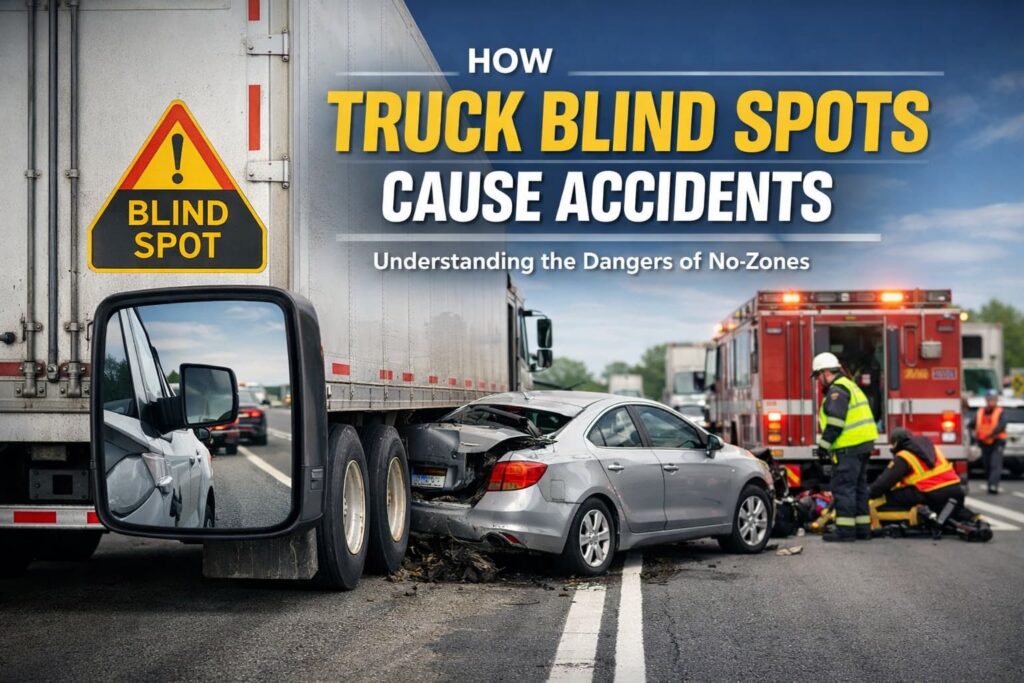
Large commercial vehicles create dangerous visibility gaps that put smaller vehicles at serious risk on U.S. highways and streets. Truck blind spot accidents occur when drivers operate in these "no-zones" around 18-wheelers, semi-trucks, and other commercial vehicles where truck drivers cannot see them.
These crashes often result in catastrophic injuries or fatalities due to the massive size and weight difference between commercial trucks and passenger cars.
The Federal Motor Carrier Safety Administration (FMCSA) identifies 4 primary blind spots around commercial trucks: directly in front, directly behind, and along both sides. When passenger vehicles travel in these areas, truck drivers may change lanes, merge, or turn without seeing them, leading to devastating collisions.
If you were injured in a blind spot crash with a commercial truck, a trusted truck accident lawyer can help you pursue justice—schedule a free consultation today.
Request Your Free Consultation
Key Takeaways for How Truck Blind Spots Cause Accidents
- Truck blind spots, also called "no-zones," exist in 4 main areas around commercial vehicles where drivers cannot see other motorists.
- Blind spot-related crashes account for approximately one-third of all accidents between large trucks and passenger vehicles.
- Truck blind spots are far larger than most drivers realize, extending 20 feet in front, 200+ feet behind, and multiple lanes on both sides of commercial vehicles.
- Texas follows modified comparative negligence rules, meaning injured parties can recover damages even if partially at fault, as long as they are less than 51% responsible.
- An experienced truck accident lawyer can help truck accident victims pursue maximum compensation for their injuries.
What Are the 4 Critical Blind Spots in Commercial Trucks?
Commercial trucks create four distinct no-zones where passenger vehicle drivers face the greatest danger. Each blind spot presents unique risks that require different defensive driving strategies.
According to the Federal Motor Carrier Safety Administration (FMCSA), blind spot-related crashes account for approximately one-third of all accidents between large trucks and passenger vehicles.
Front blind spot dangers
The area directly in front of a truck extends approximately 20 feet forward from the cab. Truck drivers sit much higher than car drivers, creating a steep downward angle that blocks their view of shorter vehicles. Passenger cars that cut too closely in front of trucks or stop suddenly may disappear completely from the driver's sight line.
Side blind spot hazards
Semi-truck blind spots along the sides pose the most significant threat to other motorists. The right side blind spot extends from the cab to the end of the trailer and spans multiple lanes of traffic. Left side blind spots are smaller but still dangerous, particularly during lane changes and merging situations.
Rear visibility limitations
Large trucks create blind spots extending 200 feet or more behind the trailer. Truck drivers rely entirely on side mirrors to see vehicles approaching from behind, but these mirrors have significant limitations. Cars following too closely may remain invisible to truck drivers for extended periods.
Common Blind Spot Accident Scenarios
Texas highways see several recurring patterns in truck blind spot accidents that result in serious injuries and property damage.
Sideswipe collisions
These crashes frequently occur when trucks change lanes while passenger vehicles travel in the side blind spots. The truck driver may check their mirrors, but cannot see the car positioned alongside the trailer. When the truck moves over, it strikes the passenger vehicle, often forcing it off the roadway or into other traffic lanes.
Rear-end crashes
These accidents develop when cars follow trucks too closely in the rear blind spot. If traffic ahead slows suddenly, the truck driver may brake hard without seeing the vehicle behind. The car has little time to react and crashes into the back of the trailer.
Wide-turn accidents
These collisions happen at intersections when trucks make right turns while cars attempt to pass on the right side. The passenger vehicle enters the truck's blind spot just as the truck begins its turn, resulting in the car being crushed against the trailer or pushed into opposing traffic.
Serious Injuries From Truck Blind Spot Crashes
The massive weight disparity between commercial trucks and passenger vehicles makes blind spot accidents particularly devastating for car occupants.
Truck blind spot crashes commonly result in severe injuries due to the size difference between commercial vehicles and passenger cars:
- Traumatic brain injuries (TBIs) from violent impacts and rollover crashes
- Spinal cord damage leading to partial or complete paralysis
- Broken bones and fractures throughout the body
- Internal organ damage, including liver and kidney injuries
- Crush injuries when vehicles become trapped under trailers
- Burn injuries from fuel fires and vehicle explosions
- Severe cuts and lacerations requiring extensive medical treatment
These injuries often require months or years of medical treatment and rehabilitation, creating financial burdens that extend far beyond the initial crash.
Request Your Free Consultation
Texas Laws Governing Truck Blind Spot Accidents
Texas applies specific legal standards when determining fault in commercial vehicle crashes involving blind spots.
Under Texas Transportation Code Chapter 545, all drivers have a duty to maintain proper lookout and avoid collisions when reasonably possible. Truck drivers must exercise greater care due to their vehicles' size and limited visibility, but this does not automatically make them liable for every blind spot accident.
The Texas Civil Practice and Remedies Code Section 16.003 establishes a 2-year statute of limitations for filing most truck accident injury claims. This deadline begins on the date of the crash, making prompt legal action crucial for preserving your rights. (*Always speak directly to an attorney for the exact deadlines that apply to your potential claims.)
Texas follows modified comparative negligence rules, allowing injured parties to recover damages even when partially at fault. However, if the injured person bears more than 50% responsibility for the accident, they cannot collect compensation from other parties. This rule underscores the importance of working with a skilled truck accident lawyer in Texas, who can defend you and your claim from efforts to shift undue blame onto you.
Compensation Available for Blind Spot Accident Victims
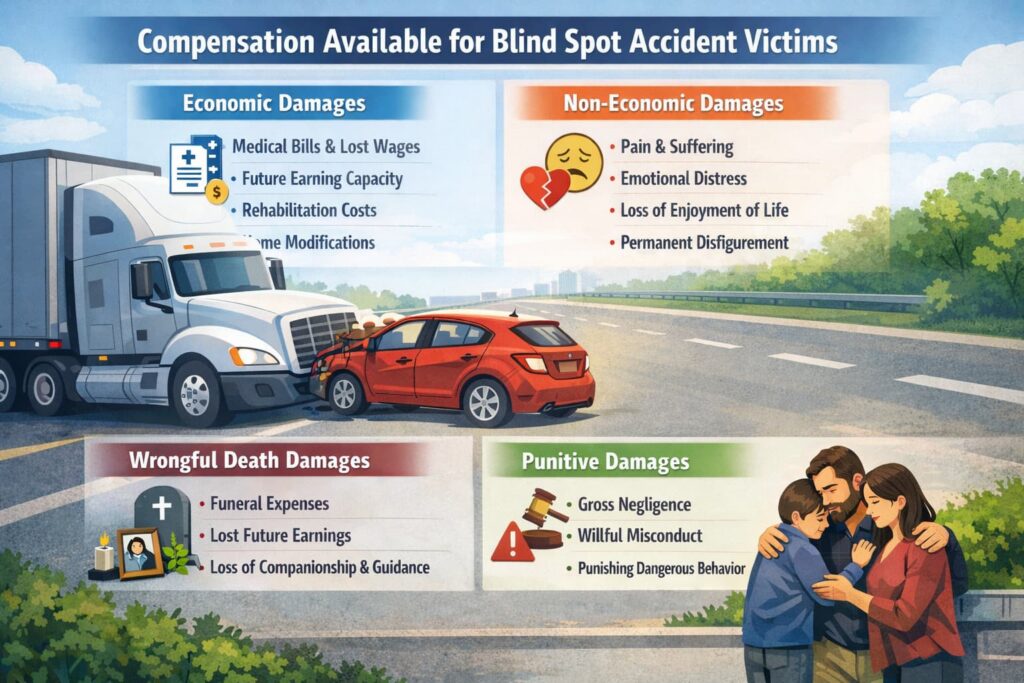
Families affected by truck blind spot crashes face overwhelming financial and emotional challenges that extend far beyond the initial accident.
Economic damages
These include medical bills, lost wages, future earning capacity, rehabilitation costs, and necessary home modifications for disabled victims. These concrete financial losses can reach millions of dollars in severe injury cases.
Non-economic damages
These compensate for pain and suffering, emotional distress, loss of enjoyment of life, and permanent disfigurement. Texas does not cap non-economic damages in truck accident cases, allowing juries to award compensation based on the full impact of injuries.
Wrongful death damages
When blind spot accidents result in fatalities, surviving family members may recover funeral expenses, lost future earnings, and compensation for the immeasurable loss of companionship, guidance, and love their family member provided.
Punitive damages
These may apply when truck drivers or trucking companies demonstrate gross negligence or willful misconduct. These additional awards punish dangerous behavior and deter similar conduct by other commercial operators.
FAQs for Truck Blind Spot Accidents
Can I file a claim if I was partially in the truck’s blind spot?
Yes, Texas comparative negligence laws allow you to pursue compensation even if you contributed to the accident, as long as you were less than 51% at fault. Your recovery amount will be reduced by your percentage of responsibility.
How long does it take to resolve a truck blind spot accident case?
Complex truck accident cases typically take 12-24 months or longer to resolve due to extensive investigations, multiple parties, and significant damages involved. Federal regulations and commercial insurance policies add layers of complexity to these claims.
Who can be held responsible besides the truck driver?
Trucking companies, cargo loading companies, truck maintenance providers, and vehicle manufacturers may all bear liability depending on the specific circumstances of your accident. Multiple parties often share responsibility in commercial vehicle crashes.
What makes truck blind spot cases different from regular car accidents?
Commercial trucks fall under federal regulations enforced by the FMCSA, creating additional legal standards and evidence requirements. These cases involve technical investigations, accident reconstruction experts, and complex insurance coverage that requires experienced legal handling.
Getting Help After a Truck Blind Spot Crash
Truck blind spot accidents devastate lives and families across Texas every year. When commercial vehicle operators fail to account for their visibility limitations, innocent motorists pay the price through catastrophic injuries, overwhelming medical bills, and permanent disabilities.
Terry Bryant Accident & Injury Law has fought for truck accident victims throughout Texas for over 40 years, securing over $1 billion dollars in gross recoveries since 1985. Our lawyers understand complex federal regulations and know how to build compelling cases against trucking companies and their insurers.
Don't let insurance companies minimize your truck blind spot accident claim. Contact us online or call (713) 973-8888 or toll-free 1 (800) 444-5000 for a free and confidential case review.