Flatbed trucks haul everything from steel beams to heavy machinery across Texas highways every day. These massive vehicles present unique dangers that set them apart from standard semi-trucks. Their open design and challenging cargo requirements create specific hazards that lead to devastating crashes.
Knowing how flatbed truck accidents happen can give you useful context about your flatbed truck accident case, providing information that helps you make informed decisions about seeking legal help and pursuing compensation against the negligent truck operator.
If you were injured in a flatbed truck crash, an experienced truck accident attorney can explain your legal options and pursue compensation—contact us today for a free consultation.
Request Your Free Consultation
Key Takeaways
- Flatbed trucks lack walls or roofs, making proper cargo securement vital. Improperly tied loads cause thousands of crashes annually when materials break free at highway speeds.
- Driver fatigue affects flatbed operators more severely because loading and securing cargo adds hours to their workday beyond federal driving limits.
- Shifting loads create sudden weight distribution changes that make flatbed trucks jackknife or roll over, especially during emergency braking or sharp turns.
- Weather impacts flatbed trucks differently. Rain loosens straps, wind catches flat surfaces, and ice makes unsecured loads deadly projectiles.
- Multiple parties share liability in flatbed crashes: drivers, trucking companies, loading crews, and cargo owners all play roles in preventing these accidents
- Texas law requires specific safety measures for flatbed cargo, and violations of these regulations strengthen injury claims for crash victims
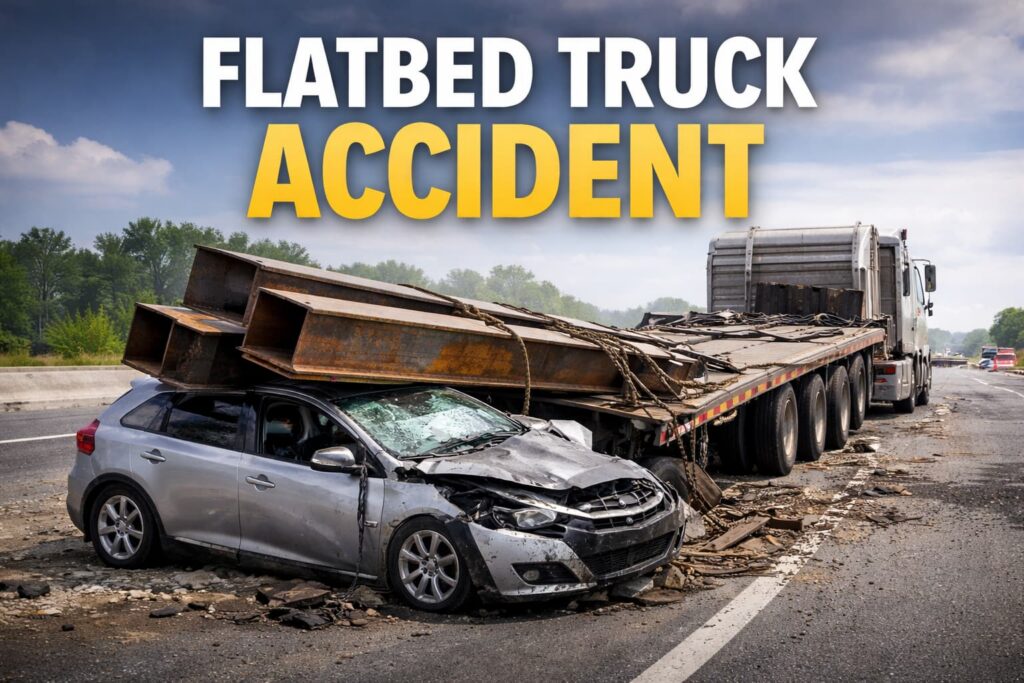
Common Causes of Flatbed Truck Crashes
Flatbed truck accidents stem from factors unique to their open design and specialized cargo. Unlike enclosed trailers that contain their loads, flatbeds rely entirely on proper securement techniques. When these fail, catastrophic accidents follow.
The danger is real: according to FMCSA data, flatbed trucks were involved in 9,479 accidents in recent years. More alarming, 4,717 of these crashes resulted in injuries, representing over 10% of all injury-causing truck crashes. Most devastating of all, 528 fatal flatbed truck accidents occurred, accounting for 11% of all deadly U.S. truck crashes. These statistics underscore why flatbed trucks pose exceptional risks on our highways, especially in Texas, which leads the nation in commercial truck accidents.
Unsecured loads top the list of flatbed crash causes. Federal Motor Carrier Safety Administration (FMCSA) regulations mandate specific tie-down requirements based on cargo weight and type. Yet drivers and loading crews frequently cut corners to save time. A single loose strap or inadequate chain can release tons of steel, lumber, or machinery onto busy highways.
Driver negligence takes many forms with flatbed operations. These drivers face pressure to deliver oversized loads on tight schedules. They speed through construction zones, ignore weight restrictions, and skip mandatory rest breaks. Fatigue becomes especially dangerous when drivers spend hours securing cargo before starting long hauls.
The nature of flatbed cargo creates additional risks:
- Oversized loads extend beyond standard lane widths, striking vehicles in adjacent lanes during turns or lane changes.
- Top-heavy cargo raises the truck's center of gravity, making rollovers more likely on curves or during sudden maneuvers.
- Irregular shapes catch wind differently, creating unpredictable handling, especially during storms.
- Multiple pieces require individual securement—one missed tie-down point endangers everyone nearby.
Weather conditions affect flatbeds more severely than enclosed trucks. Rain loosens straps and makes metal cargo slippery. High winds catch flat surfaces like sheet metal or plywood, turning stable loads into sails. Texas thunderstorms combine all these hazards, making flatbed trucks particularly dangerous during severe weather.
Mechanical Failures and Loading Violations
Flatbed trucks endure extreme stress from constantly changing loads. Each cargo type strains the vehicle differently, accelerating wear on critical components. Trucking companies often defer maintenance to keep trucks rolling and profits flowing.
Brake failures plague overloaded flatbeds. Loaded flatbed trucks frequently exceed weight limits, especially when hauling construction materials or industrial equipment. Overheated brakes fade during long descents, leaving drivers unable to stop. When a tire explodes at highway speeds, drivers lose control instantly.
Proper loading requires expertise, time, and attention to detail—resources often sacrificed for profit. Loading crews face pressure to move cargo quickly, leading to dangerous shortcuts that violate FMCSA cargo securement rules.
Uneven weight distribution turns flatbeds into accidents waiting to happen. A front-heavy load can lift the rear wheels off the pavement during braking. Side-heavy loads cause rollovers on curves that properly loaded trucks navigate safely.
Types of Injuries Associated with Flatbed Truck Accidents
Flatbed truck crashes cause particularly severe injuries due to the exposed nature of their cargo. Victims face dangers beyond those in standard truck accidents, with injuries often proving catastrophic or fatal.
Crushing injuries occur when heavy cargo falls onto vehicles. Steel beams, concrete barriers, and industrial machinery compress passenger compartments, causing severe trauma to any body part trapped beneath.
Penetrating trauma results from pointed cargo breaking through windshields and vehicle bodies. Rebar, pipes, and lumber become deadly projectiles at highway speeds.
Common injuries from flatbed crashes include:
- Traumatic brain injuries from impact with falling cargo or vehicle structures
- Spinal cord damage leading to paralysis or permanent mobility issues
- Internal organ damage from blunt force trauma during collisions
- Severe lacerations from sharp cargo materials or shattered glass
- Amputations when limbs are crushed by heavy machinery or steel
- Multiple fractures throughout the body from high-impact crashes
- Severe burns from fuel fires or friction during underride accidents
Underride injuries deserve special mention. When smaller vehicles slide beneath flatbed trailers, occupants suffer catastrophic head and upper body trauma. These accidents frequently prove fatal.
The psychological impact extends beyond physical wounds. Survivors develop PTSD, driving anxiety, and depression. Witnesses to these violent crashes often need long-term counseling.
Request Your Free Consultation
Compensable Damages for Flatbed Truck Accident Victims
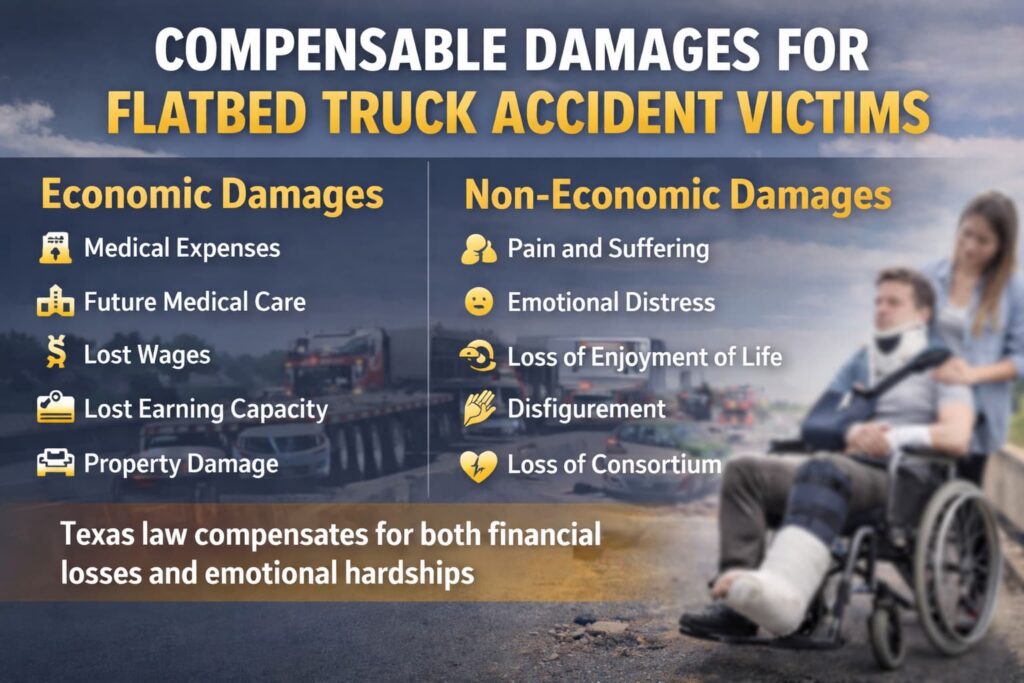
Texas law recognizes the devastating impact flatbed accidents have on victims' lives. Courts award various damages to help injured parties rebuild after these catastrophic events.
Economic damages
These damages cover measurable financial losses:
- Medical expenses including emergency treatment, surgeries, hospital stays, medications, and medical equipment
- Future medical care for ongoing treatments, physical therapy, and lifetime care needs
- Lost wages for time missed from work during recovery
- Lost earning capacity when injuries prevent returning to previous careers
- Property damage for destroyed vehicles and personal belongings
- Home modifications like wheelchair ramps or accessible bathrooms
- Professional services including home health aides or childcare during recovery
Non-economic damages
These damages address the harder-to-quantify injuries and losses:
- Physical pain and suffering from initial injuries and ongoing discomfort
- Emotional distress including anxiety, depression, and PTSD
- Loss of enjoyment of life when injuries prevent favorite activities
- Disfigurement from scars, burns, or amputations
- Loss of consortium affecting relationships with spouses
In cases involving extreme negligence, Texas courts may award punitive damages. These punish trucking companies for reckless behavior like falsifying logs, ignoring safety violations, or knowingly operating dangerous equipment.
Families who lose loved ones in fatal flatbed crashes may pursue wrongful death damages. These include funeral expenses, lost financial support, and compensation for emotional loss.
FAQs for How Flatbed Truck Accidents Happen
What makes flatbed trucks more dangerous than enclosed semi-trucks?
Flatbed trucks pose unique risks because their cargo sits exposed without walls or roofs for containment. This open design means any securement failure releases cargo directly onto highways. Additionally, flatbed cargo often includes inherently dangerous materials like steel beams or heavy machinery.
Who decides if cargo is properly secured on a flatbed truck?
Multiple parties share securement responsibility under federal and Texas law. Drivers must inspect loads before departure and at regular intervals. Trucking companies must train drivers and provide adequate equipment. Loading crews must follow FMCSA regulations during initial securement.
How do Texas weather conditions affect flatbed truck safety?
Texas weather creates multiple hazards for flatbed operations. Sudden thunderstorms loosen cargo straps and make metal surfaces slippery. High winds catch flat materials like plywood, destabilizing entire loads.
How long do I have to file a flatbed truck accident claim in Texas?
The Texas Civil Practice and Remedies Code Section 16.003 establishes a two-year statute of limitations for filing truck accident injury claims. However, critical evidence disappears quickly in trucking cases. Companies may legally destroy driver logs and maintenance records after certain periods.
Injured in a Texas Flatbed Truck Crash? Get a Free Consultation
Flatbed truck accidents shatter lives in seconds. While you focus on healing, insurance companies and trucking corporations mobilize teams to minimize their liability. You need advocates who understand the complex regulations governing flatbed operations.
Terry Bryant Accident & Injury Law has fought for Texas truck accident victims since 1985. Board Certified in Personal Injury Trial Law by the Texas Board of Legal Specialization, Terry Bryant brings both legal knowledge and judicial experience as a former judge. We have recovered over $1 billion for injured clients, earning recognition as Winner of Distinction from the Better Business Bureau for three consecutive years.
The Houston-based team handles flatbed truck accident cases throughout Texas, investigating crashes, preserving evidence, and building cases that trucking companies cannot take lightly. We know your recovery matters more than insurance company profits, and that’s why we fight relentlessly for our clients. Contact Terry Bryant online or call (713) 973-8888 for a free consultation about your flatbed truck accident case.