Houston truck accident statistics indicate that most collisions occur on major interstate freight corridors, such as I-10 and I-45, during weekday business hours, when commercial traffic volume peaks.
Houston operates as a massive hub for international trade and domestic transport, meaning our roadways constantly bustle with 18-wheelers, tractor-trailers, delivery vans, and industrial vehicles. When these heavy machines collide with passenger cars, the results are often catastrophic.
A Houston truck accident lawyer helps injured parties or surviving family members make sense of the chaos, using crash data and legal statutes to build a case for the maximum compensation available under the law.
Request Your Free Consultation
Key Takeaways About Houston Truck Accident Statistics
- Freight corridors act as collision hotspots. Major highways like I-10, I-45, and U.S. 290 see high concentrations of commercial vehicle crashes due to the sheer volume of freight moving to and from the Port of Houston.
- Weekday daylight hours carry higher risks. Contrary to the belief that most crashes happen late at night, Texas truck crash data shows a significant spike in incidents during standard business hours when congestion is heaviest.
- Driver fatigue and negligence drive the numbers. Violations of federal hours-of-service regulations often contribute to preventable accidents, giving attorneys a specific focus when investigating liability.
- Legal counsel uncovers the full story. While statistics provide a broad overview of the most dangerous roads for truck accidents in Houston, a lawyer investigates the specific circumstances of your crash to hold negligent trucking companies accountable.
Why Harris County Trucking Accidents Happen So Frequently
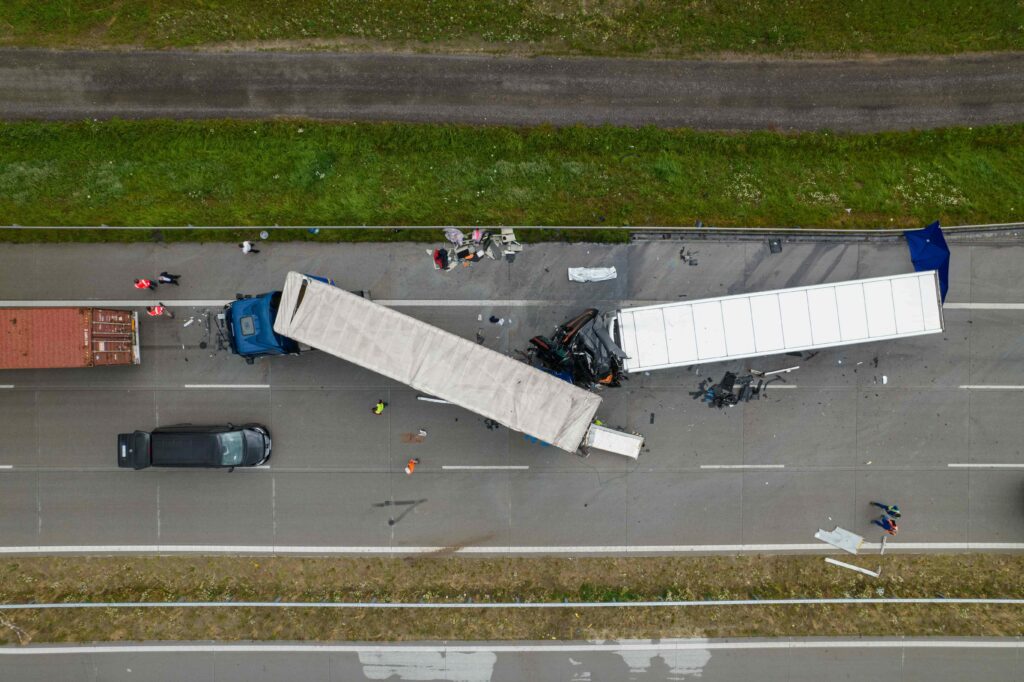
Harris County consistently ranks among the highest in the state for commercial motor vehicle crashes. This reality stems from a unique mix of urban density, industrial activity, and infrastructure design.
The Port of Houston serves as one of the busiest maritime ports in the country, necessitating a constant stream of container trucks entering and exiting the city.
When thousands of 18-wheelers share space with millions of daily commuters, the margin for error shrinks. Congested lanes force heavy trucks to stop frequently, increasing the risk of rear-end collisions.
Additionally, the complex web of overpasses and merging lanes on loops like 610, Beltway 8, and the Grand Parkway demands split-second decision-making that tired or distracted truck drivers often fail to execute.
Terry Bryant Accident & Injury Law is familiar with Houston commercial vehicle crash trends, and understands how local infrastructure contributes to incidents. Our Houston attorneys use this knowledge to challenge defense arguments that try to blame road conditions or passenger vehicle drivers for crashes caused by professional haulers who should know better.
The Role of Interstate Corridors: I-10 and I-45 Trucking Accident Hotspots
Interstates 10 and 45 serve as the arteries of Houston's economy, but they are also the sites of a staggering number of wrecks.
- I-10 (The Katy Freeway and East Freeway): Stretching coast-to-coast, I-10 brings long-haul truckers through the heart of the city. The section running through Houston sees intense lane-switching and varying speed limits, creating a volatile environment for large trucks that require longer stopping distances.
- I-45 (North and Gulf Freeways): This corridor connects Houston to Dallas and the Gulf Coast. The high volume of freight moving north and south means that motorists constantly drive in the shadow of semi-trucks.
- U.S. 290 and Loop 610: Ongoing construction and tight interchanges on these roads often catch out-of-town truckers off guard. A driver unfamiliar with Houston's sudden exit lanes or aggressive merging patterns may make a reckless maneuver, leading to a serious crash.
When a collision occurs on these major routes, determining jurisdiction and liability becomes complex. A truck might be registered in Oklahoma, carrying cargo for a company in California, and driven by an individual with a Florida license.
Legal professionals cut through this jurisdictional red tape to keep the case focused on the negligence that occurred right here in Texas.
When Do Crashes Occur? Timing and Trends of Trucking Accidents in Houston, Texas
Texas Department of Transportation (TxDOT) truck accident data reveals a sad reality for drivers. Among the most concerning statistics is that a significant portion of severe truck collisions happens between 6:00 a.m. and 6:00 p.m. on weekdays.
This timeframe aligns with peak delivery schedules. Trucking companies face immense pressure to meet deadlines. Dispatchers often push drivers to maximize their miles during the day to keep supply chains moving. This pressure creates a dangerous environment where:
- Congestion meets impatience: Drivers stuck in the city's traffic congestion freight corridors may drive aggressively to make up for lost time.
- Fatigue sets in: Even during the day, a driver near the end of an 11-hour shift reacts slower to sudden traffic stops.
- Distraction increases: During business hours, drivers are more likely to communicate with dispatchers or check GPS routes, taking their eyes off the road.
Attorneys scrutinize driver logs and GPS data to see if the timing of the crash correlates with a violation of federal safety rules. If a driver had been on the road for 14 hours straight when they hit you on a Tuesday afternoon, that evidence becomes a cornerstone of your claim.
What Are the Common Causes of Truck Accidents in Houston Revealed by Texas Crash Data?
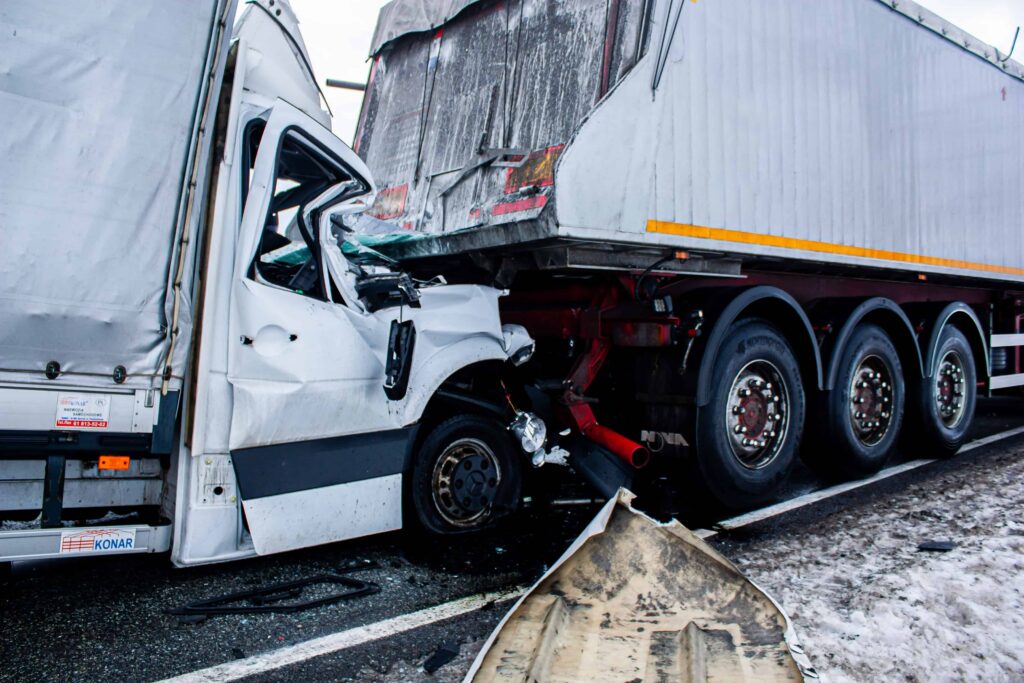
Statistics tell us where and when, but understanding why remains crucial for building a legal claim. The Federal Motor Carrier Safety Administration (FMCSA) crash statistics highlight several recurring factors in preventable accidents.
Driver Fatigue and Hours-of-Service Violations
Federal law strictly limits how long a commercial driver can operate a vehicle without a break. Despite these rules, fatigue remains a leading cause of large truck fatalities in Texas.
Drivers may falsify logs or succumb to employer pressure to keep working despite exhaustion. A lawyer can obtain electronic logging device (ELD) records to expose these violations.
Speeding and Following Too Closely
A fully loaded 18-wheeler weighing 80,000 pounds requires the length of 2 football fields to stop at highway speeds. When drivers speed or tailgate in heavy traffic, they lose the ability to react to sudden slowdowns. Rear-end collisions involving trucks often result in devastating injuries for passenger vehicle occupants.
Distracted Driving
Distracted truck driver statistics in Texas show a worrying rise in incidents involving cell phone use, onboard computers, and even eating while driving.
Because truck cabs sit high above the road, drivers may feel a false sense of security, leading them to believe they can multitask. Legal teams often subpoena cell phone records to prove a driver was texting or talking at the moment of impact.
Mechanical Failures and Maintenance Neglect
Brake failures and tire blowouts contribute to a significant number of catastrophic, and sometimes fatal wrecks. Trucking companies must regularly inspect and maintain their fleets.
When they cut corners to save money, innocent motorists pay the price. Investigating maintenance records allows attorneys to hold the company directly liable for putting an unsafe vehicle on the road.
The Impact of Weather on Houston Roadway Accident Heat Maps
Houston weather is unpredictable. Sudden downpours can turn oil-slicked highways into skating rinks within minutes. Weather-related truck crashes in Texas often involve hydroplaning or jackknifing.
While defense attorneys often try to blame “Acts of God" for these accidents, professional truck drivers are held to a higher standard of care. Federal regulations require commercial drivers to exercise extreme caution in hazardous conditions.
This often means slowing down significantly or pulling off the road entirely until conditions improve.
If a truck driver continued at highway speeds during a torrential thunderstorm and lost control, they likely acted negligently. Our Houston truck accident lawyers will argue that the driver failed to adapt to the conditions, turning a weather event into a preventable tragedy.
Why Truck Accident Injury Rates Are Higher
The physics of a truck crash differ fundamentally from a car-to-car collision. The immense size and weight disparity mean that occupants of passenger vehicles sustain the vast majority of injuries and fatalities.
Survivors often face life-altering consequences, including:
- Traumatic brain injuries (TBIs)
- Spinal cord damage and paralysis
- Severe burns and disfigurement
- Amputations
- Internal organ damage
Recovering from these injuries requires extensive medical treatment, rehabilitation, and long-term care. The financial burden can destroy a family's stability. Insurance adjusters for trucking companies know the stakes are high, which is why they work quickly to minimize payouts.
Legal representation levels the playing field. Attorneys work with medical professionals and life care planners to calculate the true cost of your injuries—not just for today, but for the rest of your life.
This comprehensive approach fights for a settlement that covers future surgeries, lost earning capacity, and the pain and suffering caused by the crash.
Investigating the Company, Not Just the Driver
One of the most critical aspects of handling a truck crash claim in Houston is looking beyond the driver. Texas law and federal regulations allow victims to hold trucking companies accountable for their systemic failures.
- Negligent hiring: Did the company hire a driver with a history of DUIs or reckless driving?
- Inadequate training: Did the company throw a rookie driver onto a complex route without proper instruction?
- Negligent supervision: Did the company ignore red flags in the driver's logs or safety performance?
Investigating these corporate practices requires a deep understanding of commercial carrier operations. Lawyers draft preservation letters to stop companies from destroying evidence and use the discovery process to uncover internal documents that prove the company prioritized profit over safety.
Frequently Asked Questions About Houston Truck Accidents
What should I do immediately after a truck accident?
Get medical attention and a police report. If you can, take photos of the scene, the trucks involved, and any skid marks. Do not discuss fault with anyone at the scene, especially not the truck driver or their company representatives. Contacting a lawyer as soon as possible helps preserve evidence that might otherwise disappear.
Who is liable in a truck accident: the driver or the company?
The driver may be liable for their specific actions behind the wheel, while the company may be liable for the vehicle's condition or the driver's employment. In some cases, liability extends to cargo loaders, maintenance shops, or truck manufacturers. A thorough investigation identifies all parties who share responsibility for your injuries.
How does the "blind spot" rule affect my case?
Truck drivers have massive blind spots, or "No Zones," on all 4 sides of the vehicle. However, having blind spots does not excuse a driver from checking them before changing lanes. If a truck merged into you, your lawyer will argue that the driver failed to clear their lane properly, regardless of blind spot limitations.
Can I sue if the truck driver was an independent contractor?
Trucking companies often try to avoid liability by claiming their drivers are independent contractors. However, federal regulations significantly limit this defense. If the company displayed its placard on the truck or exercised control over the driver's actions, it can often still be held liable. Your attorney understands how to navigate these employment classifications to find coverage.
Don't Be an Accident Statistic. Move Forward After a Truck Crash in Houston With the Help of Experienced Legal Professionals
The statistics surrounding Houston truck accidents paint a sobering picture of the risks we face on our daily commutes. But for those already injured, these numbers represent more than just data points—they represent pain, loss, and a difficult road to recovery.
You do not have to walk that road alone. The law provides a path for victims to seek justice and restoration. By partnering with a legal team that understands the nuances of trucking regulations and Harris County courts, you take a powerful step toward reclaiming control of your life.
If a negligent trucking company has turned your life upside down, you have the right to demand answers and accountability.
Are you ready to build a recovery strategy and hold the responsible parties accountable? Call us now to discuss your case for free with our experienced truck accident lawyers in Houston, Texas.
Additional Legal Resources for Truck Accident Claims in Houston
These resources provide clear, attorney-curated insights into the complexities of truck accident law, helping you understand your rights and the legal strategies used to protect them.
- How Much Is a Truck Accident Case Worth in Texas? Learn about the economic and non-economic damages that factor into a settlement, from medical bills to pain and suffering, and how lawyers calculate fair compensation.
- Accident with an Uninsured Truck Driver Discover the legal options available if the at-fault truck driver lacks adequate insurance, including how uninsured motorist coverage may apply to your situation.
- Truck Mechanical Failures: Causes and Legal Consequences Explore how poor maintenance leads to brake failure and tire blowouts, and how attorneys prove that a trucking company's negligence caused the mechanical breakdown.
- What Is the Truck Accident Claim Process in Texas? Get a step-by-step overview of the legal timeline, from the initial investigation and filing a claim to negotiating settlements and potential litigation.
- How Do Flatbed Truck Accidents Happen? Understand the specific risks posed by flatbed trailers, such as shifting cargo and improper securing, and how these factors contribute to severe highway accidents.
Call Terry Bryant Accident & Injury Law at 713-973-8888 or toll-free 1-800-444-5000 for a free and confidential consultation with our Houston personal injury attorneys.