Often, the causes of oil rig explosions in Texas result from negligence such as inadequate maintenance protocols, defective equipment, willful safety violations, or preventable human error.
After a major accident on a rig or platform, workers and their families frequently face an uphill battle against powerful oil companies and their insurers.
While immediate medical attention is the priority, securing legal counsel is often necessary to uncover the root cause of the explosion and hold the responsible parties accountable.
A Houston oil rig explosion lawyer can investigate the incident, identify regulatory violations, and fight for the compensation injured workers need to rebuild their lives.
Request Your Free Consultation
Key Takeaways About Causes of Oil Rig Explosions in Texas
- Negligence is a primary driver. Many explosions stem from preventable errors, such as ignoring safety protocols or failing to maintain equipment, which can establish liability against operators and contractors under Texas law.
- Defective equipment plays a major role. Failures in critical systems, such as blowout preventers or pressure control valves, often contribute to offshore rig explosions in the Gulf of Mexico, potentially implicating manufacturers in product liability claims.
- Multiple parties may be liable. Responsibility for an oil field accident can extend beyond the employer to third-party contractors, equipment manufacturers, and property owners, maximizing potential avenues for recovery.
- Legal investigation is crucial. Attorneys work with industry professionals to analyze evidence, such as maintenance logs and "black box" data, to prove how specific failures led to the explosion and to challenge the defenses of well-funded oil companies.
The Volatile Nature of Oil and Gas Extraction
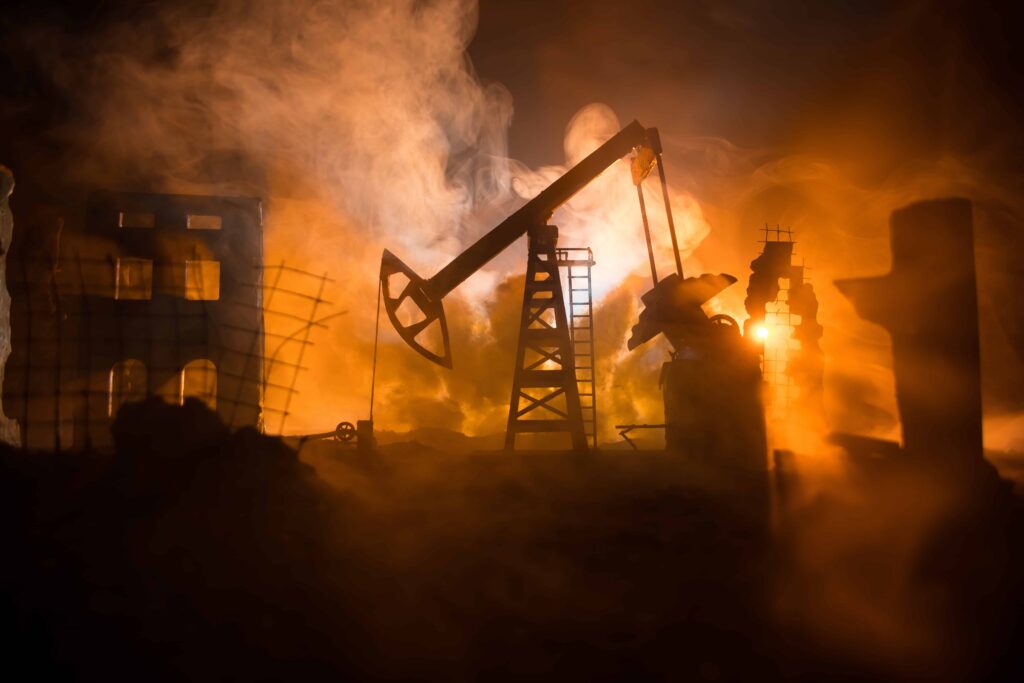
The oil and gas industry is the backbone of the Texas economy, but it is also one of the most hazardous sectors for workers. Extracting highly flammable resources from deep beneath the earth involves managing extreme pressures and dangerous chemicals.
When safety measures are bypassed to speed up production or cut costs, the risk of a catastrophic event increases exponentially.
Understanding why oil rigs explode in Texas, the Gulf of Mexico, and surrounding areas requires examining the complex interplay between mechanical systems and human decision-making. These are not just "accidents" in the sense of bad luck; they are often the predictable result of systemic failures.
Blowout Preventer Failure: The Last Line of Defense
One of the most critical pieces of safety equipment on any rig is the blowout preventer (BOP). This massive valve is designed to seal the well and stop the uncontrolled release of crude oil or natural gas. When a BOP fails, as it did in the Deepwater Horizon tragedy, the results are often catastrophic.
Blowout preventer failure in Texas can occur due to:
- Poor maintenance: Failing to regularly test and service the BOP can lead to hydraulic leaks or seized rams that prevent it from closing during an emergency.
- Design defects: Sometimes the equipment itself is flawed, unable to withstand the pressures it was rated for.
- Operator error: If the crew does not activate the BOP in time or uses it incorrectly, the well can blow out, leading to a massive fire and explosion.
When a BOP fails, investigating maintenance records and testing history becomes central to the legal strategy. An attorney can determine if the failure was due to a manufacturing defect or negligence on the part of the drilling operator.
Gas Leaks and Ignition Sources
Natural gas is a constant presence on drilling rigs. While systems are in place to safely vent or flare this gas, leaks can occur. When flammable gas accumulates in an enclosed area or near an ignition source, a massive explosion can result.
Electrical Sparks and Hot Work
Oil rigs are filled with potential ignition sources. Electrical sparks igniting flammable gases are a common cause of fires. This can happen due to:
- Faulty wiring: Exposed wires or ungrounded equipment can generate sparks.
- Static discharge: Static discharge fuel-transfer explosions occur when electricity builds up during fluid movement and discharges a spark into vapor-filled air.
- Improper hot work: Welding, cutting, and brazing (hot work) produce open flames and sparks. If improper hot work permits are issued or safety zones are not established, these activities can ignite gas pockets.
Strict safety protocols, such as the use of explosion-proof equipment and gas detectors, are required to prevent these incidents. When these protocols are ignored, the liability for the resulting explosion often falls on the company managing the site.
Hydrogen Sulfide (H2S) Exposure
Hydrogen sulfide is a naturally occurring, colorless gas often found in oil and gas formations. It is extremely toxic and highly flammable. Hydrogen sulfide exposure in the oilfield not only poses a direct poisoning risk but can also lead to combustion.
Operators must monitor H2S levels and provide workers with proper respiratory equipment. Failure to control this hazard is a serious violation of safety standards and a frequent contributor to oil field fire hazards in Texas.
Defective Equipment and Machinery Failure
An oil rig is a complex machine with thousands of moving parts. From the drilling mud pumps to the drawworks, every piece of equipment must function correctly to maintain safety. Defective equipment in oil rig accidents can involve:
- Failed pressure gauges: If workers cannot accurately read well pressure, they cannot react to kicks or surges.
- Weakened derricks: Structural failures can cause the rig to collapse, severing lines and sparking fires.
- Malfunctioning separators: Tank battery and production site explosions in Texas often occur when equipment designed to separate oil, gas, and water fails, allowing flammable vapors to build up in storage tanks.
In these cases, a lawyer may pursue a product liability claim against the manufacturer of the defective part, in addition to a negligence claim against the operator for failing to inspect the equipment.
Human Error and Inadequate Training

While equipment failure is a major factor, human error is often the catalyst. However, labeling an incident as "human error" often oversimplifies the issue. Frequently, what appears to be a worker's mistake is actually due to inadequate training or fatigue.
The Dangers of Fatigue
Oilfield workers often endure long shifts, sometimes working weeks without a day off. Fatigue impairs judgment and reaction time, increasing the likelihood of accidents. Federal and state regulations limit hours of service for certain positions, but these rules are sometimes ignored to meet production quotas.
Lack of Proper Training
Inadequate training for oilfield workers is a systemic issue. Green hands (new employees) may be assigned dangerous tasks without understanding the risks or proper safety procedures.
If a worker causes an explosion because they were never taught how to handle a specific situation, the liability lies with the employer who failed to train them.
Negligent Maintenance of Drilling Operations
Drilling for oil in Texas is a 24/7 operation that places immense stress on equipment. Negligent maintenance of drilling operations is a leading cause of preventable explosions. Companies may delay repairs or skip inspections to keep the rig running, prioritizing profits over safety.
Signs of negligent maintenance include:
- Using "band-aid" fixes instead of proper repairs.
- Ignoring warning alarms or bypassing safety interlocks.
- Failing to replace worn-out parts like seals and gaskets.
When investigating the causes of oil rig explosions, attorneys scrutinize maintenance logs for gaps or inconsistencies. Proving that a company knew about a mechanical issue and failed to fix it provides strong evidence of gross negligence.
Liability: Who Is Responsible for the Explosion?
Determining liability in an oil rig explosion is rarely straightforward. The oil and gas industry operates through a web of contractors, subcontractors, and subsidiaries. Identifying all liable parties is essential for maximizing compensation.
Operator and Contractor Liability
The lease operator is generally responsible for the overall safety of the work site in Texas. However, they often hire third-party contractors for specific tasks like drilling, cementing, or electrical work.
Contractor and subcontractor negligence on rigs is common. If a cementing contractor fails to properly seal the well, leading to a blowout, they may share liability with the operator.
Manufacturer Liability
If a piece of equipment failed due to a design or manufacturing defect, the company that made that part can be held liable. This applies to everything from BOPs to simple valves.
Property Owner Liability
In some cases, the landowner or the offshore platform itself may be liable if they knowingly allowed dangerous conditions to persist on the premises.
How Regulatory Violations Strengthen Your Case
The oil industry is heavily regulated by agencies like the Occupational Safety and Health Administration (OSHA) and the Railroad Commission of Texas. OSHA oil and gas safety violations are frequently cited after an explosion.
Common violations include:
- Failure to control hazardous energy (lockout/tagout).
- Lack of fall protection.
- Inadequate respiratory protection.
- Failure to conduct hazard assessments.
Evidence of regulatory violations serves as powerful proof of negligence per se. A Houston oil rig explosion lawyer uses these citations to demonstrate that the company failed to meet the minimum legal standards for safety, helping to strengthen the case for injured Texas oil rig workers.
The Challenges of Offshore vs. Land-Based Claims

The laws governing your claim depend heavily on where the explosion occurred.
Land-Based Rigs
Accidents on land-based rigs in Texas typically fall under state workers' compensation laws and personal injury statutes. While workers' comp provides some benefits, it is often insufficient to cover catastrophic injuries. In Texas, however, many employers are non-subscribers (and do not have official state workers’ compensation coverage). While workers’ comp is the exclusive remedy and bars a claim against an employer with workers’ comp (excluding a few very limited exceptions), injured workers can pursue negligence-based claims and sue a non-subscriber employer.
Also, if a third party (like a contractor or equipment manufacturer) caused the accident, injured workers may file a personal injury lawsuit for additional damages.
Offshore Platforms
Gulf Coast offshore platform fires and explosions are governed by federal maritime laws, such as the Jones Act, the Longshore and Harbor Workers' Compensation Act (LHWCA), and the Outer Continental Shelf Lands Act (OCSLA).
These laws can provide different, and often more generous, avenues for compensation than state workers' comp. Determining which law applies requires a deep understanding of maritime jurisdiction.
Frequently Asked Questions About Oil Rig Explosions
What is the most common cause of oil rig explosions?
While there is no single cause, blowout preventer failures and the ignition of escaping gas (gas kicks) are among the most frequent triggers for catastrophic explosions. These are often compounded by equipment failure and human error.
Can I sue if I was injured in an oil rig explosion?
While workers' compensation may cover medical bills, you may also have the right to file a personal injury lawsuit against a non-subscriber employer and third parties, such as contractors or equipment manufacturers, whose negligence contributed to the accident.
What damages can be recovered after an oilfield explosion?
Victims may recover compensation for medical expenses, rehabilitation costs, lost wages, loss of earning capacity, pain and suffering, and physical disfigurement. In cases of extreme negligence, punitive damages may also be available.
How does the Jones Act apply to rig explosions?
If the explosion occurred on a jack-up rig, semi-submersible, or other floating vessel, injured workers might be classified as "seamen" under the Jones Act. This federal law allows workers to sue their employers directly for negligence, potentially resulting in greater compensation than under standard workers' comp.
You Do Not Have to Fight the Oil Company Alone
An oil rig explosion is chaotic and terrifying. As you focus on recovering from burns, blast injuries, or the loss of a loved one, the oil company is already building its defense. They have teams of lawyers and experts working to minimize their liability.
You deserve a strong Texas legal team that can challenge their tactics and fight for your rights. Terry Bryant Accident & Injury Law can handle the complex investigation, preserve critical evidence before it is destroyed, and aggressively pursue the compensation you need for medical bills, lost wages, and pain and suffering.
Are you ready to seek justice for the injuries you sustained in an oilfield explosion? Call 713-973-8888or toll-free 1-800-444-5000 now for a free and confidential consultation with our experienced oil rig accident injury lawyers in Houston.
Legal Resources for Oilfield Accident Claims
Access to trusted, attorney-curated information can provide the clarity needed to make informed decisions after a serious workplace accident in Texas. These resources offer insights into the challenges workers face and the legal options available to them:
- The 7 Most Common Workplace Safety Violations Learn about the frequent safety oversights that put workers at risk and how regulatory violations can impact an injury claim.
- Lack of Sleep Can Lead to Workplace Injuries Understand the dangers of worker fatigue in high-risk industries like oil and gas, and how pushing limits can lead to catastrophic errors.
- Workers Beware: Summer Temperatures Can Cause Injuries Discover the risks of heat stress and environmental hazards that contribute to accidents on drilling sites during Texas summers.
- Dangers Facing Temporary Workers Explore the unique vulnerabilities of contract and temporary workers in the oilfield and how their legal rights may differ from permanent employees.
For personalized legal guidance regarding your Texas oil rig accident claim, call Terry Bryant Accident & Injury Law now at 713-973-8888. Let our Houston work injury law firm review your case for free and help you take the next steps toward recovery.