Highways across the U.S. are busy with commercial trucks, and Texas leads the nation in trucking activity by freight volume and also has the highest number of commercial trucking companies. The Lone Star State’s position on the border with Mexico, central location, and major hubs like Houston and Dallas make it vital to U.S. trade and distribution.
These vehicles move tons of cargo daily, but the consequences are often immediate and severe when something goes wrong. One mistake by a tired driver or one overlooked safety check can result in catastrophic injury or loss of life.
Certain types of truck accidents, from rollovers to rear-end crashes, happen again and again on Texas roads. Some are caused by brake failure. Others happen when cargo shifts, tires explode, or a driver takes a turn too fast. What links them isn’t just the damage they cause but the consequences for everyone affected. Each accident raises urgent questions about who was responsible, whether safety regulations were followed, and what options remain
If you or a loved one were hurt in a serious truck crash, speaking with an experienced truck accident lawyer can help you understand your legal options and take action to pursue the compensation you deserve—schedule a free consultation today.
Request Your Free Consultation
Key Takeaways
- The most common types of truck accidents in Texas include rear-end collisions, rollovers, jackknife accidents, and underride crashes.
- Poor maintenance, overloading, and driver fatigue are leading contributors to serious and fatal truck crashes.
- Highway corridors like I-10, I-45, and I-35 in Texas are frequent locations for catastrophic commercial vehicle crashes.
- Truck accident victims often suffer traumatic injuries requiring long-term medical care, rehabilitation, or wrongful death claims.
- Federal and state safety laws, including those enforced by the Federal Motor Carrier Safety Administration (FMCSA) and Texas Department of Transportation (TxDOT), help determine liability and claim eligibility.
- An experienced legal team can gather evidence, identify negligence, and fight for fair compensation when lives are upended by a truck accident.
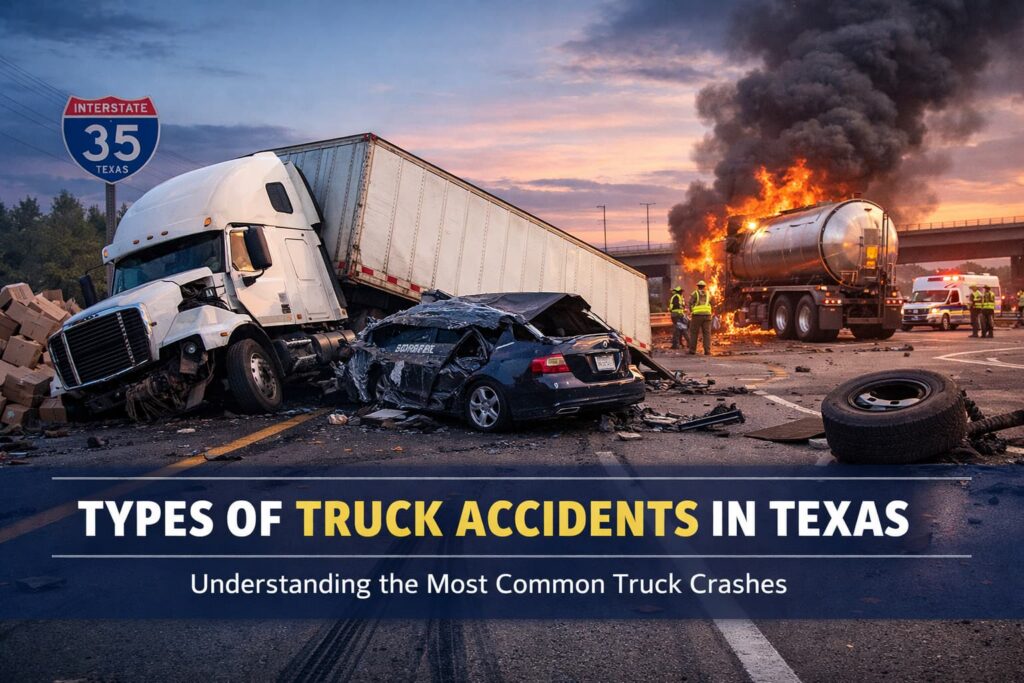
Common Types of Truck Accidents
Texas highways see certain truck crash patterns again and again, and each type offers clues about what went wrong.
Rear-end truck accidents
Large trucks require significantly more distance to stop than smaller vehicles. When a truck follows too closely or the driver is distracted, a rear-end crash can occur, often crushing the rear of the vehicle in front.
According to a study by the Texas A&M Transportation Institute, published by TxDOT, rear-end collisions are a leading cause of multi-vehicle crashes involving 18-wheelers, especially in congested urban areas like Houston or on busy stretches of I-35 and I-45.
Jackknife truck accidents
A jackknife happens when the trailer of a semi swings out at an angle from the cab, forming an "L" or "V" shape. These accidents can block multiple lanes and often occur when a driver brakes suddenly or in slippery conditions. Other motorists who can’t stop in time may suffer a deadly side underride, where the vehicle slides underneath the truck.
Jackknifes are particularly dangerous on rural roads or downhill grades where sudden stops are more likely. Improper braking techniques and unbalanced cargo can both trigger this type of event.
Rollover truck accidents
Rollover accidents typically happen when a truck turns too quickly, takes a curve at excessive speed, or drives over uneven surfaces. These incidents are especially dangerous on Texas highways with fast speeds and heavy traffic.
Improperly secured cargo and excessive speed on curved entrance or exit ramps often contribute to these crashes. According to the FMCSA, rollovers are among the deadliest truck crash types, frequently causing fatal injuries to the driver and others nearby.
Underride accidents
Underride crashes occur when a smaller vehicle slides underneath the rear or side of a truck. These are among the most deadly truck accident types because they often crush the passenger compartment. While federal regulations require rear underride guards, there are currently no federal side guard requirements, and Texas has no specific mandates in place for side underride protection. Many underride crashes happen at night or during low-visibility conditions, making them even more dangerous.
Blind spot truck collisions
Trucks have large blind spots along both sides and directly behind the trailer. If a driver changes lanes without checking carefully, nearby vehicles can be sideswiped or forced off the road.
The Texas DMV and FMCSA consistently warn about the dangers of these "no-zones." These accidents are more common on highways and interstates, especially during lane merges or heavy traffic congestion.
Wide-turn accidents
Also known as "squeeze play" accidents, these crashes happen when a truck swings left to make a right turn and traps a vehicle between the truck and the curb or another object. Wide-turn accidents often occur in urban areas or near intersections where space is limited. They are a particular risk for motorcyclists and compact car drivers.
Tire blowout truck crashes
Tire blowouts at high speeds can cause a truck to swerve, lose control, or spill cargo. In Texas, extreme heat and long highway routes increase this risk. According to data from the National Highway Traffic Safety Administration (NHTSA), tire-related issues are a factor in many large truck crashes, especially during the summer months. Regular maintenance is essential to prevent blowouts on heavily traveled routes like I-10 and I-40.
Truck brake failure accidents
Brake failure often stems from poor maintenance or equipment defects. When a loaded truck loses braking power, it can become a runaway hazard. Under FMCSA regulations, trucking companies are legally required to conduct regular brake inspections. In Texas, step grades in the Hill Country or long downward slopes on rural highways can increase the danger of runaway trucks.
Cargo-related truck accidents
Improperly loaded or unsecured cargo can shift during transit, leading to a loss of balance, rollover, or cargo spill, especially hazardous if materials are flammable or toxic. These crashes often occur due to violations of FMCSA cargo securement rules, which dictate how loads must be balanced, tied down, and distributed. Oilfield equipment, construction materials, and agricultural products are common cargo types involved in Texas truck accidents.
Hazardous material truck accidents
When trucks carry flammable liquids, corrosive chemicals, or explosive substances, any crash can trigger environmental disasters or severe burn injuries. Texas is a major corridor for the transport of hazardous materials, especially along routes connecting Houston’s petrochemical facilities to other regions.
Hazmat truck crashes require special cleanup efforts and often involve multiple government agencies, including the EPA and the Texas Commission on Environmental Quality (TCEQ).
What Causes These Truck Crashes?
While each case is unique, certain patterns contribute to the most common types of truck accidents. These include human error, vehicle issues, and regulatory failures.
- Speeding or unsafe lane changes by truck drivers
- Fatigue due to excessive hours behind the wheel
- Distracted driving, including phone use or in-cab distractions
- Mechanical failure caused by skipped maintenance or defective parts
- Overloaded or unbalanced cargo in violation of safety regulations
According to the FMCSA, driver-related factors play a role in roughly 87% of truck crashes. Texas, which leads the nation in fatal truck crashes, is deeply impacted by these factors.
Common Injuries in Serious Truck Accidents
The force of a commercial truck impact causes life-altering injuries more often than in passenger vehicle crashes. Victims may face long recovery periods, permanent impairments, or even fatal outcomes.
- Traumatic brain injuries (TBIs)
- Spinal cord injuries and paralysis
- Multiple fractures and orthopedic damage
- Burn injuries from fires or hazardous spills
- Internal organ damage or internal bleeding
- Amputations or severe lacerations
Medical bills, rehabilitation, and home modifications are just part of the aftermath. Many survivors live with pain, limited mobility, or loss of independence for the rest of their lives.
Damages You May Be Able to Recover After a Truck Accident
Truck accident cases often involve multiple liable parties, such as the driver, the trucking company, a parts manufacturer, or the cargo loading team. Under Texas law, injured parties may pursue various types of damages:
- Medical expenses, including hospital stays, surgeries, and therapy
- Future medical needs for long-term care or disability
- Lost income and loss of earning capacity
- Pain and suffering, both physical and emotional
- Loss of enjoyment of life
- Wrongful death damages for surviving family members
Claims must typically be filed within 2 years under Texas Civil Practice and Remedies Code §16.003, which provides the general statute of limitations for personal injury lawsuits in Texas. (*Always speak directly to an attorney for the exact deadlines that apply to your potential claims.)
Who May Be Held Liable in a Truck Accident?
Establishing fault in a truck crash is much more complex than in standard car accidents. Commercial trucking often involves several different parties, and each may share responsibility depending on how the crash occurred. Liability depends heavily on the cause of the accident and which safety regulations may have been violated.
Some of the potentially liable parties include:
- Truck driver: for negligence such as speeding, distraction, or fatigue
- Trucking company: for poor hiring practices, inadequate training, or forcing drivers to exceed hours-of-service limits
- Cargo loaders: if cargo was not properly balanced or secured
- Maintenance provider or mechanic: if faulty repairs or missed inspections led to brake failure or tire blowouts
- Manufacturer of vehicle parts: if defective brakes, tires, or coupling systems contributed to the crash
Pinpointing who caused a truck crash takes a thorough investigation of driver logs, weight station records, maintenance files, black box data and more to trace where safety broke down. It’s not uncommon for multiple parties to be involved in a single truck accident.
Request Your Free Consultation
How Federal and State Laws Affect Your Claim
Federal rules set the baseline for safety, and Texas law determines how fault gets divided. Together, they shape the strength of a truck accident claim.
Texas follows a modified comparative fault rule under Texas Civil Practice and Remedies Code § 33.001. If you're found more than 50% at fault, you lose the right to recover damages. If you're 50% or less at fault, your recovery is reduced by your percentage of fault.
Insurance adjusters often misuse this rule to lower their liability by shifting blame onto truck accident victims, underscoring the importance of working with a skilled lawyer who can fight efforts to unfairly blame you.
Federal rules also shape how liability is determined:
- Hours-of-service rules limit how long truckers may drive before taking mandatory breaks
- Maintenance records are required to be logged and retained by motor carriers
- Drug and alcohol testing is mandatory after crashes involving serious injuries or fatalities
- Driver qualification files must be available upon request and reviewed in investigations
Any violation of FMCSA regulations can be a strong indicator of negligence. Attorneys often subpoena these records during litigation to prove a systemic failure in training, oversight, or vehicle upkeep.
Why Are Truck Accidents Such a Big Problem in Texas?
Texas leads the country in deadly truck wrecks, with large volumes of truck traffic tied to the state’s energy, agriculture, and logistics industries. The state’s vast highway system, spanning I-10, I-45, I-35, US-290, and State Highway 6, sees some of the highest levels of 18-wheeler activity in the country.
Some of the factors that lead to higher truck accident rates in the Lone Star state include:
- Long-haul routes through rural areas with higher speed limits
- Congested urban centers such as Houston and Dallas
- Heavy freight activity tied to oilfields, ports, and agriculture
- Intense summer heat increasing the risk of mechanical failure
Data from TxDOT shows that Harris County consistently ranks among the top in the state for fatal truck collisions. Many of these involve rollovers, jackknifes, and underride accidents, especially near freeway interchanges and commercial hubs.
The Role of Evidence in Proving a Truck Accident Claim
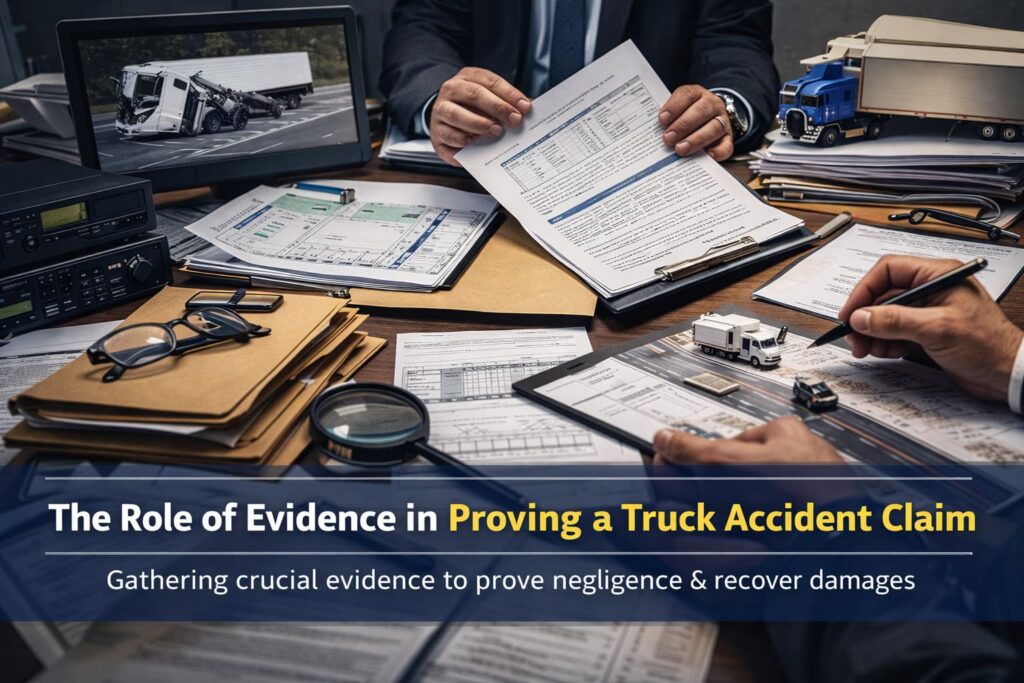
Strong evidence is essential to prove negligence and recover damages in a truck crash case. Unlike typical car accidents, truck crashes usually involve corporate defendants who are backed by insurance companies and legal teams. The burden falls on the injured person’s legal counsel to preserve and present key evidence.
Important forms of evidence include:
- Black box (ECM) data showing speed, braking, and hours of operation
- Driver logs and ELD records verifying compliance with hours-of-service rules
- Dashcam or traffic footage capturing the accident
- Maintenance and inspection records
- Cargo weight documentation and bills of lading
- Witness statements and police reports
- Expert accident reconstruction and forensic analysis
Some forms of evidence can be legally destroyed after a certain period unless your lawyer orders it to be preserved through a spoliation letter or court order. Working with a law firm that has the resources to secure and analyze key evidence can significantly impact the outcome of your case.
FAQ for Types of Truck Accidents
How long does a truck accident investigation take?
Investigations can range from a few weeks to several months. Cases involving severe injuries or disputed liability often require analysis by experts and multiple sources of evidence. An experienced truck accident lawyer can give you a clearer idea of how long your case might take and keep you up-to-date on your case’s progress.
What if the truck driver was an independent contractor?
Liability may still extend to the trucking company depending on how much control it exercised over the driver. Courts look at factors like vehicle ownership, dispatch authority, and who maintained compliance with safety regulations.
Are truck accident settlements taxable?
In most cases, compensation for physical injuries is not taxable. However, any interest earned on settlement amounts or awards for lost income may be subject to tax. Always consult a tax professional for specific advice.
Can I sue the trucking company directly?
Yes, especially if the company was negligent in hiring, training, supervising, or retaining the driver. Companies can also be liable for pushing drivers to exceed legal driving limits or ignoring safety protocols.
What if multiple vehicles were involved in the crash?
These are often referred to as multi-vehicle or chain-reaction crashes. Liability may be shared among several drivers, including the truck driver. A full investigation is necessary to determine each party’s level of responsibility.
Injured in a Commercial Truck Accident in Texas?
Since 1985, Terry Bryant Accident & Injury Law has helped thousands of Texas injury victims and their families get justice for all they have endured following a serious injury caused by someone else’s negligence. Founded by a former judge and Board Certified in Personal Injury Trial Law, our firm brings extensive legal insight and trial experience to every case we handle. With over $1 billion dollars recovered for clients, our team has earned a reputation for trusted advocacy in the toughest situations.
When a crash involves an 18-wheeler, hazmat truck, or other commercial vehicle, the investigation and legal process can be complex and challenging. Terry Bryant Accident & Injury Law has the resources to uncover what went wrong, hold negligent parties accountable, and pursue fair compensation. Contact us now at (713) 973-8888 or toll-free 1 (800) 444-5000 or online for a free and confidential truck accident consultation.