Escalator accidents may seem rare, but when they occur, the consequences can be catastrophic. Serious escalator injuries often involve traumatic brain injury, spinal cord damage, crushed limbs, or even fatalities when mechanical failures or safety violations cause an accident.
These incidents are preventable, yet they still happen in public places like malls, airports, stadiums, and office buildings. When they do, determining liability is key to helping injured victims and families pursue rightful compensation.
Request Your Free Consultation
Key Takeaways
- Escalator injuries often result from preventable issues, including poor maintenance, design flaws, or missing safety warnings.
- Falls, entrapments, and sudden malfunctions can cause serious harm such as brain trauma, spinal injuries, or amputations.
- Property owners, maintenance contractors, manufacturers, and even government entities may all share legal responsibility.
- Victims may be entitled to compensation for medical bills, lost income, pain, and other long-term effects.
- Wrongful death claims may be available for families who lose a loved one in an escalator-related incident.
- Video footage, maintenance logs, and eyewitness statements can play a key role in proving liability.
- Texas law sets strict filing deadlines—early legal action helps preserve your right to seek recovery.
Common Causes of Serious or Fatal Escalator Injuries

Escalator failures that result in serious injuries are often linked to clear, identifiable problems, most of which could have been prevented. These issues are not random. They typically trace back to poor maintenance, design defects, or negligence by those responsible for keeping the equipment safe.
Problems that can cause injuries on these machines include:
Sudden stops or jerky movements
An abrupt halt or uncontrolled acceleration can throw passengers off balance, resulting in falls from a height or down a steep incline, or into the metal sides of the escalator. These malfunctions often point to electrical or mechanical failures, many of which fall under the responsibility of maintenance contractors or property owners.
Entrapment between moving parts
One of the most dangerous escalator defects is entrapment, where clothing, shoes, or even body parts become stuck between steps or in the comb plate. Children and older adults are especially vulnerable, but anyone can suffer crushed fingers, severed toes, or worse. These events may indicate a failure in the escalator's design, safety guards, or emergency shutoff functions.
Missing or broken steps
If a step suddenly collapses or shifts beneath someone’s feet, the result can be a violent fall. Escalators should undergo regular safety inspections, especially in high-traffic environments, but those inspections are often skipped or poorly performed.
Loose handrails or synchronization issues
If the handrail moves at a different speed than the steps, or if it is loose or defective, users can easily lose their balance. Falls from even a short height on a moving escalator can lead to blunt-force trauma, especially for older adults or those caught off guard.
Inadequate warning signage or supervision
Poor signage, particularly in areas under construction or where the escalator is malfunctioning, can cause serious injury. Businesses and property managers have a legal responsibility to warn guests and restrict access when equipment is unsafe.
Types of Injuries Associated With Serious Escalator Accidents
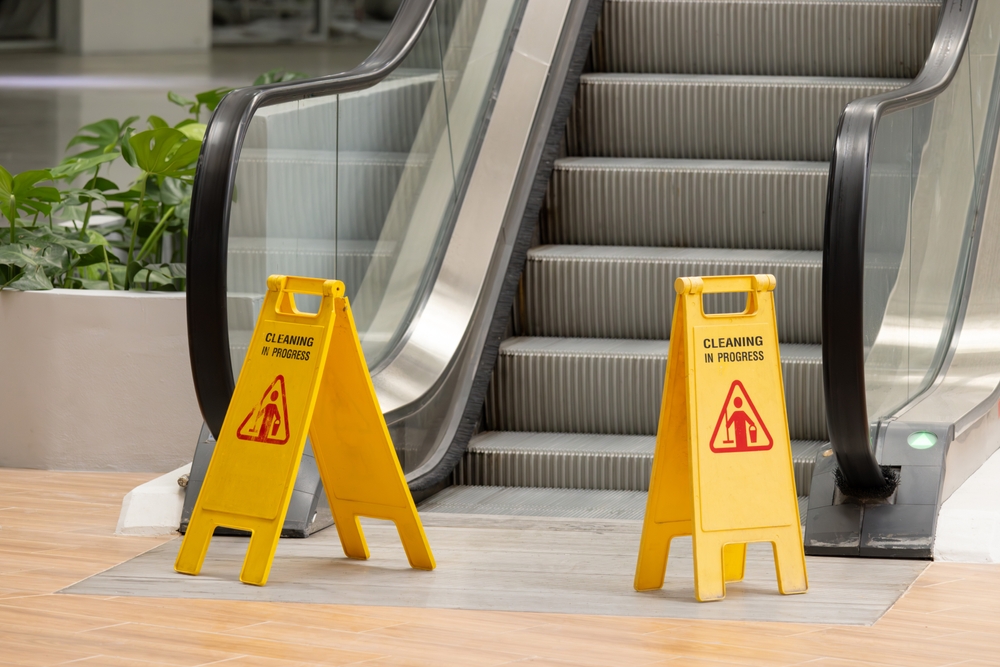
Escalator accidents that result in injury often involve more than a few bumps or bruises. When heavy machinery malfunctions or escalator safety protocols are ignored, the outcome can be life-altering.
Traumatic brain injuries (TBI)
Falls on or from escalators can cause skull fractures or concussions. In severe cases, long-term cognitive damage or permanent disability may follow.
Spinal cord injuries and paralysis
Falling down a moving escalator can result in broken vertebrae, nerve damage, or complete paralysis. Recovery, if it is possible, may involve extensive surgery, rehabilitation, and long-term care.
Crush injuries
When body parts are caught between moving escalator components, such as the comb plate, step edges, or side panels, the resulting trauma can lead to severe crush injuries. Victims often suffer nerve damage, broken bones, or permanent tissue loss.
Amputations
Entrapment in malfunctioning or poorly maintained escalators can result in the loss of fingers, toes, or entire limbs. Amputations caused by escalator accidents are especially devastating and often require long-term prosthetics, rehabilitation, and psychological support.
Internal injuries
Falls and mechanical impacts involving escalators can cause internal bleeding, organ damage, or other life-threatening complications. These injuries are often not immediately visible, which makes prompt medical attention critical. Without timely treatment, internal injuries can quickly become fatal.
Wrongful death
Escalator accidents can lead to death when the failure involves a significant fall, entrapment, or impact with malfunctioning parts. When a fatal injury occurs, surviving family members may have the right to pursue a wrongful death claim. These cases require a full investigation to determine who failed their responsibility to keep the escalator safe for use.
Who May Be Liable for an Escalator Injury?
Determining liability in a serious escalator injury case is not always straightforward. Depending on the facts, several parties may be legally responsible. Texas law allows injured parties or surviving families in fatal cases to pursue claims against one or more defendants.
Property owners and managers
Under Texas premises liability laws, property owners have a legal duty to maintain safe conditions for lawful visitors. This includes regularly inspecting escalators, posting warning signs when needed, and promptly fixing defects. Failing to do so may make them liable for injuries caused by unsafe conditions on their property.
Maintenance and inspection contractors
Escalators require ongoing maintenance and detailed inspections. When third-party contractors perform substandard work or falsify inspection records, they may be held accountable for any resulting injuries. In Texas, multiple contractors may share liability if their negligence contributed to the same failure.
Manufacturers and designers
If an escalator's design is inherently unsafe or a component is defective, the manufacturer may be liable under Texas product liability laws. In cases where design flaws or defective safety mechanisms are to blame, victims may have grounds for a product liability claim.
Government entities
Escalator injuries that occur in public transit stations or municipal buildings may involve claims against government agencies. These cases often have shorter deadlines and stricter requirements under the Texas Tort Claims Act, so it’s important to act quickly if a government entity may be involved.
Types of Compensation Available in Escalator Injury Cases
When an injury results in permanent disability or death, the financial impact can be devastating. Texas law allows victims or families to recover a wide range of damages depending on the facts of the case.
Medical expenses
These include emergency care, hospitalization, surgeries, rehabilitation, assistive devices, and any future medical costs associated with long-term disability.
Lost income and diminished earning capacity
If injuries prevent you from returning to work, compensation may include past and future lost wages and reduced earning potential.
Pain and suffering
Texas courts allow compensation for physical pain, mental anguish, emotional trauma, and loss of enjoyment of life caused by serious injuries.
Wrongful death damages
In fatal escalator accidents, surviving family members may pursue wrongful death damages, including loss of companionship, funeral expenses, and emotional suffering.
FAQs About Liability for Escalator Injuries
What is the deadline for filing an escalator injury lawsuit in Texas?
Texas generally allows two years from the date of the injury or death to file a personal injury or wrongful death claim. There are exceptions, so contact an attorney as soon as possible to preserve your rights.
Can I still sue if the escalator injury occurred in a government building?
Yes, but lawsuits against government entities in Texas follow different rules under the Texas Tort Claims Act. Notice may need to be given within six months or less, so fast action is essential.
What if multiple parties are responsible for the escalator failure?
Texas law allows for multiple parties to be held jointly or severally liable. A skilled attorney can help determine how fault should be apportioned.
How can I prove the escalator was defective?
Evidence may include inspection records, maintenance logs, surveillance footage, eyewitness statements, and expert evaluations. An experienced legal team will gather and preserve this critical evidence.
What does it cost to hire a personal injury lawyer for this type of case?
At Terry Bryant Accident & Injury Law, consultations are free, and you pay nothing unless your case is successfully resolved.
Call Terry Bryant Accident & Injury Law After a Serious Escalator Injury

If you or a loved one has suffered a catastrophic injury or if you lost a family member in an escalator accident, you deserve answers and accountability. At Terry Bryant Accident & Injury Law, we have spent over 40 years fighting for seriously injured Texans seriously injured by unsafe conditions, defective equipment, and corporate negligence.
Our founder, Terry Bryant, is a Board Certified personal injury trial lawyer and former judge with deep knowledge of Texas law. Under his guidance, our firm has recovered over $1 billion for clients and has earned nearly 100% positive ratings online thanks to our compassionate guidance, tenacious advocacy, and results. We handle the legal process so you can focus on healing or honoring your loved one.
We serve clients across Houston and throughout Texas. Call (713) 973-8888 or contact us online to schedule a free consultation today. Let us help you pursue the justice and compensation you need to heal and move forward.