Texas Slip and Fall Laws: What You Need to Prove to Win Your Case
Texas slip and fall cases are decided based on what you can prove about the property owner’s responsibility, not just the fact that an injury occurred.
- You must show the property owner knew or should have known about the dangerous condition
- The hazard must have posed an unreasonable risk of harm
- The owner must have failed to fix or warn about the condition
- The failure must be directly connected to the injury
- The strength of a claim depends on clear, consistent evidence
When a slip and fall happens, many people assume that being injured is enough to bring a claim. In reality, these cases depend on whether the property owner can be shown to have acted unreasonably under the circumstances.
The short answer is that Texas law requires proof of specific elements tied to responsibility, not just the existence of an injury. Missing even one of these elements may affect how the claim is evaluated and whether it moves forward.
At Terry Bryant Accident & Injury Law, we work with individuals across Houston to review these cases, organize evidence, and clarify what legal options may apply based on the facts.
What You Need to Know About Texas Slip and Fall Laws
- Texas slip and fall claims fall under premises liability, which governs how property owners must maintain safe conditions for visitors
- You must prove the property owner knew or should have known about the hazard before your injury occurred
- The dangerous condition must present an unreasonable risk of harm, not just an inconvenience
- The owner's failure to fix or warn about the condition must be a direct cause of your injury
- Evidence collected early in the process may determine how a claim is evaluated and resolved
What Are Texas Slip and Fall Laws and How Do They Work?

Texas slip and fall claims are governed by premises liability law, which holds property owners responsible for maintaining reasonably safe conditions for people who enter their property.
These cases do not automatically result in liability just because a fall occurred.
The outcome depends on whether the property owner failed to meet a legal standard of care that applies to your situation.
Under the Texas Civil Practice and Remedies Code, the responsibilities of a property owner depend in part on the legal status of the person who was injured.
Invitees, such as customers in a store, receive the highest level of protection. Licensees and trespassers may be treated differently depending on the circumstances.
How Texas Slip and Fall Laws Define Property Owner Responsibility
Texas law requires property owners to inspect their premises, identify conditions that create unreasonable risks, and either fix those conditions or provide adequate warning. This duty is active, not passive.
A property owner who waits until someone is hurt before addressing a known hazard may be found to have failed that duty.
The scope of responsibility applies to retail stores, apartment complexes, parking lots, restaurants, and most other privately owned spaces where people are invited to visit.
What Counts as a Dangerous Condition in a Texas Slip and Fall Case
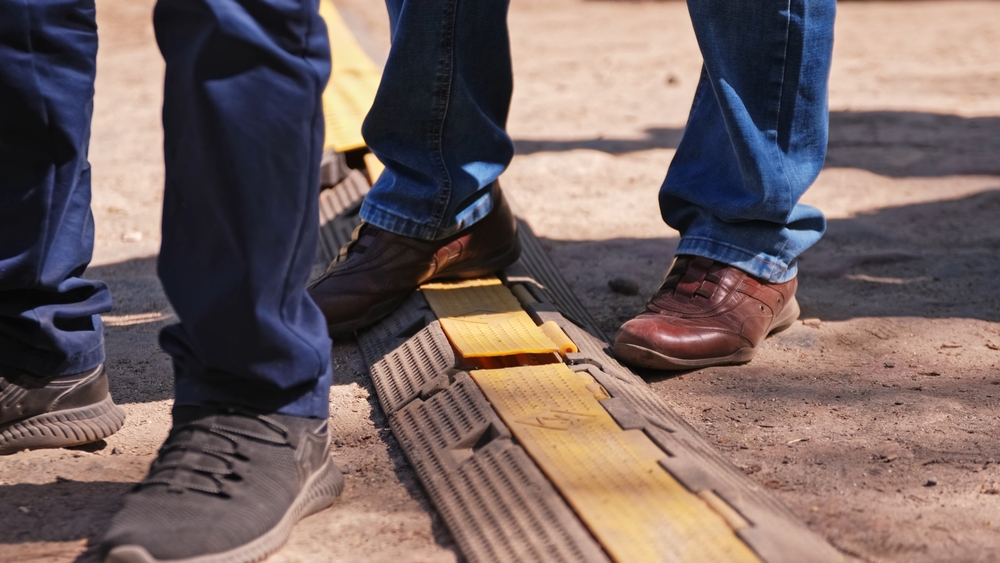
A dangerous condition is any physical hazard that creates an unreasonable risk of harm to a visitor who exercises ordinary care.
Common examples include wet or slippery floors, uneven pavement, broken stairs, poor lighting, unmarked drop-offs, and loose floor coverings.
Whether a condition qualifies as dangerous is evaluated based on how visible it was, how long it existed, and whether a reasonable person would recognize the risk.
Not every imperfection qualifies, but conditions that pose a clear risk of serious injury generally meet this threshold under Texas slip and fall laws.
What You Must Prove to Win a Texas Slip and Fall Case
Winning a Texas slip and fall case requires satisfying four specific legal elements that connect the property owner's conduct to your injury.
Our attorneys evaluate each of these elements from the start to determine how a claim may be supported.
To win a Texas slip and fall case, you must prove all four elements
| Legal Element | Description under Texas Law |
|---|---|
| 1. Knowledge | The property owner had actual knowledge of the hazard or constructive knowledge (should have known through reasonable inspection). |
| 2. Failure to Act | The owner failed to exercise reasonable care by not repairing the dangerous condition or providing an adequate warning. |
| 3. Causation | The specific dangerous condition was the direct and proximate cause of the fall and resulting injuries. |
| 4. Damages | The claimant suffered actual harm, such as medical expenses, lost wages, and pain and suffering. |
Note: In Texas, missing even 1 of these 4 elements may prevent a successful premises liability claim.
How to Prove the Property Owner Knew About the Hazard
You must show that the property owner had actual knowledge of the dangerous condition or that the condition existed long enough that a reasonable inspection would have revealed it. This is known as actual or constructive knowledge.
Actual knowledge means the owner was directly aware of the problem, such as through an employee report or a prior complaint.
Constructive knowledge means the hazard had been present long enough that it should have been discovered through routine maintenance.
Surveillance footage, maintenance logs, prior incident reports, and employee testimony may all be relevant to establishing this element.
How to Prove the Hazard Was Not Addressed in a Texas Slip and Fall Case
Once knowledge is established, you must show that the owner failed to take reasonable steps to address the condition.
This can mean failing to clean up a spill, failing to repair a broken surface, or failing to place warning signs near a known hazard.
Texas courts look at whether the response was timely and adequate given the nature of the risk.
If an employee placed a wet floor sign, but the hazard remained present for hours without further action, that may not constitute a reasonable response under Texas slip and fall laws.
How to Prove the Hazard Directly Caused Your Injury
You must establish that the dangerous condition was the direct cause of your injury, not just a factor present at the time.
This requires consistent documentation showing how the fall occurred and how your injuries connect to that specific event.
Medical records, photographs, and videos of the scene, witness accounts, and your own testimony all contribute to this element.
Gaps between the incident and initial medical treatment can complicate this connection, which is one reason why prompt evaluation matters.
What Evidence Helps Support a Texas Slip and Fall Claim
Evidence is central to how Texas slip and fall cases are evaluated. Our team helps clients understand what documentation may strengthen their position from the beginning of the process.
What Types of Documentation Strengthen a Texas Slip and Fall Case
Relevant documentation may include photographs or video of the hazard taken at the time of the incident.
Also, written incident reports filed with the property owner, surveillance footage from the location, medical records and treatment histories, receipts for expenses related to the injury, and any communications with the property owner or their insurer.
The sooner this information is gathered, the better. Surveillance footage is often overwritten within days, and physical conditions at the scene may change quickly.
Why Consistency in Evidence Matters for Texas Slip and Fall Claims
Consistent documentation means that the facts of the incident are described the same way across medical records, incident reports, insurance communications, and legal filings.
Inconsistencies, even minor ones, may be used by a property owner's insurer to challenge the claim. When our team evaluates a case early, we can help identify and address potential gaps before they become problems.
Are you ready to explore your legal options and begin the path toward financial stability? Call Terry Bryant Accident & Injury Law now at 713-973-8888 or toll-free 1 (800) 444-5000 for a free and confidential consultation with our experienced slip and fall accident injury lawyers in Houston.
What Can Affect Liability in Texas Slip and Fall Cases?
Several factors influence how liability is assessed in a Texas slip and fall case. Understanding them helps set realistic expectations for how a claim may develop.
How Comparative Fault Works in Texas Slip and Fall Cases
Texas follows a modified comparative fault rule under Texas Civil Practice and Remedies Code Chapter 33. This means that if you are found partially responsible for the incident, your potential compensation may be reduced in proportion to your share of fault.
If your percentage of fault exceeds 51%, you may not be able to recover.
A property owner's insurer will often attempt to shift responsibility onto the injured person, which makes documentation of the conditions at the time of the fall particularly important.
How Property Type Can Affect a Texas Slip and Fall Case
The type of property where the fall occurred can affect how liability is evaluated. Commercial properties open to the public, such as grocery stores or retail chains, typically carry a higher duty of care than residential properties or private land.
Government-owned property involves additional procedural requirements and different notice deadlines. Industrial properties may involve overlapping liability between owners, operators, and contractors.
How Timing and Maintenance Records Influence Texas Slip and Fall Claims
Maintenance logs, inspection schedules, and cleaning records can directly affect how liability is established. If records show that an area was inspected recently and no hazard was documented, that may support a property owner's defense.
If records show that a known problem was never addressed, that may support your claim. Our team can help identify whether these records should be requested early in the process.
Do I Need a Lawyer for a Texas Slip and Fall Case?

Working with our attorneys may help ensure that each element of a Texas slip and fall case is properly documented and presented. These cases are not straightforward, and liability is not automatic simply because a fall occurred.
Because the elements of knowledge, failure to act, and causation each require specific types of evidence, having legal support early in the process may reduce the risk of important information being lost or overlooked.
How Early Case Preparation Affects a Texas Slip and Fall Claim
Starting with our team as soon as possible after a fall allows time to preserve surveillance footage before it is overwritten, request maintenance logs before they are lost, identify witnesses while their memories are still clear, and document the physical scene before conditions change.
Claims that begin with strong documentation are generally easier to evaluate and more difficult to dismiss outright.
Why Waiting Creates Risk in Texas Slip and Fall Cases
Delaying the process limits access to time-sensitive evidence and may allow the property owner's insurer to shape the narrative before you have had a chance to document your position. It also reduces the time available for a thorough investigation before any applicable statute of limitations creates urgency.
What to Keep Track of After a Slip and Fall in Texas
Good organization may strengthen your claim and help our team provide a more complete evaluation during your initial consultation. Many clients find it useful to gather the following from the beginning:
- Photographs and video of the location where the fall occurred, including any visible hazards
- A written account of the incident, including the time, date, and what you observed before and after the fall
- The names and contact information of anyone who witnessed the fall
- A copy of any incident report filed with the property owner
- Records of all medical appointments, diagnoses, and expenses related to the injury
- Notes about how the injury has affected your work, daily activities, and quality of life
Having this information organized before contacting us allows our team to begin a meaningful evaluation from the first conversation.
Ask Terry Bryant Accident & Injury Law
Q: How long do I have to file a slip and fall claim in Texas? A: Most Texas slip and fall claims must be filed within 2 years of the date of the incident under the state's statute of limitations. Claims involving government-owned property may have shorter notice requirements, sometimes as little as 45 days. (*Always speak directly to an attorney for the exact deadlines that apply to your potential claims). Acting early helps preserve evidence and protects your right to pursue a claim.
Q: What if there were no warning signs where I fell? A: The absence of warning signs may be relevant to your claim, particularly if a hazard had existed long enough that the property owner had time to post a warning or address the condition. Whether the lack of signage affects liability depends on the specific facts of the situation.
Q: What if the business says the area had just been cleaned? A: Timing matters in these cases. If a floor was cleaned but remained hazardous, or if the cleaning itself created the dangerous condition, liability may still apply. Maintenance logs and employee schedules are often requested to evaluate claims like this, and our team can help determine what records are relevant.
Q: Can I still file a claim if I was partially at fault for the fall? A: Texas follows a modified comparative fault rule. If you were partially responsible for the incident, your potential recovery may be reduced proportionally. As long as your share of fault does not exceed 51%, a claim may still be pursued. Our attorneys can help evaluate how fault might be assessed in your specific situation.
Texas Slip and Fall Laws: Questions Answered by Our Houston Attorneys
Can I file a Texas slip and fall claim if the accident happened in a grocery store?
Yes, grocery stores and other commercial retailers owe a duty of care to customers as invitees. A claim may be filed if the store knew or should have known about a hazardous condition and failed to address it. Common situations include wet floors near refrigeration units, spills in aisles, and uneven entrance surfaces.
Does it matter how long the hazard existed before I fell?
Yes. The length of time a hazard was present is directly relevant to whether the property owner had constructive knowledge. A spill that occurred seconds before a fall is treated differently from a condition that had existed for hours or days without being addressed.
Can I still file a claim if the fall happened outdoors on private property?
Outdoor conditions may still give rise to a premises liability claim depending on who was responsible for maintaining the area, what the specific hazard was, and your legal status on the property. Weather-related conditions are evaluated differently from structural or maintenance-related hazards.
What if more than one party owns or manages the property?
Some Texas slip and fall cases involve multiple parties, such as a property owner and a separate property management company or cleaning contractor. Liability may be shared depending on who was responsible for maintaining the specific area where the fall occurred. Our team evaluates these situations to determine who may bear responsibility.
One Conversation Can Change Where You Stand
Slip and fall cases involve questions that are not always obvious at first. What looked like a minor incident may involve real legal responsibility on the part of a property owner. What felt like a clear-cut situation may have complications worth evaluating before making any decisions.
At Terry Bryant Accident & Injury Law, our Houston team works with injury victims to review premises liability claims, explain how Texas law applies, and help you understand what your options are. Consultations are available at no upfront cost, in English and Spanish.
Call us now at (713) 973-8888 or toll-free 1 (800) 444-5000. There is no pressure and no obligation — just a conversation about what happened and what may be possible.