If you’ve just received a truck accident insurance offer, chances are it’s lower than what you need and what your claim is truly worth. For many truck accident survivors, that first offer shows up fast, often before they’ve had time to contact a personal injury attorney or fully grasp the total cost of their recovery.
This process isn’t accidental. Insurance companies are businesses. Their goal is to resolve claims quickly and cheaply. They rely on the fact that you’re still in pain, overwhelmed by bills, and uncertain about what comes next.
Accepting a lowball offer might feel like relief in the short term, but it could leave you without the support you need long-term. From medical bills after a truck crash to future care, loss of income, and pain and suffering compensation, there’s more at stake than you may realize.
Before accepting a first insurance offer, a trusted truck accident lawyer can review your claim and protect your rights—contact us today for a free consultation.
Request Your Free Consultation
Key Takeaways For Truck Accident Insurance Offers
- Insurance companies often offer a low first settlement to protect their bottom line, not to reflect the true value of your losses.
- A first offer rarely accounts for long-term medical costs, emotional distress, or lost future earnings.
- Commercial truck insurance policies can involve multiple liable parties, each with its own adjuster and negotiation tactics.
- Rejecting the first settlement offer does not end your case. It opens the door to negotiating for a more accurate payout.
- Legal advice after a truck crash is essential, especially in serious or fatal injury cases where the stakes are high.
- A Texas personal injury attorney can evaluate the true value of your claim, handle the claim process, and communicate directly with insurance companies on your behalf.
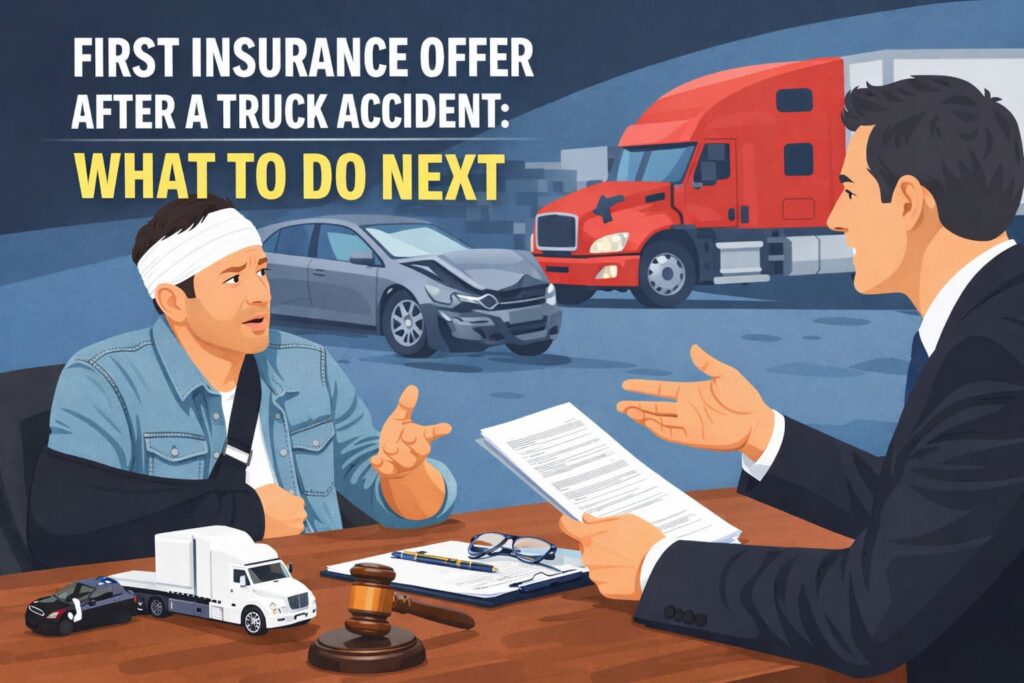
Why Do Insurance Companies Make Low First Offers?
Insurance companies approach commercial truck accident claims with one thing in mind: minimizing payouts. The first settlement offer is rarely based on the whole picture.
Here’s why the initial amount is typically low:
- Limited medical records: Early insurance offers often rely solely on ER records, not long-term diagnoses.
- Uncertainty around liability: If fault is still under investigation, insurers may take advantage of that to lower your claim’s value.
- Pressure tactics: Insurance adjusters know that quick cash can feel tempting when you're injured and out of work.
These methods may seem unethical, but they aren’t illegal. They’re not in your best interest either. It’s common for people to ask: Should I accept the first settlement offer from the insurance company after a truck accident? The short answer is no, not until you know the full extent of your losses.
What Should I Do After Receiving a Truck Accident Insurance Offer?
Don’t respond right away. The decisions you make now can affect your entire future. Instead, take these steps to protect your rights and set yourself up for a more accurate outcome:
- Review the offer with an attorney experienced in Texas truck accident cases, laws, and commercial insurance policies.
- Gather full documentation of your injuries, including long-term medical care, physical therapy, and specialist visits.
- Track all out-of-pocket costs related to the crash, including travel for treatment, lost income, and property damage.
These steps shift control back into your hands, which is essential when you’re up against a trained insurance adjuster.
Common Injuries in Serious Truck Accidents
When a commercial truck crashes into a smaller vehicle, the results are often catastrophic. Insurance companies treat these cases differently because the potential damages are much higher. First offers don’t reflect that reality.
In serious or fatal cases, common injuries include:
- Traumatic brain injuries (TBIs)
- Spinal cord injuries (SCIs) and paralysis
- Internal organ damage
- Severe burns or disfigurement
- Multiple fractures requiring surgery
These injuries often result in lifelong complications. When the first offer doesn’t cover future care, it puts you at risk. That’s why an accurate truck accident claim process involves projecting your future medical and financial needs—not just current expenses.
What Happens If I Reject the First Offer?
Many people worry that rejecting the first offer will delay their case. In reality, it’s a standard part of the negotiation process. It signals to the insurance company that you’re taking the process seriously—and that you’re prepared to pursue a fairer outcome.
Here’s what happens after rejecting a first settlement offer after a truck accident:
- The insurance adjuster may increase the offer, especially if you’ve provided documentation of damages.
- Additional evidence may be requested, such as a more detailed medical evaluation or witness statements.
- You may begin formal negotiations or consider filing a lawsuit if settlement talks stall.
Turning down a low offer doesn’t mean you're walking away from compensation. It simply means you're not settling for less than what your case is worth.
Key Signs the First Offer Is Too Low
It’s not always obvious that a first offer is unfair. In fact, some may seem generous until you factor in future expenses or talk to someone who’s been through it.
Keep an eye out for these warning signs:
- The offer arrives within days of the crash
- The adjuster asks you to sign a release quickly
- It doesn’t include future treatment or lost earning potential
- You haven't had a full medical evaluation yet
- The offer doesn't cover non-economic damages, like emotional trauma
If any of these apply to you, there’s a good chance the offer isn’t based on the full picture.
Quick, early offers can feel like progress. But if you’re dealing with long-term injuries or someone you love has been lost, it’s worth taking the time to assess everything.
Why Are Truck Accident Claims More Complicated?
Unlike regular car crashes, truck accident claim processes often involve multiple layers of liability. Trucking companies, maintenance providers, and even freight brokers may share blame. That complicates the insurance picture—and makes early offers even more suspect.
Key differences in commercial truck accident claims:
- Higher policy limits, which give insurers more incentive to settle low
- Federal regulations, including hours-of-service and drug testing rules
- Black box data and accident reconstruction reports that can support your version of events
- Third-party liability, such as cargo loading or fleet maintenance companies
Each of these factors can affect what a fair offer looks like. Without a full investigation, the value of your claim remains hidden—something the insurance company is hoping you don’t pursue.
Request Your Free Consultation
The Role of Evidence in Strengthening Your Claim
You don’t need to match the insurance company’s negotiation skills—you need documentation that tells your story. In cases involving serious injuries or fatalities, the strength of your evidence can determine the outcome of your claim.
Important evidence to gather includes:
- Medical records and future treatment plans
- Photos and videos of injuries and vehicle damage
- Police reports and eyewitness statements
- Proof of lost wages or career impact
- Expert evaluations, such as accident reconstruction or economic forecasting
Detailed evidence makes it harder for insurers to lowball you. It also shifts the conversation from speculation to facts, which leads to more meaningful negotiations.
What Damages Can You Recover After a Truck Accident?
Truck accident claims are about more than covering immediate expenses. A fair settlement considers the full impact of the crash—physically, emotionally, and financially. If the insurance company’s first offer doesn’t include these categories, it’s incomplete.
Here are common types of compensable damages in serious or fatal truck accident claims:
- Medical expenses for ER visits, surgeries, rehabilitation, and ongoing care
- Lost income and reduced earning potential if you can’t return to work
- Pain and suffering compensation for physical pain and emotional distress
- Loss of consortium or companionship, especially in wrongful death cases
- Property damage, including vehicle repair or replacement
- Funeral and burial costs when a loved one is killed in a crash
A fair settlement accounts for both economic and non-economic damages. This is especially important when your life has been changed permanently by the collision.
What Insurance Tactics Should You Watch Out For?
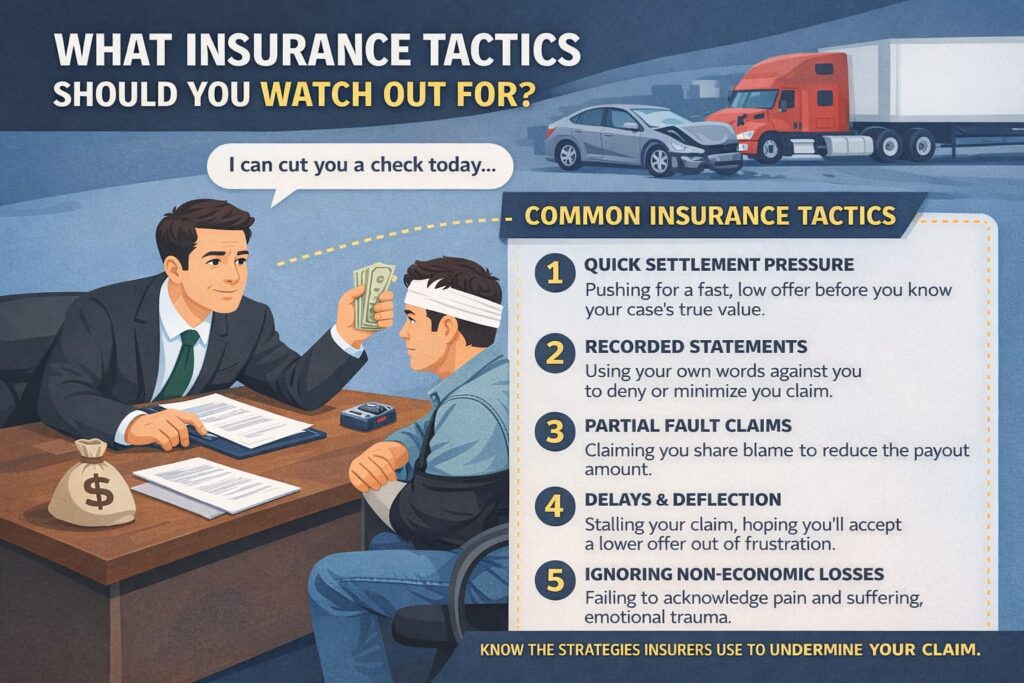
Insurance adjusters are trained to close claims quickly and limit payouts. That doesn't mean they’re dishonest, but it does mean you must be cautious about anything you say, write, or sign.
Here are 5 common insurance tactics after a crash that may affect your claim:
- Quick settlement pressure: The adjuster may offer money before you’ve seen a lawyer or a medical specialist, hoping you’ll accept before you understand the full extent of your injuries.
- Recorded statements: Insurers often ask questions in a way that shifts blame, using your words to downplay their responsibility or dispute your injuries.
- Partial fault claims: They might suggest that you were partly responsible for the crash, which could reduce what they’re willing to pay under comparative fault rules.
- Delays and deflection: Some adjusters intentionally stall or stop responding, hoping the frustration or confusion pushes you to accept a lower offer.
- Ignoring non-economic losses: Many first offers leave out pain and suffering, emotional trauma, or mental health impacts, even though these are real and compensable damages.
If you're wondering, “What can I do if the insurance company is trying to lowball me?”, the first step is to recognize these patterns. The second is to respond with the facts and strong documentation that a truck accident lawyer can provide, never guessing or making assumptions.
What Are Your Rights Under Texas Truck Accident Laws?
Texas follows a modified comparative fault system under Civil Practice and Remedies Code § 33.001. This means you can still recover damages if you’re less than 51% at fault for the accident. However, your compensation will be reduced by your percentage of fault.
You also have a strict deadline to act. The general statute of limitations for personal injury in Texas is 2 years from the date of the crash. If the case involves wrongful death, the same 2-year window applies from the date of death. (*Always speak directly to an attorney for the exact deadlines that apply to your potential claims.)
Other important rights to know:
- You are not required to give a recorded statement to the insurance company.
- You have the right to seek legal advice after a truck crash before signing anything.
- You may request access to certain types of evidence, such as black box data and driver logs.
- You can file a lawsuit if the insurance company acts in bad faith, such as denying a valid claim without cause.
These rights exist to protect you, but they’re only effective when someone enforces them on your behalf. An experienced legal advocate can step in, assert those rights, and make sure the insurance company plays by the rules.
What’s the Risk of Accepting an Early Settlement?
The main risk of accepting an early settlement is that you may not know the full cost of your injuries and losses until it’s too late. Once you accept an offer and sign a release, you cannot go back and ask for more, despite any new issues that arise.
Early settlements often miss:
- Future surgeries or treatments not yet scheduled
- Delayed complications like chronic pain or PTSD
- Reduced ability to work or support your family
- Invisible costs, such as emotional trauma and loss of quality of life
If you're asking, "How do I know if a truck accident settlement offer is fair?", the truth is, it may be extremely difficult to know without a full legal and financial review, especially in cases involving serious injuries or wrongful death. A personal injury lawyer works with medical professionals, economists, and other experts to assess the full scope of your losses. That includes not just immediate medical bills or property damage, but also long-term care needs, future lost income, and damages that come without a price tag, such as the emotional and psychological toll of the crash.
FAQ for Truck Accident Insurance Offers
What happens if I ignore the insurance company's first offer?
If you ignore the offer, the insurance company may follow up once or twice, then close the file. This doesn't end your legal options, but waiting too long to respond could harm your claim’s strength.
Can I negotiate a truck accident insurance offer myself?
You can, but it’s not recommended, especially in serious injury cases. Without legal or medical help, it’s easy to underestimate what your case is worth. According to the Insurance Research Council, people who hire personal injury lawyers recover 40% more compensation on average than those who handle claims on their own.
What if the truck driver admitted fault but the insurance offer is still low?
Even with an admission of fault, insurers may argue that your injuries aren’t severe or that treatment wasn’t necessary. Documentation and legal support are key to countering these arguments.
Is it normal for the insurance company to delay responding?
Yes. Delays are a common tactic used to frustrate claimants and push them toward lower settlements. If delays persist, it may signal bad faith in the insurance company’s practices.
How long does it take to settle a truck accident claim in Texas?
Every case is different, and the timeline can vary based on how serious the injuries are, how clear the facts are, and how the insurance company responds. After reviewing your case, your lawyer can give you a better idea of what to expect and help move the process forward as efficiently as possible.
Next Steps: Getting Help from a Texas Truck Accident Lawyer
Insurance companies move fast to protect themselves after serious truck crashes in Texas. If they’re working to lower the value of your claim, shouldn’t you take swift legal action to protect it?
At Terry Bryant Accident & Injury Law, we’ve helped seriously injured victims for over 40 years. Our Houston-based team of experienced truck accident lawyers investigates claims, handles negotiations, and builds strong evidence-based cases that get results.
If you’ve received a truck accident insurance offer after a serious or fatal crash, don’t sign anything yet. Call Terry Bryant Accident & Injury Law now at (713) 973-8888, or toll-free 1 (800) 444-5000. You may also contact us online for a free and confidential case review. We’re here to listen, and we’re ready to help.