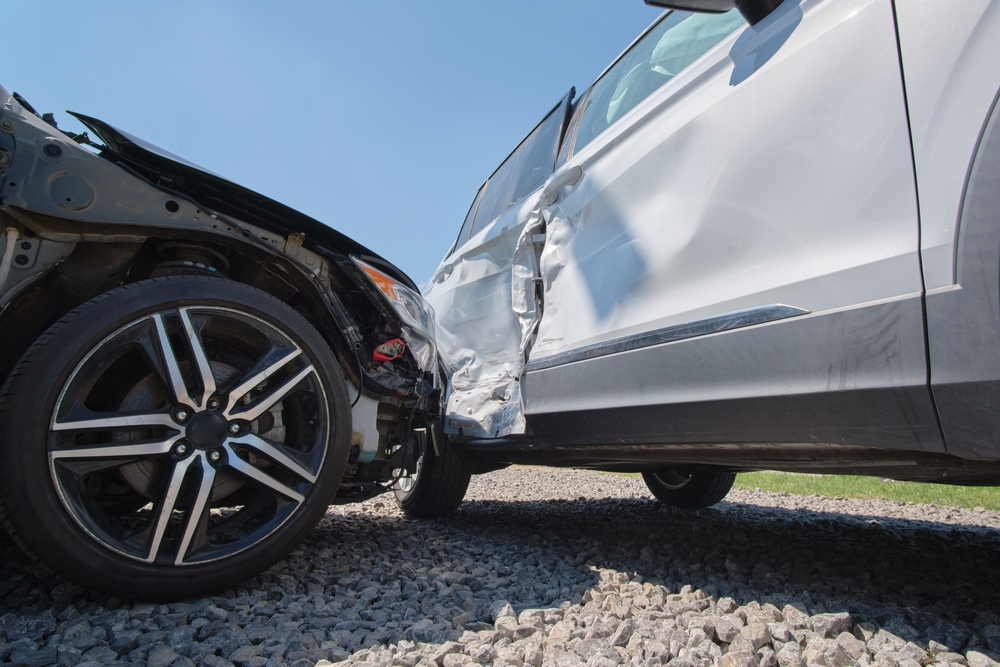
The call usually comes within a week. An adjuster has reviewed the crash, and somewhere in a pleasant conversation lands a sentence like "we are assigning you 40% of the responsibility." No explanation of where 40 came from.
Comparative negligence in Texas car accidents is the rule behind that number. The percentage is not a measurement. It is an opening bid, and Texas law gives you specific ground to push back on.
If You Were Partly at Fault, Can You Still Recover in Texas?
Yes, as long as your share of the blame is not more than half. Texas uses modified comparative negligence, and the percentage assigned to you is subtracted directly from your recovery.
- 0% at fault: full damages
- 1% to 50% at fault: damages reduced by your percentage
- More than 50% at fault: no recovery at all, under Tex. Civ. Prac. & Rem. Code §33.001
- Exactly 50% still recovers, cut in half, so the cutoff is more than half rather than half
- An insurance adjuster's percentage is a negotiating position, not a legal finding
Percentages are argued, not measured, which is why the number an insurer opens with rarely survives contact with the evidence.
Key Takeaways About Shared Fault in Texas Crashes
- Texas bars recovery only when a claimant is more than 50% responsible, so partial fault does not end a claim
- Only a jury or judge makes a binding allocation of fault, stated in whole numbers
- The Texas Department of Insurance says plainly it cannot decide who caused a crash, and neither can an adjuster
- Seat belt nonuse became admissible in Texas fault apportionment in 2015
- A defendant found more than 50% responsible can be pursued for the entire recoverable amount
What Does Modified Comparative Negligence Mean in Texas?
It means fault gets divided into percentages, and yours reduces what you collect until it crosses a hard line.
| Your percentage of responsibility | What you recover |
| 0% | Full damages |
| 1% to 50% | Damages reduced by that percentage (§33.012) |
| More than 50% | Nothing (§33.001) |
The statute is one sentence. Section 33.001 says a claimant may not recover damages if his percentage of responsibility is greater than 50 percent. Note the wording: at exactly 50%, recovery continues at half value. The shorthand "51% bar" works in conversation but is wrong if read as "50% or more."
Who Actually Decides Your Percentage?
The jury does, or the judge in a bench trial. Under §33.003, the trier of fact assigns a percentage in whole numbers to each claimant, defendant, settling party, and responsible third party.
Two things people assume are binding are not.
The police report is not a verdict. An officer's opinion about contributing factors is evidence that can be argued about, and officers rarely witness the crash.
The adjuster is not a referee. The Texas Department of Insurance lists, among things it cannot do, decide who was at fault in an accident. If the state regulator does not decide fault, a claims employee is not doing so either.
One trial detail is worth knowing: the jury answers the damages question without applying any reduction. The court applies your percentage afterward.
How Much Does a Percentage Actually Cost You?
On a claim valued at $200,000, being assigned 20% costs $40,000. Being talked up to 35% costs $70,000. Being pushed to 51% costs the entire claim.
That math explains adjuster behavior. Moving a percentage costs an insurer nothing, requires no proof at the claims stage, and erases the file if it clears half.
What Arguments Push a Percentage Up?
Some recur in nearly every Houston file.
Was there a seat belt in the picture?
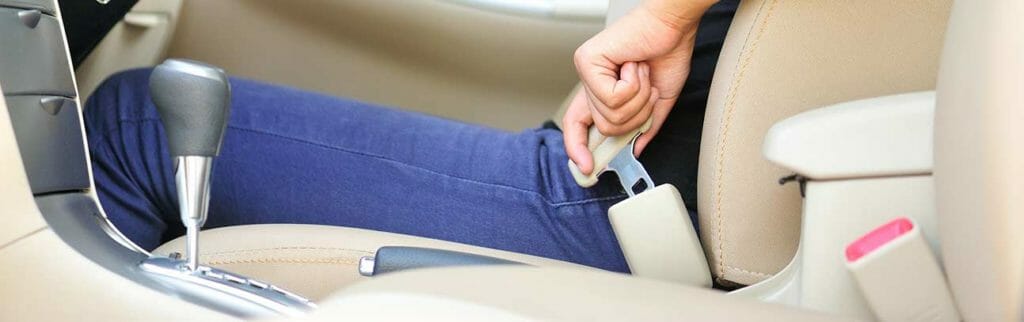
This changed in 2015. In Nabors Well Services v. Romero, the Texas Supreme Court held that seat belt use or nonuse is admissible for apportioning responsibility, overturning four decades of the opposite rule.
Nonuse does not cause a collision. It can be argued to have caused the injuries, which is enough to move a percentage.
Could you have avoided it?
The lawful-but-avoidable argument shows up constantly on Houston freeways. You had the green light, and the defense says you should have seen the vehicle running the red. You were rear-ended in stop-and-go traffic on the Katy Freeway, and the argument becomes that you stopped too fast.
What were you doing in the seconds before impact?
Phone records, infotainment data, and dashcam footage are routinely requested. Speed, following distance, and lane changes get reconstructed from vehicle data most drivers do not know exists. Expired inspections and worn tires come up for the same reason.
What Do Texas Crash Numbers Show?
- TxDOT recorded 554,146 reportable crashes in Texas in 2024, with 4,150 people killed and 18,218 suspected serious injuries (Texas Motor Vehicle Traffic Crash Facts, 2024).
- That is one reportable crash every 57 seconds, and TxDOT notes there were no deathless days on Texas roadways in 2024.
- Texas minimum liability limits are $30,000 per injured person, $60,000 per crash, and $25,000 for property damage, known as 30/60/25 (Texas Department of Insurance).
Why it matters legally: with policies this thin, a fault percentage often decides whether a seriously injured person reaches meaningful coverage at all. Underinsured motorist coverage becomes the real question in many Harris County cases.
What Happens When More Than Two Vehicles Are Involved?

Multi-vehicle pileups on I-45 and the 610 Loop follow different rules than a two-car collision.
Each defendant normally pays only its own share. Under §33.013, several liability is the default.
Unless one defendant is more than 50% responsible. That defendant becomes jointly and severally liable for the whole recoverable amount, which matters enormously when the most-at-fault driver carries a minimum policy and a commercial defendant is also in the case.
Defendants can add people you never sued. Section 33.004 lets a defendant designate a responsible third party up to 60 days before trial, including a phantom vehicle or road contractor. Percentage assigned there reduces your recovery with nobody to collect from.
Settling early has a cost. Under §33.012(b), settlement dollars are subtracted from what remains recoverable against the others.
Passengers are claimants too, so a jury assigns them a percentage as well, usually zero though not automatically. Their advantage is that they can pursue both drivers.
Which Deadlines Apply?
Two years from the crash for most injury claims, under §16.003. For a death, the two years run from the date of death.
Crashes involving a government vehicle are far shorter. The Texas Tort Claims Act requires notice within six months, and §101.101(b) lets city charters set shorter periods. A METRO bus, a city truck, or a school district vehicle can carry a deadline measured in weeks, and damages against governmental units are capped by statute.
What Can Be Recovered When Fault Is Shared?
The same categories as any injury claim, then reduced by your percentage: medical care past and future, lost income, lost earning capacity, physical pain, mental anguish, disfigurement, and impairment.
Property damage follows its own track and is often settled separately, which is how people accept a fault percentage on the vehicle repair without realizing they may have set a tone for the injury claim.
When Should You Talk to a Lawyer About Shared Fault?
When an adjuster has assigned you a percentage, when injuries required more than an emergency room visit, when a commercial or government vehicle was involved, or when you are asked for a recorded statement.
Recorded statements are where percentages get built. Questions about how fast you were going, whether you saw the other car, and what you could have done differently are not small talk.
What Tends to Help Before Fault Is Decided
Many claimants find it helpful to:
- Request the written basis for any percentage an insurer assigns
- Photograph final rest positions, skid marks, and debris fields before anything is cleared
- Identify nearby businesses with exterior cameras within a few days, since most systems overwrite in about a week
- Keep the vehicle unrepaired until it has been photographed and, in serious cases, inspected
- Get the CR-3 crash report and read the contributing factors section carefully
Shared Fault Questions Texas Drivers Ask
The other driver's insurer says I was 30% at fault. Do I have to accept that?
No. That figure is a claims position, and nothing requires you to agree with it. Ask for the reasoning in writing, then compare it against the physical evidence and the crash report. Early percentages often shift once vehicle data, scene photographs, or witness statements surface.
My teenager was driving my car and caused the crash. Where does that leave us?
That involves your policy, the passengers' claims, and sometimes claims against you as the owner. Family members can still have claims against a driver on the same policy in many circumstances, so the coverage structure needs a careful read before anyone concludes nothing is available.
The other driver had no insurance. Does my percentage still matter?
Yes. Uninsured and underinsured motorist coverage steps into the shoes of the other driver, which means your own carrier can raise the same fault arguments the other insurer would have. People are often surprised that their own company disputes percentages.
Can I be assigned fault for a crash where I was rear-ended?
Occasionally. Insurers raise arguments about sudden stops, non-functioning brake lights, or stopping in a travel lane. Rear-end collisions still favor the person struck in most cases, though favoring is not the same as a zero percentage.
Does Texas have no-fault insurance?
No. Texas is an at-fault state, and the driver responsible for a crash is responsible for the resulting harm. Personal injury protection is included by default in Texas policies and pays some early medical costs regardless of fault, which is different from a no-fault system.
What if the driver who hit me was working at the time?
The employer may share responsibility, which changes both the available coverage and the percentage analysis. Commercial policies are typically far larger than 30/60/25, and company records on hours, dispatch, and vehicle maintenance become relevant.
The Number Is Negotiable. The Deadline Is Not.
Fault percentages get adjusted all the time. Photographs get deleted, vehicles get crushed, and camera footage overwrites itself while a claim sits open. The evidence that lowers a percentage has a shorter shelf life than the argument it defeats.
Terry Bryant Accident & Injury Law has handled Houston crash claims since 1985. Mr. Bryant is Board Certified in personal injury law by the Texas Board of Legal Specialization, and as a former judge he has watched juries divide responsibility firsthand.
If an insurer has already put a percentage on you, that is the moment worth a call. Consultations are free and cases are handled on a contingency fee basis. Reach the firm at (713) 973-8888.
Related reading: Houston Car Accident Lawyer · How Share of Liability Impacts Your Car Accident Case