A road hazard motorcycle accident in Houston can lead to a lawsuit when a dangerous condition on the road, such as a pothole, loose debris, or missing signage, causes a rider to crash and suffer injuries.
In some cases, the City of Houston, the Texas Department of Transportation (TxDOT), a county, or a private contractor may be legally responsible if they failed to repair a known hazard or warn riders about it.
For injured motorcyclists, understanding who may be liable and how quickly they must act is essential to preserving the right to compensation.
A free consultation with experienced motorcycle accident lawyers in Houston, like Terry Bryant Accident & Injury Law, can help clarify how the following legal insights may affect your claim.
Request Your Free Consultation
Key Takeaways About Road Hazard Motorcycle Accident Claims in Texas
- Road hazards that a driver in a car might barely notice can be catastrophic for a motorcyclist, leading to serious injuries and complex liability questions.
- Potentially liable parties may include the City of Houston, Harris County, TxDOT, or private contractors involved in road construction, maintenance, or traffic control.
- Claims against government entities follow the Texas Tort Claims Act, which includes damage caps, immunity rules, and strict notice deadlines that are often much shorter than the standard 2‑year statute of limitations for personal injury lawsuits. (*Always speak directly to an attorney for the exact deadlines that apply to your potential claims.)
- Evidence such as photographs of the hazard, eyewitness statements, repair records, and prior complaints often plays a central role in proving that a dangerous road condition caused the crash.
- A Houston motorcycle accident lawyer can investigate all possible defendants, handle government notice requirements, and pursue a road hazard motorcycle accident lawsuit that accounts for the full impact of the injuries.
How Road Hazards Cause Motorcycle Crashes in Houston
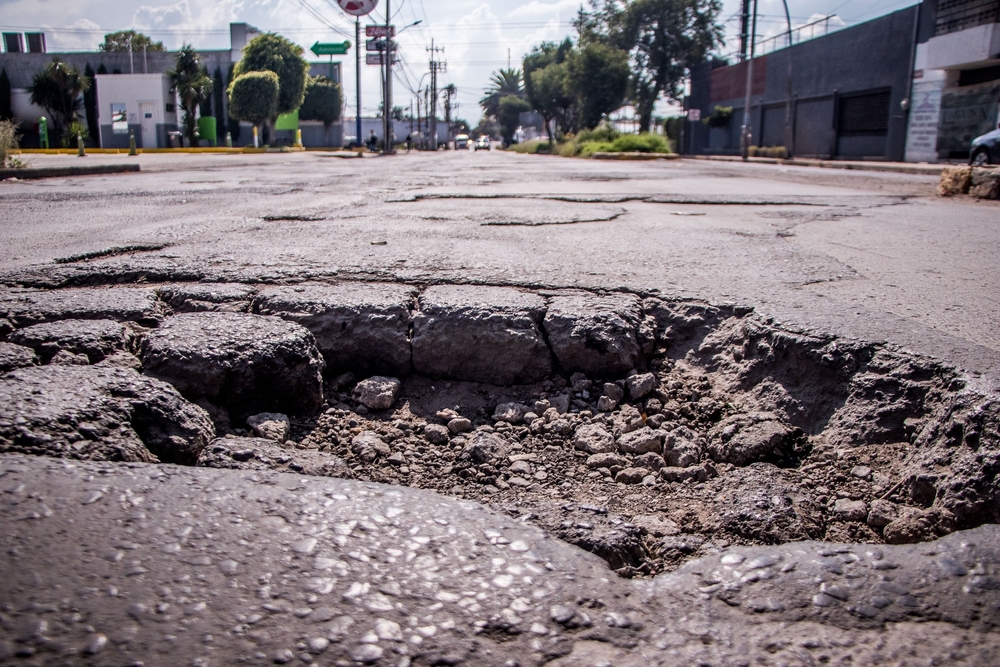
Motorcycles respond very differently to poor road conditions than passenger vehicles. A pothole that a car can absorb may cause a rider to lose control. Loose gravel that a truck rolls through can send a motorcycle sliding across the pavement.
Common dangerous road conditions that contribute to motorcycle accidents include:
- Deep potholes and broken pavement
- Uneven road surfaces or raised utility covers
- Loose gravel, sand, or construction debris in travel lanes
- Faded lane markings or missing warning signs
- Standing water from poor drainage design
- Poorly designed intersections or curves that reduce visibility
These hazards show up across Houston, including busy corridors and surface streets that riders use daily. When a crash occurs, it is not always clear who is legally responsible: another driver, a government entity, or a private company.
Untangling that liability is one of the most important roles a motorcycle accident attorney can play.
Who May Be Liable for a Road Hazard Motorcycle Accident in Texas?
Liability in a road hazard motorcycle accident in Texas often depends on who had the duty to maintain or design the area of roadway where the crash occurred.
Possible defendants can include:
- The City of Houston or Harris County, for hazards on local streets and county roads under their control
- TxDOT, for state‑maintained highways, interstates, and some major thoroughfares running through the Houston area
- Private contractors, when negligent road construction, resurfacing, or traffic control, created or left behind dangerous conditions
- Private property owners, if debris or runoff from their property created an unsafe condition on a public road
In some cases, more than one entity shares responsibility. A contractor might have left a trench improperly patched, while a government agency failed to inspect or respond to complaints in a reasonable time. A careful investigation often reveals more potential defendants than a rider first realizes.
The Texas Tort Claims Act and Government Liability
Suing the City of Houston, TxDOT, or another government entity is very different from bringing a claim against a private driver or business. Government bodies benefit from sovereign immunity, which the Texas Tort Claims Act (TTCA) partially waives in limited circumstances.
Under the TTCA and related statutes:
- Government entities can sometimes be held liable for certain roadway defects or dangerous conditions when they had actual or, in some situations, constructive knowledge of the hazard and failed to act with ordinary care.
- Claims are subject to damage caps, which limit the total amount of compensation that can be recovered from a government entity.
- Strict notice requirements apply, and missing these deadlines can completely bar a claim even when the hazard is clear.
For a rider injured in a pothole-related motorcycle accident on public roads, the TTCA framework often determines whether a lawsuit against a government body is even possible. This is one reason early legal advice is so important.
Notice Deadlines for Government Road Hazard Claims
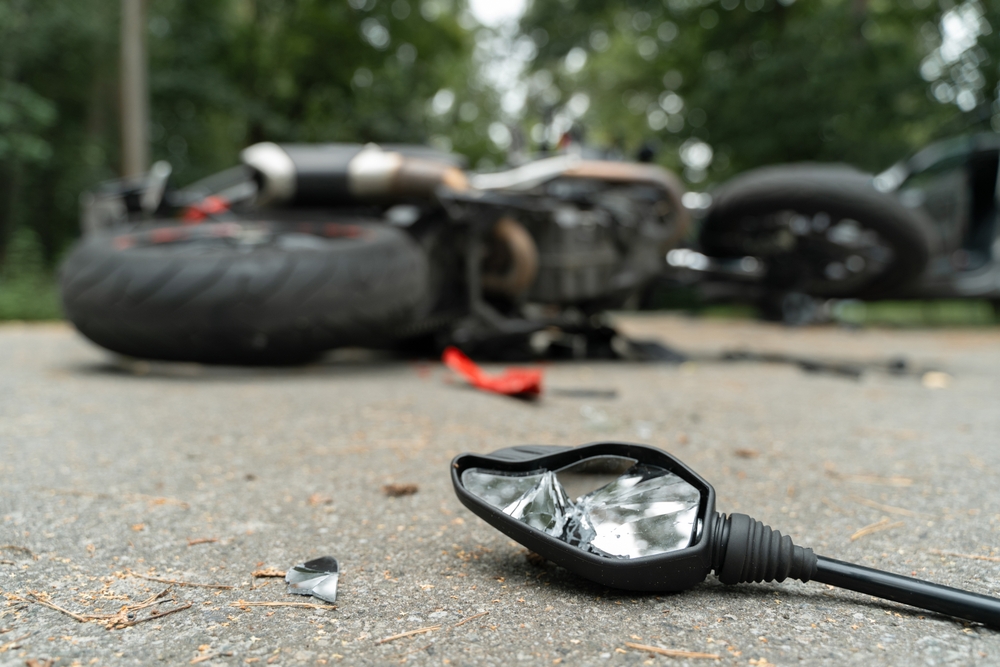
One of the most important differences between a standard motorcycle injury case and a road hazard motorcycle accident lawsuit against a government entity in Houston is the notice deadline.
In Texas:
- The TTCA generally requires that a claimant provide written notice to the government entity within 6 months of the date of the incident, with specific information about the time, place, and nature of the claim.
- Some cities and counties, including Houston and Harris County, may impose even shorter notice periods, such as 90 days, under local ordinances or charters.
- Failing to provide proper notice within the required timeframe can result in the claim being dismissed, no matter how serious the injuries are.
These notice deadlines are separate from the general 2‑year statute of limitations that applies to most Texas personal injury lawsuits. Riders who wait to see if injuries improve or try to handle the matter informally may lose their ability to bring a government liability claim before they ever talk with a lawyer. (*Always speak directly to an attorney for the exact deadlines that apply to your potential claims.)
Proving a Pothole or Road Hazard Caused the Motorcycle Crash
To pursue compensation for a pothole motorcycle accident, a rider must do more than show that a hazard existed. It is necessary to connect that hazard to the crash and establish that the responsible entity failed to act reasonably.
Key elements often include:
- Duty and knowledge: The government entity or contractor had responsibility for the road and knew, or should have known, about the dangerous condition.
- Failure to fix or warn: The entity failed to repair the hazard within a reasonable time or failed to provide adequate warning signs or barricades.
- Causation: The pothole, debris, or design issue created a risk that caused the motorcycle to crash, and the rider could not reasonably anticipate or avoid the hazard.
Evidence that may support these points includes:
- Photographs and video of the hazard, taken as soon as possible after the crash
- Eyewitness statements about the condition of the road and the sequence of events
- Police crash reports noting defects or obstructions in the roadway
- Maintenance and inspection records, or logs of prior complaints, obtained through legal discovery or public information requests
- Expert analysis of road design, maintenance practices, or how a particular defect affects motorcycles differently than other vehicles
A motorcycle accident attorney can coordinate this evidence, work with specialists when needed, and present a clear narrative that shows the road condition was a substantial factor in the crash.
Dangerous Road Conditions and Comparative Fault
Texas uses a modified comparative fault system. That means that even if a rider shares some responsibility for a crash, they may still recover compensation as long as they are not more than 50% at fault. However, their recovery can be reduced by their percentage of fault.
In motorcycle accident liability cases involving dangerous road conditions in Texas, insurers and government entities often argue that a rider was speeding, following too closely, or not paying attention. These arguments can be especially strong when a road defect is not immediately obvious in photos.
A lawyer can help counter these attempts to shift blame by:
- Demonstrating how the road hazard posed particular risks to motorcycles
- Showing that the hazard was not clearly visible or marked
- Highlighting the difference between a rider making a reasonable mistake and a government entity failing to fix or warn about a known danger
The goal is to keep the focus on the party responsible for maintaining the roadway and to protect the rider’s right to a meaningful recovery.
How a Houston Motorcycle Accident Lawyer Investigates Road Hazard Claims
Road hazard cases often require more extensive investigation than two‑vehicle collisions. Terry Bryant Accident & Injury Law can take on that work and help identify every potential source of compensation.
Steps may include:
- Visiting the crash scene quickly to document the road hazard before it is repaired
- Photographing and measuring the defect, skid marks, and the surrounding area
- Interviewing witnesses and collecting statements while memories are still fresh
- Requesting maintenance records, work orders, and complaint logs from the City of Houston, TxDOT, or contractors
- Determining which entity had responsibility for that segment of the road at the time of the crash
- Evaluating whether a private party, such as a contractor, utility company, or adjacent property owner, contributed to the dangerous condition
This thorough approach is particularly important when a rider is considering suing the city for a motorcycle crash in Houston, because the legal standards and defenses available to government entities are different from those that apply to private parties.
What Compensation May Be Available After a Road Hazard Motorcycle Accident?
The types of compensation available in a road hazard motorcycle accident lawsuit in Houston are similar to other personal injury claims, although damage caps may apply when a government entity is involved.
Riders may pursue:
- Medical expenses for emergency care, hospitalization, surgery, and rehabilitation
- Future medical costs for ongoing treatment, therapy, or assistive devices
- Lost wages during recovery and loss of future earning capacity
- Pain and suffering and emotional distress
- Loss of enjoyment of life and impact on daily activities
In severe cases, family members may also have claims for wrongful death or loss of consortium. A motorcycle accident lawyer can analyze how government caps and other rules affect the maximum potential recovery in a given case.
Road Hazard Motorcycle Accident in Houston FAQ
If I crashed because of a pothole in Houston, can I sue the city?
It may be possible to bring a claim, but it depends on where the crash occurred, who maintained the road, whether the city had notice of the pothole, and whether the strict notice deadlines were met. A lawyer can evaluate whether the Texas Tort Claims Act allows a claim against the City of Houston in your specific situation.
What is the deadline to notify the government about a dangerous road condition claim?
Under Texas law, many government entities require written notice within six months of the accident, and some, including Houston and certain counties, may require notice within 90 days. Waiting too long can prevent you from pursuing compensation, even if you file a lawsuit before the general 2‑year deadline. (*Always speak directly to an attorney for the exact deadlines that apply to your potential claims.)
Can I still recover if I was partly at fault for the motorcycle crash?
Texas comparative fault rules allow an injured rider to seek compensation as long as they are not more than 50% responsible. However, any recovery is reduced by the rider’s percentage of fault. An attorney can work to limit unfair fault claims and focus attention on the road hazard and the party that should have addressed it.
What if the road hazard was caused by construction work?
If a private contractor created or failed to remedy a dangerous condition during road construction or maintenance, that company may be liable. It is also possible that both the contractor and a government entity share responsibility, depending on contracts and control of the site.
Do I need a lawyer for a road hazard motorcycle accident claim?
Claims involving potholes, debris, or design flaws can be complex, especially when government entities are involved. A lawyer can manage notice requirements, gather technical evidence, identify all potential defendants, and negotiate with insurers on your behalf, allowing you to focus on your health.
Talk With a Houston Motorcycle Accident Lawyer About Road Hazard Claims
If a dangerous road condition caused your motorcycle crash in the Houston area, you may be facing serious injuries, lost income, and confusing information about who is responsible. You do not have to navigate government rules, notice deadlines, and liability questions alone.
A Houston motorcycle accident lawyer at Terry Bryant Accident & Injury Law can:
- Assess whether a road hazard contributed to your crash
- Determine whether the City of Houston, TxDOT, a county, or a private contractor may be liable
- Make sure all required notices and deadlines are met
- Pursue the full compensation the law allows from every responsible party
Prompt action can make a significant difference in preserving evidence and protecting your rights.
Legal Resources About Texas Motorcycle Crash Injury Claims
The following resources provide additional insight into motorcycle risks and claims in Texas. For advice specific to your situation, call Terry Bryant Accident & Injury Law at 713-973-8888 or toll-free 1 (800) 444-5000 for a free and confidential case review.
- Learn the top causes of motorcycle accidents and how to reduce your risk on Texas roads
- Find out how lane-splitting can impact your motorcycle accident case
- Discover the hidden factors that determine the value of a motorcycle accident case in TX
- See why a seemingly minor motorcycle crash causes major long-term injuries