There is a sentence injured construction workers in Houston hear on day one, usually from a foreman or an HR coordinator, and it quietly ends a lot of legitimate claims: "Don't worry, it's covered."
Sometimes that is true. Often it is not, and even when it is, it usually does not mean what the worker thinks it means.
A Houston construction accident lawyer at Terry Bryant Accident & Injury Law can tell you within one conversation which of those you are dealing with, because the answer turns on 2 things: whether your employer actually carries workers' compensation, and whether somebody other than your employer helped cause the injury.
Those 2 questions decide almost everything about what your case is worth.
Free, confidential consultation. Call (713) 973-8888.
On This Page
- What Should You Do After a Construction Accident in Houston?
- Can You Sue if You Were Hurt on a Texas Construction Site?
- Who Can Be Held Responsible Besides Your Employer?
- What Is That Injury Benefit Plan Your Employer Wants You to Sign?
- Which Construction Accidents Send Houston Workers to the Hospital?
- What Makes Houston Job Sites Different?
- What Is a Construction Injury Claim Worth in Texas?
- How Long Do You Have to File?
- Serving Houston Job Sites Since 1985
- Houston Construction Accident Questions
What Should You Do After a Construction Accident in Houston?
Report the injury in writing to your employer, get treated the same day, and photograph the site before anything gets moved. Then find out, in writing, whether your employer carries workers' compensation. Those 4 steps preserve nearly every option you have.
Job sites change fast. The scaffold gets rebuilt, the trench gets filled, the ladder goes back on the truck. Evidence disappears in hours, not weeks. If you cannot take photos yourself, ask a coworker to do it and send them to you the same day.
Do not give a recorded statement to any insurance adjuster before you understand which insurer they work for. On a Houston job site there are often 4 or 5 carriers involved, and the one calling you may be defending the company that caused the injury.

Can You Sue if You Were Hurt on a Texas Construction Site?
Often, yes. Texas is unusual, and that difference works in injured workers' favor more than in most states.
Texas is the only state that does not require private employers to carry workers' compensation. The Texas Department of Insurance's most recent estimate, published in 2023 from its 2022 nonsubscriber survey, puts 25% of Texas private-sector employers outside the system, covering 17% of the state's employees.
That creates 2 very different tracks.
If your employer is a nonsubscriber, you can sue your employer directly for negligence. More importantly, a nonsubscriber loses the 3 classic defenses: it cannot argue you were contributorily negligent, cannot argue you assumed the risk, and cannot blame a fellow employee. That is a powerful position, and most workers have no idea they are in it.
If your employer does carry comp, you generally cannot sue that employer. You can still sue anyone else whose negligence contributed to the injury, and on a construction site that list is usually long: the general contractor, another sub, the property owner, a scaffold or crane rental company, an equipment manufacturer, an engineer, a trucking company delivering material.
Those third-party claims are not limited to the medical and partial wage benefits comp pays. They can include full lost earnings, future medical care, and physical pain and suffering.
Who Can Be Held Responsible Besides Your Employer?
Anyone on the site who owed you a duty of care and breached it. Construction is layered by design, and each layer creates a potential defendant.
| Party | When they are usually on the hook |
|---|---|
| General contractor | Retained control over safety, ignored a known hazard, failed to coordinate trades |
| Another subcontractor | Created the hazard your crew walked into |
| Property or premises owner | Knew about a dangerous condition and did not warn or fix it |
| Equipment rental company | Supplied a defective or poorly maintained lift, scaffold, or crane |
| Manufacturer | Design or manufacturing defect in a tool, harness, or machine |
| Trucking or delivery company | Struck a worker or dropped a load |
| Engineer or architect | Design that made the work unsafe to perform |
The analysis usually starts with the contract stack. Who had authority over site safety, and did they exercise it? A general contractor that writes a safety plan, runs the toolbox talks, and then lets a subcontractor work without fall protection has retained control in a way Texas courts take seriously.
What Is That Injury Benefit Plan Your Employer Wants You to Sign?

It is a private substitute for workers' compensation, and signing it usually costs you the right to sue. Read it before you sign anything, even if someone is standing over your bed with a clipboard.
Nonsubscriber employers in Texas often set up their own occupational injury plan. These plans go by different names, and the paperwork tends to arrive early, sometimes within days of the injury, framed as the form you have to fill out to get your medical bills paid.
Buried in most of them is an arbitration agreement, a waiver of your right to a jury trial, or a release that ends the negligence claim you did not know you had. Some plans cut off benefits if you miss a single appointment with a doctor the company chose. Some require you to report the injury within 24 hours or lose coverage entirely.
None of that means the plan is worthless. Some plans pay medical bills promptly and are worth using. The point is that you cannot know which kind you are holding until someone reads it, and once it is signed the leverage is gone.
If a form has been put in front of you, take a photo of every page and call before you sign. Our work injury practice reviews these plans regularly, and our guide on how to read your injury benefits plan explains what to look for.
Which Construction Accidents Send Houston Workers to the Hospital?
Falls, above everything else. OSHA reports that 389 of 1,034 construction deaths in 2024 were falls to a lower level, making falls the leading cause of death in the industry. Its Focus Four framework groups the deadliest hazards as falls, struck-by, caught-in or between, and electrocution.
Texas carries a heavy share of that. The Bureau of Labor Statistics recorded 557 fatal work injuries in Texas in 2024, 125 of them in construction, the highest state total in the country.
We handle the full range, and each has its own evidence problems:
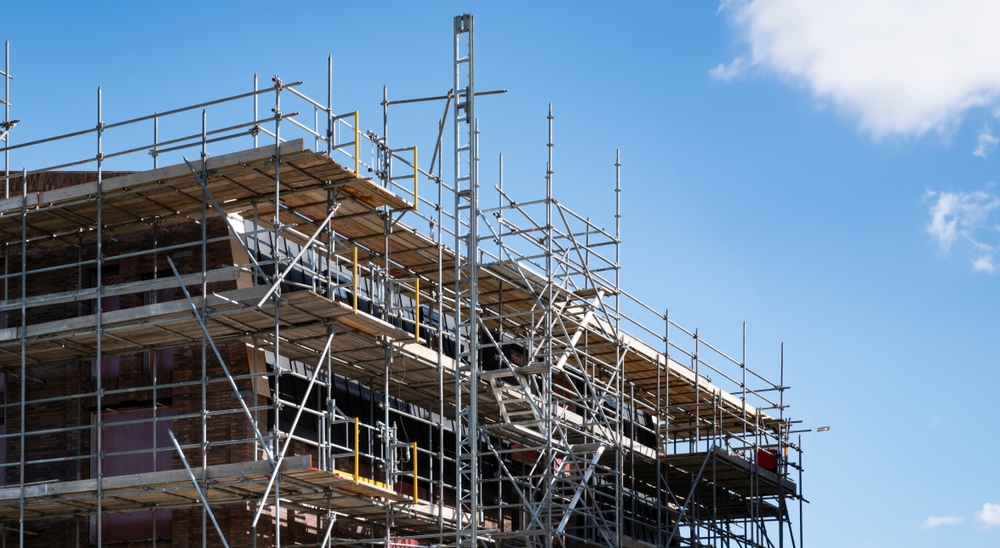
Scaffold collapses and falls from height. Our Houston scaffolding accident page covers inspection records and tie-in failures.
Crane and hoist incidents. Load charts, ground conditions, and signal-person qualifications drive these cases. See our Houston crane accident page.
Forklift and equipment strikes. Often a training and traffic-control failure. Detailed on our forklift accident page.
Electrocution and arc flash. Lockout-tagout records and utility locates are the whole case. See electrical injuries.
Trench and excavation collapse, falling objects, fires and explosions, and heat illness. Houston's summer is its own hazard category, and heat-related collapse on a job site is rarely documented the way it should be.
The injuries that follow tend to be permanent in ways that are hard to see at first. A fall from 12 feet produces spinal fractures and traumatic brain injuries. Crush injuries end in amputation. Arc flash burns require years of reconstruction.
Even a "minor" shoulder tear ends a career for someone whose work is overhead. What a case is worth depends far more on what the injury does to your ability to earn a living over the next 20 years than on what the emergency room charged.
What Makes Houston Job Sites Different?

Scale, heat, and the sheer number of parties on a single site. Houston builds continuously and builds heavy.
Petrochemical turnarounds along the Ship Channel compress months of work into weeks, with hundreds of contract workers from different companies on the same unit. Highway work along I-10, the Grand Parkway, and the ongoing North Houston Highway Improvement Project puts crews next to live traffic.
The Texas Medical Center's expansion runs high-rise construction in dense urban space. Add residential and commercial building spreading out through Katy, Cypress, and Conroe, and you get a labor market that is largely subcontracted, frequently multilingual, and constantly turning over.
That turnover matters legally. Crews that have worked together for 2 weeks have not built the habits that prevent struck-by incidents. And when everyone on site works for a different company, "whose fault was it" stops being obvious and starts being a matter of documents.
Heat deserves its own mention. Gulf Coast humidity keeps overnight temperatures high enough that workers never fully recover between shifts. Employers who do not build in water, rest, and shade are creating a foreseeable risk, and heat illness that leads to a fall is a construction accident, not a medical event.
What Is a Construction Injury Claim Worth in Texas?
It depends on which track your case is on, and the gap between the 2 is wide. That is the single most important financial fact on this page.
A workers' compensation claim pays medical care and a portion of lost wages. It does not pay for pain, for disfigurement, or for the loss of the life you had before.
A third-party or nonsubscriber claim can include past and future medical treatment, full past and future lost earnings and lost earning capacity, physical pain and mental anguish, physical impairment and disfigurement, and, in cases of gross negligence, exemplary damages.
Texas also applies proportionate responsibility. Under Texas Civil Practice and Remedies Code §33.001, you can recover as long as your share of responsibility is not greater than 50%, with your damages reduced by your percentage.
Defense lawyers spend a great deal of energy trying to get an injured worker over that line. That is one reason the nonsubscriber rule matters so much: a nonsubscriber employer cannot make that argument at all.
Not sure which track you are on? A short call answers it. (713) 973-8888.
How Long Do You Have to File?

2 years from the date of the injury, in most Texas construction cases, under Texas Civil Practice and Remedies Code §16.003. Workers' compensation has its own, much shorter reporting deadlines, which is why the written report on day one matters. (*Always speak directly to an attorney for the exact deadlines that apply to your potential claims.)
Contact a lawyer as soon as possible after your construction accident. Subcontractors dissolve. Rental equipment gets sold or scrapped. Site supervisors move to another state. Preserving evidence usually requires a letter going out in the first weeks, not the last months. More detail on Texas deadlines is on our statute of limitations page.
Serving Houston Job Sites Since 1985
Terry Bryant Accident & Injury Law has represented injured Texans from this city since 1985. Mr. Bryant is a former judge and is board-certified in personal injury trial law by the Texas Board of Legal Specialization, a certification most Texas lawyers do not hold.
Construction cases get built the way the job site did: on documents. Daily reports, safety meeting sign-ins, subcontractor agreements, equipment maintenance logs, OSHA 300 logs, and the contract language that tells you who was responsible for what. Our office is at 8584 Katy Fwy Suite 100, Houston, TX 77024. Consultations are free and confidential, and you pay nothing unless you win your case.
For background reading, our blogs on the Fatal Four construction site dangers and the 7 most common workplace violations go deeper into how these injuries happen.
Houston Construction Accident Questions
Can I be fired for reporting a construction injury in Texas?
Texas prohibits retaliation for filing a workers' compensation claim in good faith. Because Texas is an at-will employment state, proving retaliation depends heavily on timing and documentation. Keep copies of your injury report, any write-ups that appear after it, and the names of anyone who witnessed the conversation.
Does my immigration status affect a construction injury claim?
Texas law allows injured workers to pursue personal injury claims regardless of immigration status, and courts have generally limited defendants' ability to turn a case into an immigration inquiry. Concerns about status keep many valid claims from ever being filed. Ask the question before you assume the answer.
What if OSHA investigated my accident?
An OSHA investigation can be useful, but it is not the same as your case. OSHA regulates employers and issues citations. It does not award you anything, and a citation is not automatically admissible as proof of negligence. It can, however, point directly at the records your case needs. You can look up an employer's inspection history through OSHA's establishment search.
Can I bring a claim if I am paid in cash or classified as a 1099 contractor?
Frequently, yes. How you are paid does not control the analysis. Courts look at who directed the work, who supplied the tools, and who controlled the schedule. Misclassification is common on Houston job sites, and a worker labeled an independent contractor may still have claims against the general contractor, the property owner, or an equipment supplier regardless of the label.
What if the injury happened months ago and I kept working?
You may still have a case. Workers routinely push through a back or shoulder injury until it becomes impossible, and defense lawyers use that delay to argue nothing serious happened. Contemporaneous medical records help. So does anything that shows you reported it: a text to a supervisor, a clinic visit, a coworker who remembers the day.
Get an Answer About Your Case This Week
The question that decides your case is not complicated. Does your employer carry workers' compensation, and did anyone besides your employer contribute to what happened?
Most injured workers cannot answer either one, and nobody on the job site is going to volunteer it. We can find out.
Call Terry Bryant Accident & Injury Law at (713) 973-8888 or request a free, confidential consultation online. You pay nothing unless you win your case.