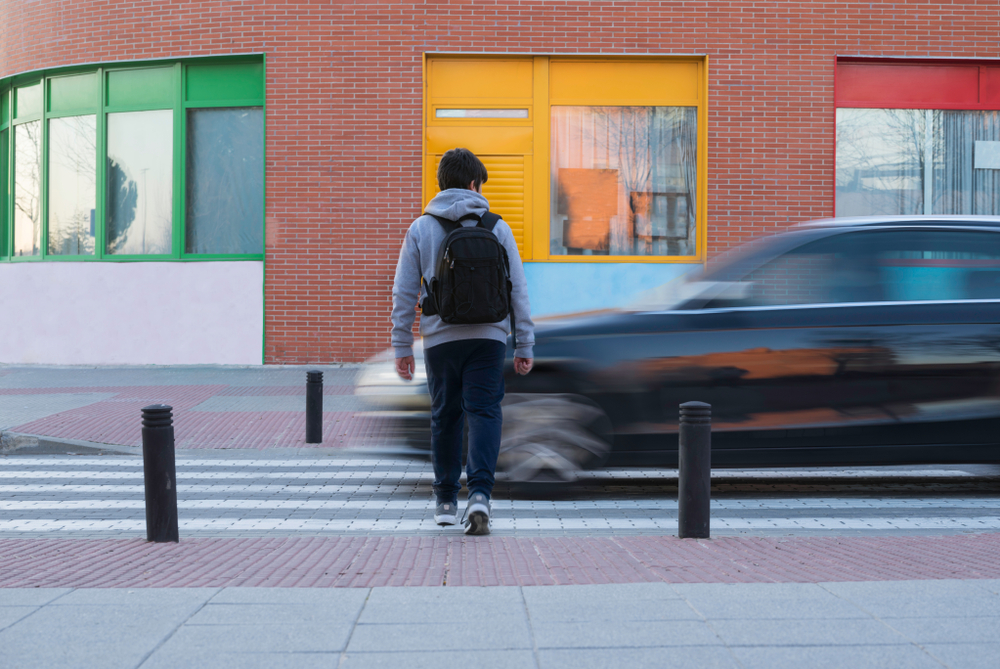
The first thing an insurance adjuster will suggest, sometimes in the first phone call, is that the pedestrian was at fault. He stepped out. She was not in a crosswalk. He was wearing dark clothes.
A Katy pedestrian accident lawyer's first job is usually to take that argument apart, because in Texas it does not have to be true to reduce what you are paid. It only has to stick.
Terry Bryant Accident & Injury Law represents people hit while walking in Katy and across the Houston area. Call (713) 973-8888 for a free, confidential consultation.
On This Page
- Why Is Fault So Often Blamed on the Pedestrian?
- Does a Pedestrian Always Have the Right of Way in Texas?
- What Makes Katy Roads Dangerous for People on Foot?
- Whose Insurance Pays When a Pedestrian Is Hit?
- What Are Pedestrian Injuries Actually Like?
- What Should Happen in the First 2 Weeks?
- How This Firm Investigates a Pedestrian Case
- Katy Pedestrian Accident Questions
Why Is Fault So Often Blamed on the Pedestrian?

Because of how Texas allocates responsibility, and because the only person who can contradict the driver is usually in surgery.
Texas uses proportionate responsibility. Under Texas Civil Practice and Remedies Code §33.001, an injured person recovers as long as their share of the fault is not greater than 50%, and the award is reduced by whatever percentage is assigned. Push a pedestrian to 51% and the claim is worth nothing.
So the insurer's incentive is obvious. Every percentage point they move onto you saves them money, and at 51 they save all of it.
The driver gives a statement at the scene. The pedestrian, in many of these cases, is unconscious, intubated, or in no condition to say anything for days. By the time a version of events exists from the person who was hit, the file already contains another one.
That imbalance is fixable, but not by arguing. It is fixed with physical evidence: point of impact, throw distance, vehicle damage location, sight lines, signal timing, and whatever cameras were nearby.
Does a Pedestrian Always Have the Right of Way in Texas?
No, and the honest answer helps your case more than the myth does. Texas gives pedestrians the right of way in specific situations, not all of them.
Drivers must yield to a pedestrian lawfully in a marked crosswalk, or in an unmarked crosswalk at an intersection, when the pedestrian is on the driver's half of the roadway or close enough to be in danger. Drivers turning on a green light or a permitted red must yield to pedestrians already in the crossing. Vehicles must not pass another vehicle stopped at a crosswalk.

Pedestrians have obligations too. Crossing outside a crosswalk between adjacent signalized intersections requires yielding to vehicles. Stepping suddenly into the path of a vehicle so close that the driver cannot stop is a violation.
Here is the part that matters: a pedestrian violation does not end the claim. Even a pedestrian crossing mid-block still recovers if the driver's share of the fault is greater. A driver who was speeding, texting, or ran a red light does not get absolved because the pedestrian was jaywalking. Texas assigns percentages, not verdicts on character.
What Makes Katy Roads Dangerous for People on Foot?
Katy was built for cars, and the walking infrastructure was added later or not at all. That is the honest description of a place that grew from a rice-farming town into one of the fastest-expanding suburbs in the country in about 3 decades. Drivers and passengers hurt on those same roads have their own claims, covered on our Katy car accident lawyer page.
Several patterns come up repeatedly.
Feeder road crossings. The I-10 Katy Freeway frontage roads carry high-speed traffic through retail districts where people are constantly moving between parking lots, bus stops, and businesses. Distances between signalized crossings are long, which produces exactly the mid-block crossings drivers do not expect.
Wide arterials with long gaps between signals. Mason Road, Fry Road, Grand Parkway service roads, and Highway 90 were designed to move volume. Crossing them on foot means covering 6 or 7 lanes with a turn lane in the middle.
Incomplete sidewalk networks. Newer master-planned sections have continuous walkways. Older stretches and the areas between developments do not, which puts people in the roadway or on the shoulder by necessity, not by carelessness.
Apartment and retail corridors. Where dense housing sits across a major road from the grocery store, people will cross. That is a predictable behavior, and it is a design condition, not a personal failing.
School zones and Katy ISD traffic. One of the largest school districts in Texas produces heavy pedestrian volume at predictable hours, and drop-off congestion generates the distracted, rushed driving that causes these collisions.
Dark, wet, and early. Most fatal pedestrian crashes nationally happen after dark. Add Gulf Coast rain and unlit stretches of road, and visibility becomes the central issue in a large share of Katy cases.
Statewide, TxDOT recorded 695 pedestrian deaths in Texas in 2025, along with 1,387 suspected serious injuries, in its pedestrian crash data. Harris County recorded 503 traffic fatalities overall that year.
Hit while walking in Katy? Call (713) 973-8888 for a free, confidential consultation.
Whose Insurance Pays When a Pedestrian Is Hit?
More policies than most people check, and the one that matters most is often your own. This is the single most overlooked fact in pedestrian cases.
| Source | When it applies | Why it gets missed |
|---|---|---|
| The driver's liability policy | Always, first in line | Texas minimum limits are low and often exhausted by an ambulance ride and 2 days in an ICU |
| Your own UM/UIM coverage | Even though you were on foot | Coverage follows the person, not the vehicle |
| Personal injury protection (PIP) | Regardless of who was at fault | Pays medical bills and some lost income, and covers pedestrians |
| A commercial policy | The driver was working: delivery, rideshare, a company truck | Limits are usually far higher than a personal policy |
| Health insurance | Immediately | Pays early, then asserts reimbursement out of any settlement |
The driver's liability policy comes first. Texas minimum limits are low, and they are frequently exhausted by an ambulance ride and 2 days in an ICU.

Your own uninsured or underinsured motorist coverage applies even though you were not in your car. UM/UIM follows the person, not the vehicle. If you own a car with UM/UIM, or live in a household with a relative who does, that coverage may be available to you as a pedestrian. Texas insurers must offer it and it must be rejected in writing, so many people have it without knowing.
Personal injury protection, or PIP, is also offered on Texas auto policies and covers medical bills and some lost income regardless of fault. It applies to pedestrians too.
A commercial policy, where the driver was working: delivery, rideshare, a company truck, a landscaping crew. These limits are usually far higher.
Health insurance, which will pay early and then assert a right of reimbursement out of any settlement. Negotiating that reimbursement down is part of what determines how much you actually keep.
Hit-and-run cases are not hopeless. Uninsured motorist coverage generally applies when the driver is never identified, provided the claim is reported promptly. Reporting delay is the thing that kills these claims.
What Are Pedestrian Injuries Actually Like?

There is no protection in these collisions, and the injury pattern reflects that. A person on foot absorbs the full impact, then a second impact with the vehicle's hood or windshield, then a third with the ground.
Traumatic brain injuries, spinal cord damage, pelvic and femur fractures, internal organ injuries, and complex lower-leg fractures are the recurring outcomes. Many require multiple surgeries over years. Some end in permanent impairment that is not apparent for months.
That timeline is why early settlement offers are dangerous. An offer that looks reasonable against the first hospital bill will not cover the revision surgery, the year out of work, or the cognitive changes a family starts noticing in month 4. Our blog on the long-term costs of a traumatic brain injury in Texas explains how those numbers are actually calculated.
Texas allows recovery for past and future medical care, lost income and lost earning capacity, physical pain and mental anguish, physical impairment, and disfigurement. In a fatal crash, Chapter 71 permits a spouse, children, or parents to bring a wrongful death claim.
What Should Happen in the First 2 Weeks?
Evidence collection, before anything else. A pedestrian case is won or lost on physical proof, and most of that proof has a short shelf life.
6 things are worth chasing immediately:
The vehicle. Impact height and damage location establish whether the pedestrian was struck while walking laterally or stepped in front of the car. Once the vehicle is repaired, that information is gone.

Camera footage. Retail parking lots, gas stations, apartment entrances, and residential doorbell cameras along the route. Most overwrite in 2 to 4 weeks, and none of them are obligated to keep anything without a written demand.
The scene itself. Sight lines from the driver's approach, lighting at the actual hour of the crash rather than in daylight, vegetation or signage blocking the view, crosswalk paint condition, and whether a signalized crossing existed within a reasonable distance.
Signal and lighting records. Whether a signal was functioning, and whether a streetlight outage had been reported to the city or the county, are questions with documented answers.
Witnesses. People stop, give a name to an officer, and become unreachable within a few months.
The full medical picture. Not just the emergency room record. Injuries that surface in weeks 2 through 6 are frequently the ones that define the case.
Photographs taken by a family member on a phone in the first 48 hours have carried more weight in these cases than anything gathered later.
How This Firm Investigates a Pedestrian Case
Serving Houston Since 1985. Terry Bryant Accident & Injury Law handles pedestrian injury claims across the greater Houston area, including Katy. Mr. Bryant is a former judge and is board-certified in personal injury trial law by the Texas Board of Legal Specialization.
Pedestrian cases get investigated differently from vehicle collisions. Crush damage tells you less than the impact point on the bumper and the distance the person traveled. Signal timing records, roadway lighting maintenance, sight-line obstructions from landscaping or parked vehicles, and nearby business cameras all matter, and most of it has to be collected in weeks.
Where a Katy case is filed often depends on where the collision occurred, although there can be other suitable venues. We practice in Harris, Fort Bend, and Waller counties, and many more, and can determine if, when, and where to file suit. Our office at 8584 Katy Fwy Suite 100, Houston, TX 77024 sits on the same corridor. Consultations are free and confidential, and you pay nothing unless you win your case.
Katy Pedestrian Accident Questions
What if I was crossing outside a crosswalk when I was hit?
You may still have a claim. Texas reduces your recovery by your share of fault rather than eliminating it, and you recover unless your responsibility exceeds 50%. Drivers have an independent duty to keep a proper lookout and drive at a safe speed for conditions. A speeding or distracted driver carries a significant share of fault regardless of where the pedestrian crossed.
The driver never stopped. Do I have any options?
Often yes. Uninsured motorist coverage on your own auto policy, or a resident relative's policy, is designed for exactly this situation. Report the crash to law enforcement and to your insurer quickly, because delay is the most common reason these claims get denied. Investigators can sometimes still identify a vehicle through debris, paint transfer, and area camera footage.
How soon after being hit should I contact a lawyer?
As early as you are able, and ideally within the first 2 weeks. Roadway conditions change, vehicles get repaired, and nearby business cameras overwrite on short cycles. Early involvement is also what keeps a recorded statement from being taken while you are on pain medication.
Does the police report decide who was at fault?
No. A crash report reflects an officer's opinion based on what was available at the scene, often including only the driver's account. Reports are frequently amended once additional evidence surfaces, and a report is generally not admissible as proof of fault at trial. It is a starting point, not a ruling.
What if the person hit was a child?
The analysis changes in the child's favor. Texas holds children to a standard of care appropriate to their age, and a young child is generally not expected to judge traffic the way an adult would.
Deadlines are different too: under Texas Civil Practice and Remedies Code §16.001, the limitations clock is paused during minority, so a child generally has until age 20 to file. (*Always speak directly to an attorney for the exact deadlines that apply to your potential claims.) Contact a lawyer as soon as possible after your child's injury, because the evidence does not pause with the clock.
Do Not Let Their Version Be the Only One
In the first days after a pedestrian is hit in Katy, one account of what happened exists, and it belongs to the person driving the car.
Changing that takes physical evidence, gathered while the road, the vehicle, and the cameras still hold it. That work does not require anything from you except a phone call.
Terry Bryant Accident & Injury Law reviews Katy pedestrian accident cases at no cost. Call (713) 973-8888 or contact us online. You pay nothing unless you win your case.